The “Research Room” section of the UP-ON Archive aims to revitalize archival materials through theoretical research, seminars, self-publishing, and other means, thereby fostering in-depth knowledge production.
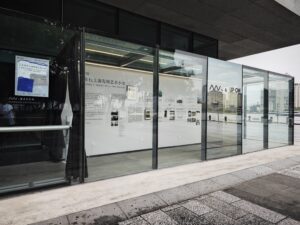
On June 17, 2026, the first project of the MAM & UP-ON Live Art Documentation Center, *Rustic Art: Uncovering the Past*, was launched in Shanghai. As a key artist featured in the documentary exchange *A Brief History of Shanghai’s 1980s Avant-Garde Art*, Ding Yi co-created the performance art piece *Street Cloth Sculpture* with Qin Yifeng and Zhang Guoliang in 1986.
We interviewed Ding Yi about the origins and subsequent developments of this work. This article is an excerpt that has been reviewed and approved by the interviewee.
Interviewee: Ding Yi
Interviewer: Shao Ye
Date: May 20, 2026
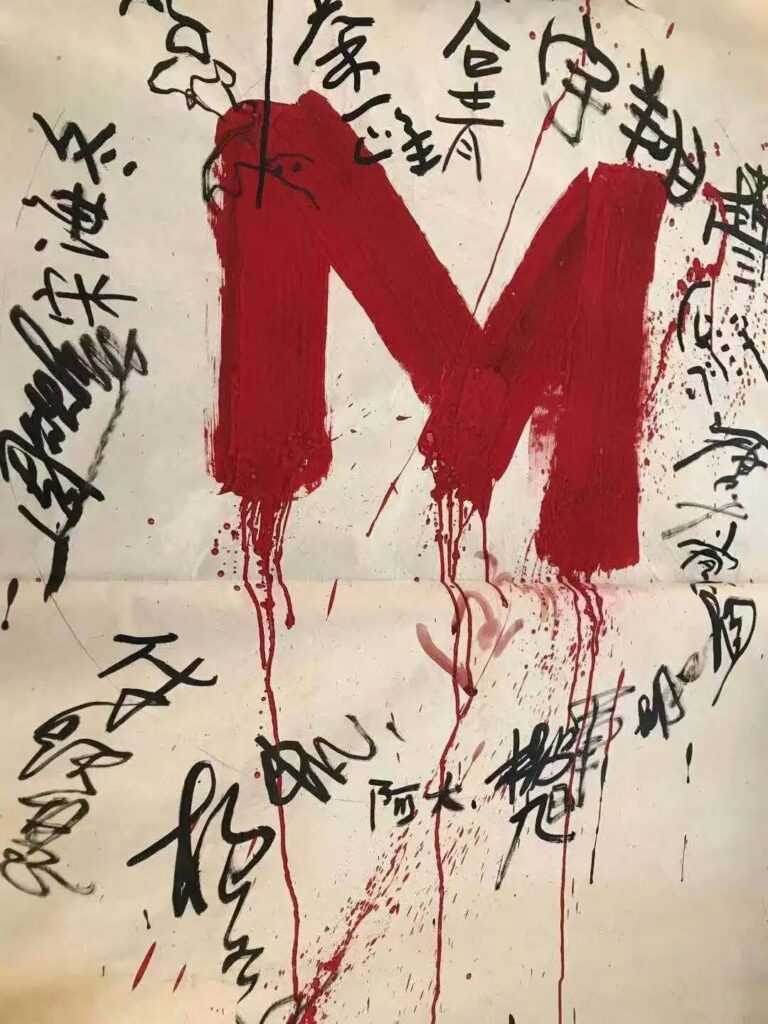
Poster for the “M Group Conceptual Art Performance Exhibition”
Q: In the 1980s, as one of the key figures in Shanghai’s experimental art scene, what was your life and creative process like at that time?
Ding Yi: During the “85 New Wave” period, I was a freshman in college. At that time, many art activities took place on campus. For me, since I already had a modern artistic mindset, I would study at school while also developing my own style in my creative work. For example, by 1986, I had already produced some abstract works. At that time, there were many group-based activities in Shanghai, including the “Convex and Concave” Exhibition (1986), the performance art events organized by the “M Art Group,” and *The Last Supper* (1988). Everyone was both a participant and the primary audience.
The art scene back then wasn’t very large; it wasn’t like today, where so many young people and non-art majors are involved. In reality, people were exploring within small circles, looking for a place to bring their ideas to life. Since there weren’t any real art museums at the time—and the Shanghai Art Museum was very difficult to access—many of our events were held at district cultural centers or even venues like youth palaces.
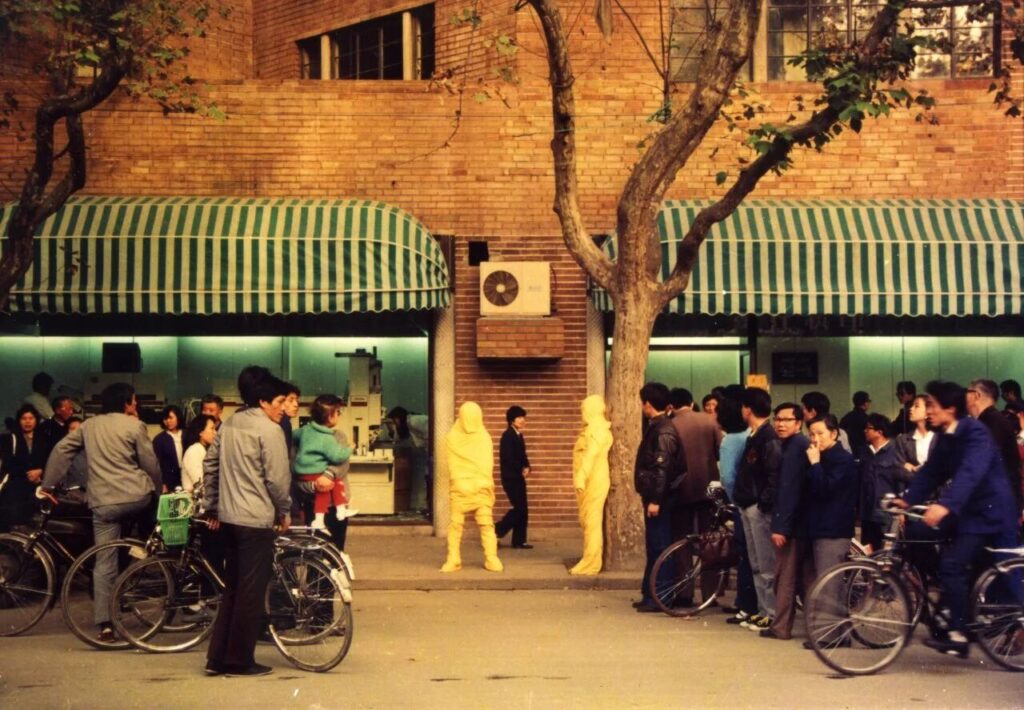
Ding Yi, Qin Yifeng, and Zhang Guoliang, *Street Fabric Sculptures* 1
Q: Which art media piqued your curiosity at the time, or which medium did you feel was particularly groundbreaking from the perspective of that era?
Ding Yi: Information was rather limited and disorganized back then; it wasn’t conveyed through the established narrative of art history. Translators would often compile books based on whatever materials they happened to obtain. During that period, Chinese contemporary art was emerging from nothing—it was in its infancy, just beginning to take shape. We were interested in everything.
However, Shanghai had a certain atmosphere; I felt that an underlying structure of modernism had always been present.
We know that many artists who returned from studying abroad in the 1930s were connected to Shanghai—they either lived or worked there. Because of Shanghai’s colonial background at the time, its lifestyle, its ideas, and the city’s ongoing process of expansion all created an environment conducive to the development of these returning artists. By the early 1980s, a wave of retrospective exhibitions featuring these older artists had already begun. At the time, our understanding of Guan Liang was likely limited to his ink paintings, but at his retrospective exhibition, we saw the oil paintings he created after returning to China, which blended Chinese and Western styles. These retrospectives helped Shanghai’s artists establish a sense of contemporaneity and laid the foundation for continuing the modernist tradition. Of course, some Western exhibitions were also beginning to be introduced to China. For example, the “Exhibition of 19th-Century French Rural Paintings” held in 1978 at the Sino-Soviet Friendship Building (now the Shanghai Exhibition Center)—works by artists like Delacroix sparked significant controversy, as people found them difficult to understand due to their highly expressive and subjective nature. All of this had a profound impact on young artists.
This included the Picasso exhibition at the Shanghai Library in the 1980s, which caused quite a sensation. Artists from all over the country came to Shanghai to see these exhibitions, standing in very long lines—it took nearly several hours just to get in. So at that time, information was very mixed; there were different sources of information and different ways of presenting them.
At the time, we mainly read Reed’s *A Brief History of Modern Painting*. The illustrations in that book were very rudimentary—printing technology wasn’t very advanced back then—so most were small black-and-white images, with perhaps a few color ones. But it was likely the earliest reference book for understanding the trajectory of Western art over nearly a century. I think many people interested in contemporary art had a copy of it back then. In fact, I believe much of the character of Chinese contemporary art is connected to this book. People would interpret the intentions behind these Western images to inform their artistic creation and drive their own artistic transformations.
During this period, I came across an introduction to Christo’s “wrapping” works. Back then, we would explore various avenues to find forms of expression that challenged societal and artistic norms. For example, abstract art at the time was actually a powerful tool for challenging mainstream society. Even as late as 1988, when I began painting works like “Ten Illustrations,” there was no audience for such art—people would assume I had gone down the wrong path. Painting, they believed, shouldn’t be like that; it should have what they called “figurative elements.”
In fact, the Soviet system had a significant influence on art education throughout China, including thematic creation. Shanghai’s dual nature was also reflected in this regard. It was both a city with modernist roots and a place where thematic creation was renowned nationwide. It possessed a certain academic system while simultaneously engaging in artistic reflection on the fringes of that system.
Q: In the 1980s, you also experimented with other media, such as a performance art piece titled *Street Fabric Sculpture*, which you created in collaboration with Qin Yifeng and Zhang Guoliang. Could you describe the creative process behind this work in detail?
Ding Yi: I created this work while I was in college. Qin Yifeng and Zhang Guoliang were classmates of mine in different classes, and we were quite close. As students at the time, our circumstances were very difficult. We had this idea for a performance art piece, but we needed money to carry it out. Looking back today, the amount of money required seems laughable—we just needed to buy a roll of color film and at least 10 meters of yellow fabric. The three of us split the cost; whoever had a little more money would cover it, and then we’d work together to complete the piece. We called it “fabric sculpture,” or “wrapping art.”
Back then, this piece was presented in two settings. One was at an abandoned pier on the outskirts of the city. The other was in downtown Shanghai. The three performers were wrapped in yellow cloth—intended to shape their forms—and used body language to express themselves.
Since these performances had to be set up and dismantled quickly in the city, it was difficult to create a lasting installation. So we would perform the simplest actions—for example, two people standing or sitting across from each other in a fast-food restaurant, as if enjoying a meal, but since we were completely wrapped up, it was impossible to actually eat. That fast-food restaurant was China’s first at the time; it was a self-service establishment called the “People’s Fast Food Restaurant,” located right next to the Grand Light Cinema on Nanjing Road—a prime location and an excellent medium for our work.
At the time, it could be described as the most luxurious dining spot. It had large windows, and people walking up and down Nanjing Road would find it very strange to see two bandaged people sitting inside. We attracted a crowd. At that time, neon signs and advertisements were beginning to appear in Shanghai. Advertising was a very important aspect of Shanghai’s transition to a market economy. That’s why we chose to perform this performance art in front of the advertisements.
At that time, the Shanghai Art Museum was hosting an exhibition featuring three early masters of Shanghai-style traditional Chinese painting: Wu Changshuo, Xu Gu, and Ren Bonian. We performed right beneath the exhibition posters. At that time, street performance art was virtually unheard of in Shanghai, so it had a huge impact on the general public. As a result, when we performed on the street, we were surrounded by onlookers, drew interviews from many newspapers and magazines, and were even dispersed by the police. The year 1986 was a period when this kind of performance art was particularly effective. It possessed a certain public quality and subverted traditional forms of artistic expression. That’s more or less how it was.
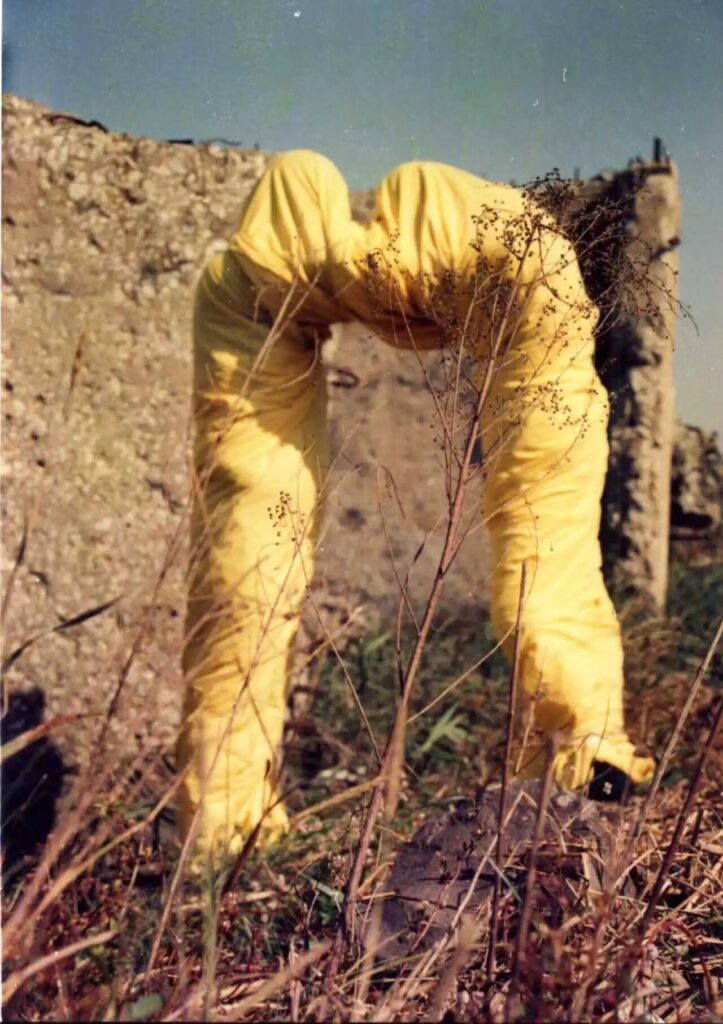
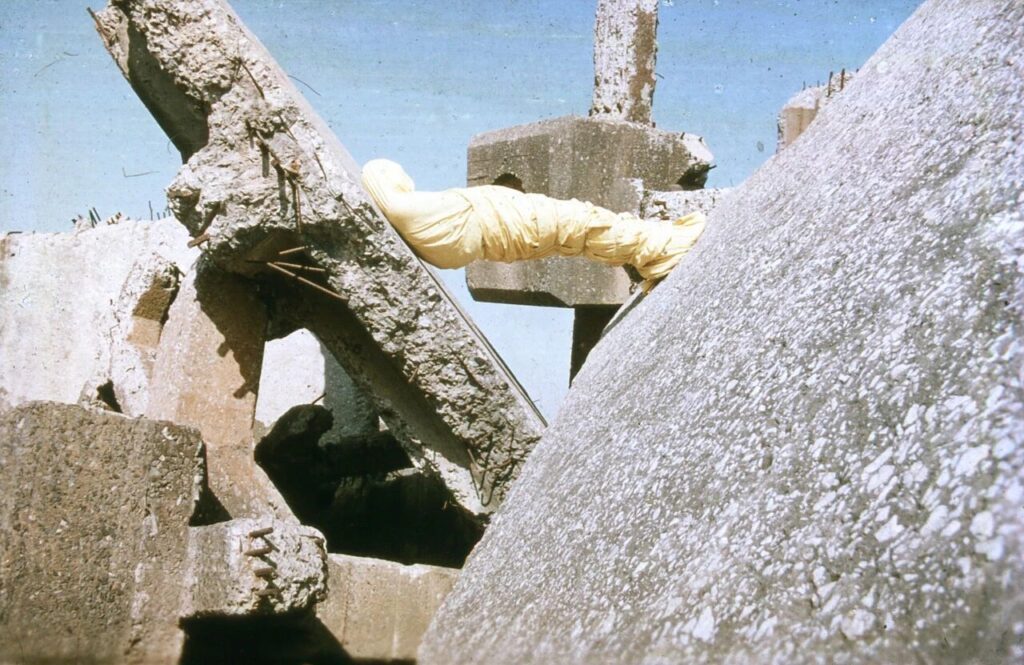
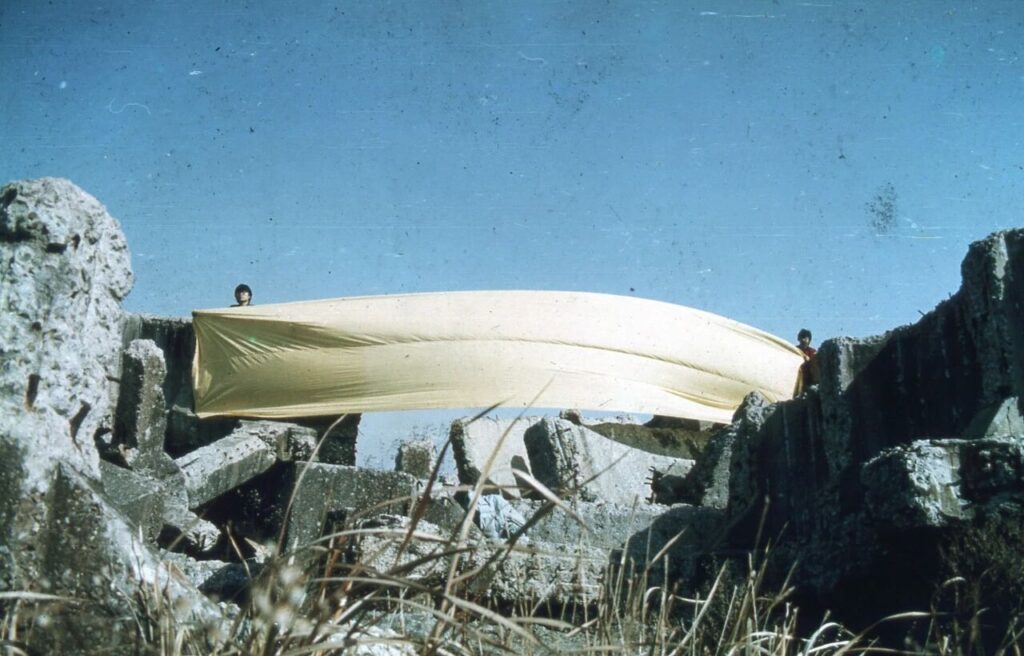
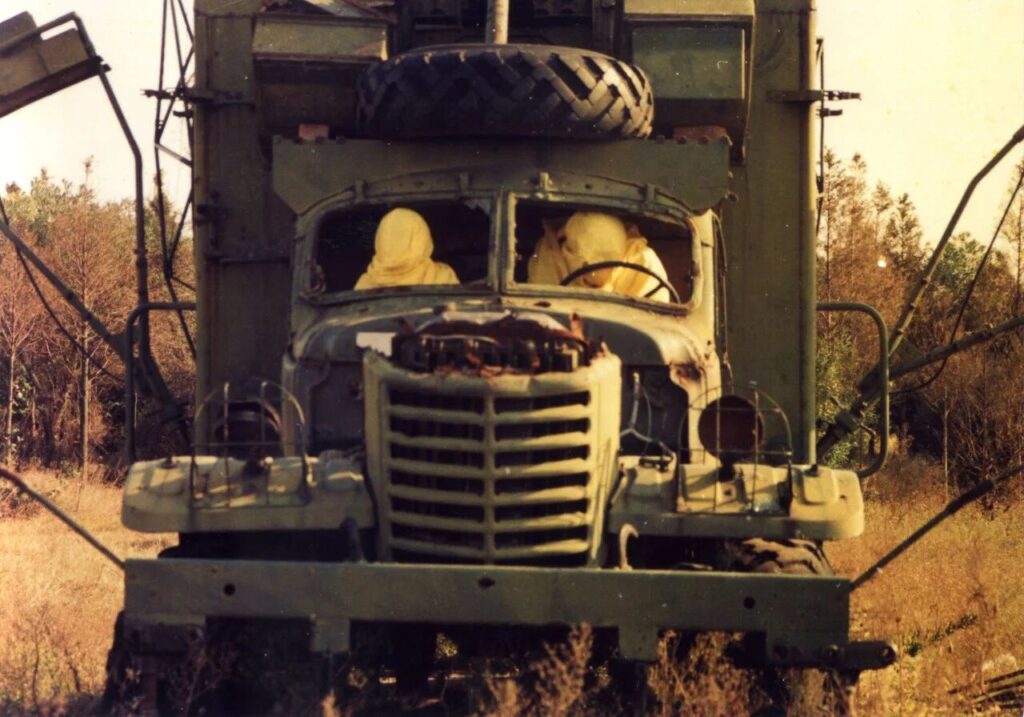
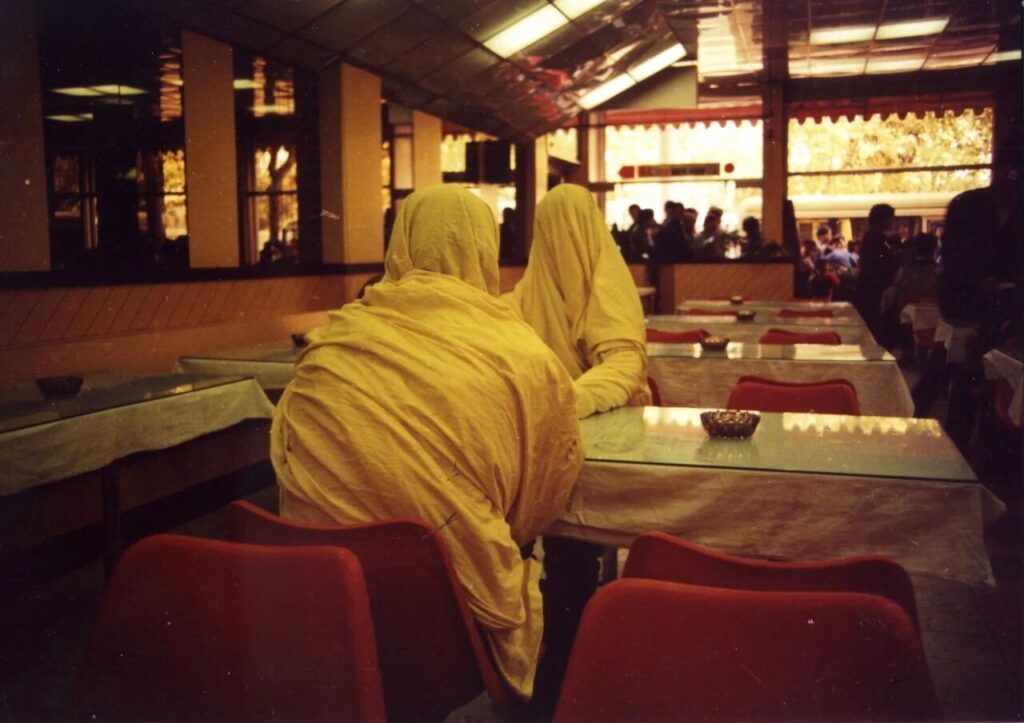
Ding Yi, Qin Yifeng, and Zhang Guoliang, *Street Fabric Sculptures*, 2–6
Q: Looking back on the work *Street Fabric Sculpture* now, what are your thoughts or reflections? Or, if you were to create this work again today, would anything be different?
Ding Yi: Of course, I wouldn’t recreate a work like that today. First of all, I’ve never defined myself as a performance artist. As an early work, it was valid—it represented a line of thinking that emerged from the context of that time. Today, performance art like that might seem too simplistic. While its emergence was indeed tied to the era, its logic for survival isn’t strong, and its deeper logic doesn’t hold up. As a concept for an artist’s ongoing practice—including the language of expression—it might be too simplistic.
Q: The UP-ON Archive primarily focuses on the field of performance art. I’d like to ask you, Mr. Ding Yi, how do you view the current state of performance art and its future possibilities?
Ding Yi: Performance art has a history of at least 50 years, and its achievements have had a tremendous impact on art and even on social life. Performance art has also evolved from being merely a medium of artistic expression to increasingly becoming a public phenomenon—or an activity in which the public can generally participate. Sometimes, without even realizing it, you might notice on the street that certain behaviors fall within the category of performance art. Many performance artists initially set out to subvert the systems of art galleries and museums, but ultimately ended up within those very institutions—a stark contrast between their original intentions and the outcome. Of course, this form still serves as a reminder or warning to society, but its impact is not as intense as it was in the early days. One reason is that today’s art system has undergone such profound changes; many aspects have become more public and more commercialized. Consequently, the so-called idealistic intentions of performance art are shaped by this market-driven context. What exactly is its purpose? Is it the realization of an ideal, or is it simply about generating traffic and the like? I believe this raises certain questions.
Q: Looking solely at this medium, what possibilities do you see for its future?
Ding Yi: I don’t know. I think perhaps an interaction with stage performance might be the best approach.
Q: So, in the direction of drama and theater.
Ding Yi: Yes, drama and theater. Because it involves a certain ritual, a specific venue, and a specific audience—it might be able to express its intentions more accurately. Since art today is no longer as provocative as it once was, the so-called provocativeness of performance art is also gradually diminishing. Another factor is information overload—it’s so rampant that many profound ideas are quickly diluted; in other words, it’s hard to maintain their seriousness for very long.
Finally, there’s the social context. Only in a relatively open social environment can performance art continue to emerge and generate a form of resistance. Take He Yunchang, for example—it’s almost impossible for him to create new works now, right? Because even if he creates such works in the wild, it’s still very difficult to present them within institutional settings. Furthermore, since much performance art ultimately has to be presented within institutional settings—which is a source of contradiction—its so-called “wild” nature ends up being diluted.
Q: Thank you, Professor Ding Yi, for this interview. We look forward to welcoming you to the exhibition “A Brief History of Shanghai Avant-Garde Art in the 1980s.”
Ding Yi: Sure, thank you.
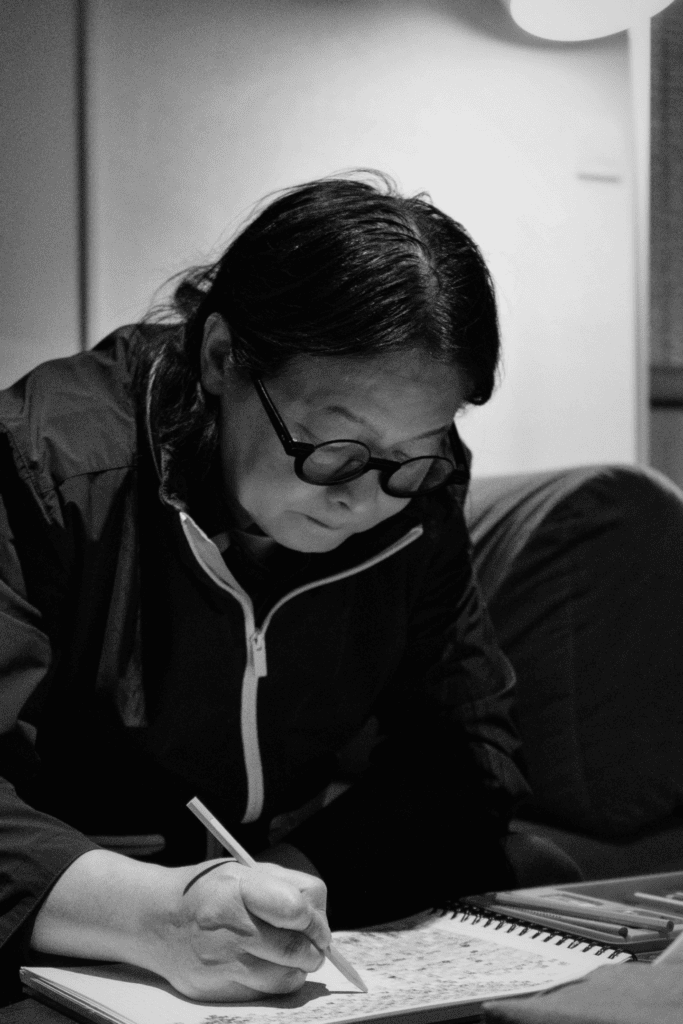
Ding Yi, born in Shanghai in 1962, is one of the leading figures in contemporary Chinese abstract art. Since the late 1980s, Ding Yi has incorporated the “ten” character into his work and has remained an active presence on the global art scene. His works are held in the collections of renowned institutions, including the Metropolitan Museum of Art in New York, the British Museum in London, the Centre Pompidou in Paris, the M+ Museum in Hong Kong, and the Shanghai Museum of Contemporary Art. Ding Yi has participated in major international exhibitions such as the 45th Venice Biennale, the 1st Asia-Pacific Triennial, and the 1st Yokohama Triennale. The Quirinus Stampalia Foundation is currently hosting a solo exhibition of his work during the 61st Venice Biennale.
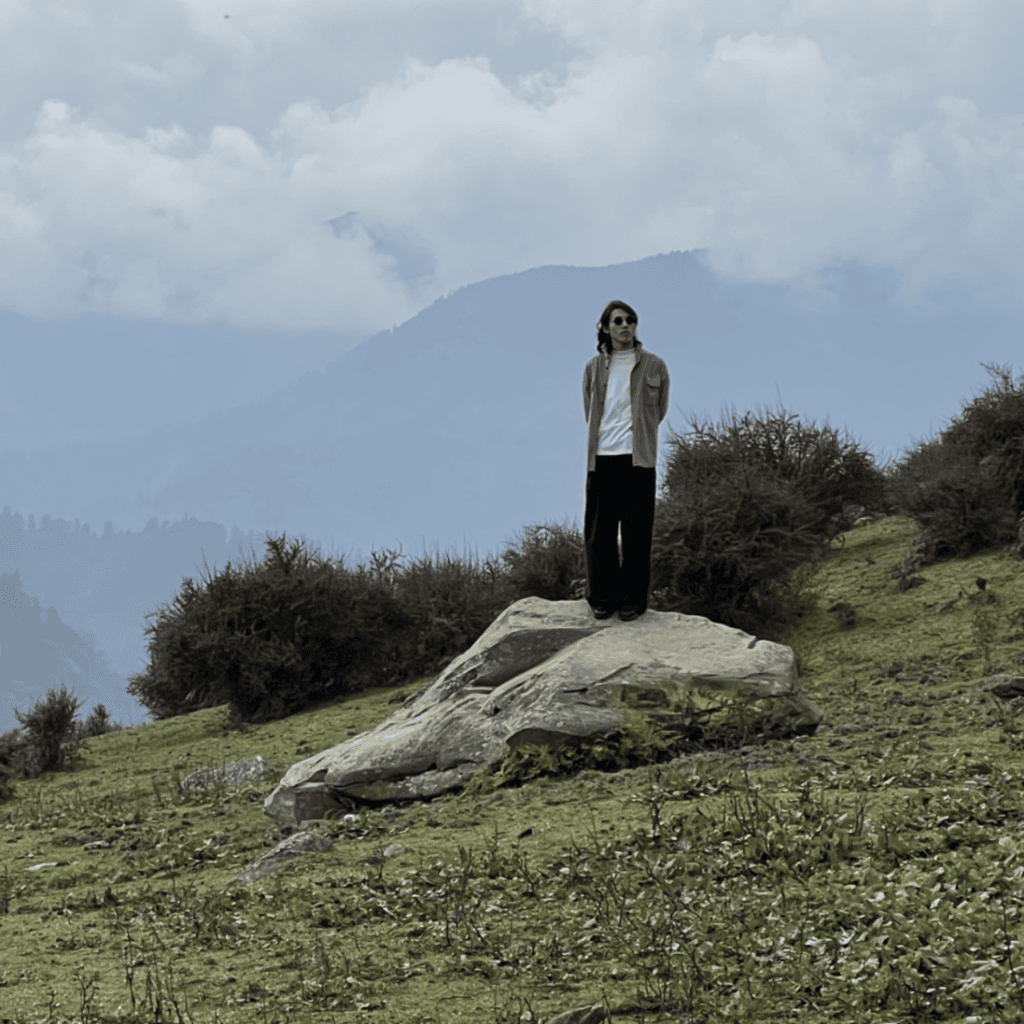
Shao Ye is an artist. His current social identity is that of an internet industry professional dedicated to artistic creation; he lives and works in Shanghai. In recent years, he has been exploring the boundaries of the “live” experience: traversing mountains and rivers, or walking through human society, using his body as a medium to continually deepen his “pseudo-theatrical” artistic practice. Some of his works are intended to span his entire life journey; he deeply cherishes the philosophy that “the artist himself is his greatest work.” He has been deeply involved in art projects such as the UP-ON International Live Art Festival, the In the Clouds International Live Art Festival, and Rebe Live Action, with his works touring multiple countries and regions, including Southeast Asia, Argentina, and Moscow.

Chengdu Shangcheng Design has been deeply engaged in architecture and spatial design for over two decades, consistently focusing on the relationship between architecture, nature, culture, and society. The firm has developed an integrated design practice encompassing urban planning, architecture, landscape architecture, and interior design. Its projects are located in numerous cities across China and span a wide range of types, including industrial parks, offices, cultural exhibition spaces, and residential spaces. With a focus on spatial value and user experience, Shangcheng Design is committed to providing clients with architectural and spatial solutions that combine foresight, aesthetic appeal, and practicality. The firm’s work has been recognized with numerous domestic and international awards, including the China Interior Design Awards and IFI International Interior Design Competition, the Architecture MasterPrize (AMP), the BLT Built Design Awards, the DNA Paris Design Awards, the Milan Design Awards, the London Design Awards, and the Architect of the Year Awards.