The “Research Room” section of the UP-ON Archives is dedicated to revitalizing archival materials through theoretical research, seminars, self-publishing, and other means, with the goal of fostering in-depth knowledge production.
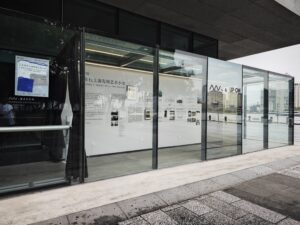
On September 27, 2026, the second event of “Pusu: Uncovering the Past”—“A Retrospective of the 1990s ‘Defenders of Water’ Art Initiative”—opened at the MAM & UP-ON Live Art Documentation Center in Shanghai. Prior to the exhibition, we conducted an online interview with Ms. Betsy Damon (U.S.), the initiator of the “Defenders of Water” initiative, to revisit the stories behind many of the events.
Interviewee: Ms. Betsy Damon (USA)
Interviewer: Shao Ye
Organization: UP-ON Performance Art Archive
Date: July 2026
Method: Online
Background of the Interview: Performance art emerged in mainland China in the 1980s, primarily taking place in private or public spaces outside of art museums, in a private and individual creative manner. The “Defenders of Water” series, which ran for four editions from 1995 to 2000, was an extremely rare artistic initiative in mainland China that closely integrated avant-garde artistic creation with urban ecological issues. It received government support, garnered extensive media coverage, took place in urban public spaces, and actively engaged with the public.
A key point of interest is that the artistic principles and characteristics of “Defenders of Water” were in step with the latest trends in Western contemporary art in the early 1990s—a period some theorists refer to as the “third turn” in contemporary art. This shift saw art move beyond the gallery and take root in public spaces, with artistic themes shifting from grand narratives to a focus on micro-level concerns such as daily life, community environments, identity, race, and social class. and interactions between people, between individuals and communities, and between people and the city became key modes of artistic expression.
That such synchronization could occur was also a matter of serendipity. As the chief curator of the “Defenders of Water” campaign, Betsy Betsy Damon (born in the United States in 1940) is an internationally renowned ecofeminist artist, a pioneer of public intervention art, a curator, and the founder of a nonprofit organization. Since the 1980s, she has focused on ecological issues, and in 1991, she founded the nonprofit organization Keepers of the Waters, which brings together artists, governments, and communities worldwide to create public art addressing water environments and to promote education on ecological restoration. In 1994, while she was planning the event with numerous artists, the Chengdu municipal government had just launched a comprehensive river restoration project, and environmental protection was a central public issue in the city at that time. In 1995, following the conclusion of the first “Keepers of the Waters” event, Betsy Damon proposed to the Chengdu government the construction of a Living Water Park. Completed in 1999, it became the world’s first urban park dedicated to water ecological purification and stands as the most far-reaching tangible outcome of this art initiative, serving as a model for the integration of artistic endeavors with public ecological issues.
From 1995 to 2000, The Water Defenders, as an early example of a socially engaged art project in China, was clearly greatly overlooked in terms of its significance. We hope that through this archival exhibition, the Chinese academic community will come to recognize its value anew.
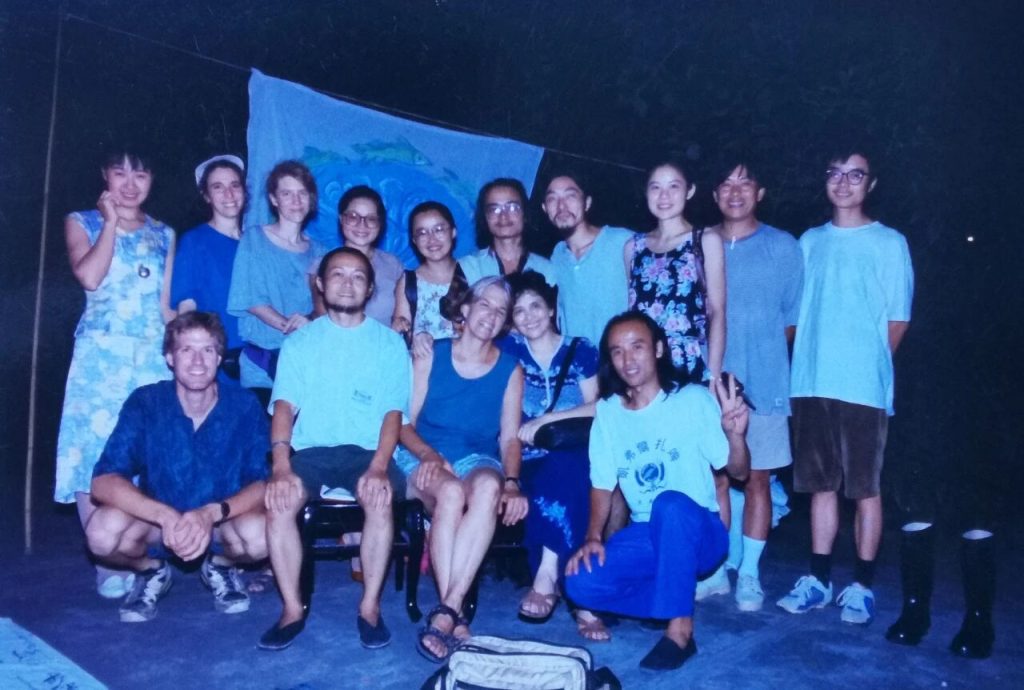
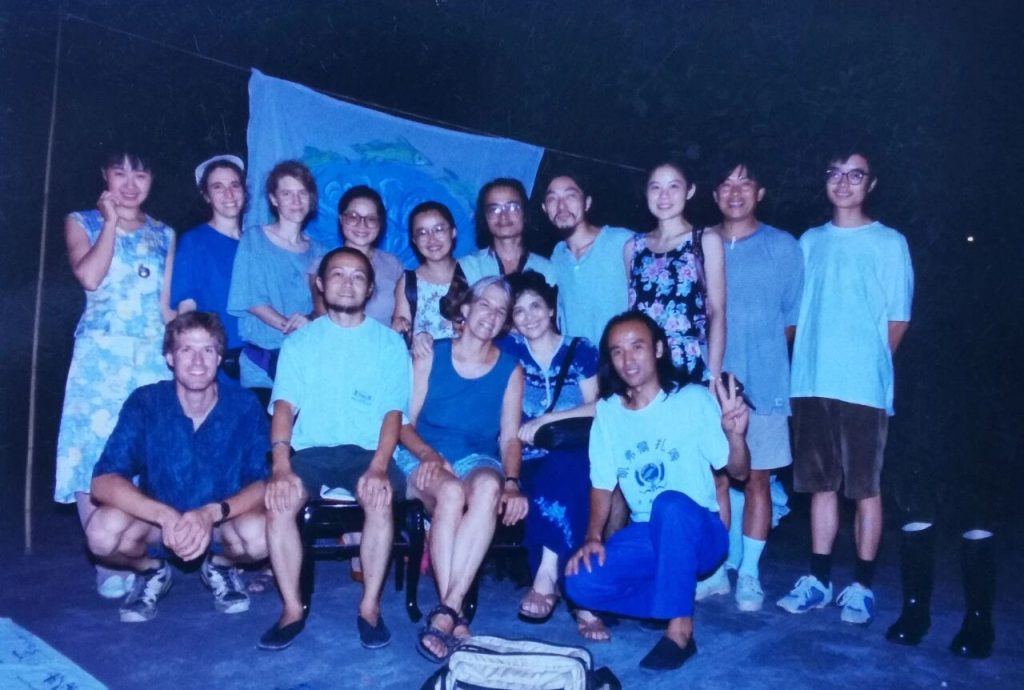
Group photo taken during preparations for the first installment of The Water Guardians (Chengdu) (Front row, from left: Zeng Shan, Dai Guangyu, Betsy Damon, Lin Shaohan, Liu Chengying; Back row, from left: Ji Xia, Beth Grossman, Christine Baeumler, Li Qi, Liu Mei, Zeng Xun, Zhu Gang, Xie Mingxiang, Li Dan, Chen Zhongxin), 1995, Chengdu
UP-ON: Dear Ms. Betsy Damon, Greetings! We are the UP-ON Behavioral Art Archive, and we are currently preparing for the “Retrospective of the ‘Keepers of the Waters’ Art Project from the 1990s,” to be held in Shanghai on September 27, 2026. The “Keepers of the Waters” public art initiatives you launched in Chengdu and Lhasa in 1995 and 1996 were among the most iconic and influential early ecological intervention public art projects in China. Thirty-one years later, we would like to conduct an interview with you focusing on the project’s origins, on-site memories, historical significance, and contemporary insights. This interview will be used for on-site sharing at the event, archival documentation, and art historical research.
You founded the “Keepers of the Waters” art project in the United States in 1991 and carried out a large-scale public art action on this theme in Chengdu, China, in 1995. We’ve heard that you initially hoped to implement this project in other Chinese cities as well. Could you tell us specifically which cities you had in mind? What challenges did you encounter?
Betsy: I never intended to launch “Defenders of Water” in other cities, nor did I initially plan to do so in Chengdu. I was simply familiar with Chengdu at the time. I had visited Chengdu twice with my son, Jon Otto, who lives there.
It all began with a small, five-day conference in Chengdu in 1993. I met an artist at a museum in Chengdu who told me about the conference, and that’s how I came to be invited to attend. The participants included people from Japan, Chinese engineers, and qigong experts. For the first two days, I listened to those men discuss philosophy rather than ecology.
I had to muster the courage to ask to speak. I introduced the water initiative I was trying to launch in Minnesota at the time, which combined art and science. Everyone in the room turned to me and said, “We need you here.” Then they began sharing their deep knowledge about water, including eight methods for determining water quality.
Together, we devised an action plan involving the Yangtze and Mississippi Rivers, starting from the cities at the highest elevations in the upper reaches of each river, and encompassing exchanges, initiatives, and collaboration between the two countries.
Upon returning to the United States, I applied for grants, but they were all rejected because, at the time, no one was willing to fund work in a GC-aligned country. However, one person called me—she didn’t give her name or explain why—and simply said she was considering funding me, so the money came from her. I secured enough funding to return to China and continue seeking additional support.
Why Chengdu? I’d been there twice and really liked the city. Through that conference I mentioned earlier, I’d established a connection with Dr. Zhu Xiaofeng. I knew that if I said I was coming to carry out environmental activism, I wouldn’t get a Chinese visa, so I came to China as a tourist. As a tourist, there was nothing I could do—all I could do was spend money staying in hotels. I tracked down Zhu Xiaofeng; I had his business card. Back then, it was very difficult to communicate between the two countries. I sent him a message saying I was coming, and we agreed to meet at a hostel near the bus station—it was a place for travelers, and the rates were very cheap. I couldn’t find Zhu Xiaofeng, and he couldn’t find me either. It wasn’t until five or six days later that I finally found him, by which time I had already broken my arm.
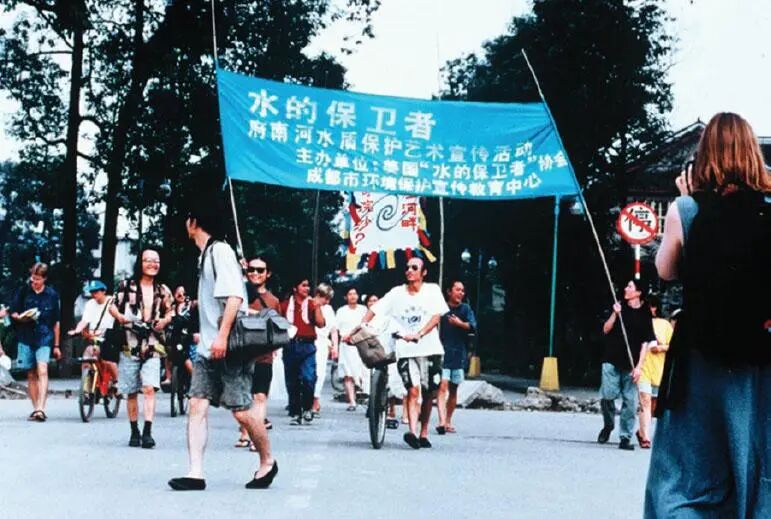
The first edition of the two-week “Guardians of Water” art event kicked off in Chengdu in 1995
UP-ON: You addressed river ecology issues through artistic activities rather than environmental education or social advocacy. At the time, what did you consider to be the most distinctive power of performance art and public art?
Betsy: I don’t directly address river ecology. Instead, I use art to invite people to pay attention to water and rivers. I encourage artists to learn some scientific facts—such as what lives in the river, what is polluting it, how old the river is, and where it begins. These days, people know very little about the bodies of water around them, and art can bring them back to the riverbank and spark their curiosity.
Artists can create works that don’t have to be judged as scientifically correct or incorrect. These works can be fun and exciting, or they can express a love for rivers and the historical relationship between people and rivers. Performance art, in particular, exists within its own timeframe, so artists don’t need official permits or museum spaces to create. Many people are involved in environmental education and advocacy, and I believe we need every possible approach. The beauty of art is that it requires no permission or validation; we are free to imagine, experiment, and try again.
UP-ON: The “Water Defenders” campaigns held in Chengdu in 1995 and in Lhasa in 1996 both received support from local government agencies, which is no small feat. How did this come about?
Betsy: It took a lot of effort to gain support in Chengdu. We had to find people within the government who were willing to support us. Zhang Xuehua can explain this in more detail. At that time, artists were constantly under government scrutiny; they kept an eye on everything and were always around during our meetings.
Sichuan University had housing for foreigners, so my son, my assistant, and I stayed there. The hot water wasn’t working, so we couldn’t take showers and had to go elsewhere to wash. Later, when we marched holding signs that read “Defenders of Water,” the university staff thought we were protesting them over the hot water issue.
On one occasion, the government asked me to set aside the artists’ ideas and focus directly on designing the Living Water Park. After a heated debate, I told them we had to complete the artists’ projects because my grant funding was specifically allocated for those projects. They said they were sorry to hear that decision, as they believed performance art was a waste of time and money; however, they also indicated that if they liked what the artists were doing, they would invite me back to design the water purification park. That was a very important moment. The artists’ achievements were inseparable from our eventual success in obtaining the permit to move forward with the park’s construction.
Before working on the Chengdu project, Zhu Xiaofeng, my son, my assistant, and I traveled to the source of the Yangtze River. At that time, the railroad hadn’t been completed yet. Later, we decided to go to Lhasa, even though we didn’t have official permission. The buses were full, so we hitched a ride on a new truck, paid the driver, crossed the highest mountain, and then descended into Lhasa. I said, “Let’s go meet some artists.” We met with some artists, told them about the Chengdu project, and then paid for them to fly to Chengdu to work on the project with us. Five Tibetan artists came, but two of them were so frightened that they went back. Later, they asked me, “Why don’t you come to Lhasa and do ‘Guardians of Water’ there?” So I went to Lhasa the following year, but the atmosphere there was completely different.
The local government in Lhasa supports this project because we have already completed a project in Chengdu, and the park design is currently underway. After we obtained the permit, Zhang Jihai or Tian Jun—I can’t remember which one—mentioned that they finally realized I wasn’t JD or a JDJ missionary. They saw that I was there to do something good and that I had brought funding with me. To be honest, I’m not entirely sure why the project was accepted; other than the fact that I had a great idea—and it’s hard to argue against a good idea.
In 1995, Dr. Zhu Xiaofeng, Kirsten Caskey (U.S.), and I met many artists while in Lhasa. We sponsored five of them to travel to Chengdu to participate in an event; three of them stayed for a month and took part in the “Defenders of Water” project. After the project ended, one of the artists asked me if I’d be willing to go to Lhasa. The following summer—in 1996—I received a generous grant, so I went to Lhasa. At the time, the Yarlung Tsangpo River was being polluted, and I didn’t have enough time to think it through carefully. If it were up to me, I would have taken a few people to the headwaters of the Yarlung Tsangpo to document the river, rather than creating art on the river itself. I don’t do the same thing over and over again; instead, I make decisions based on the specific circumstances. The Yarlung Tsangpo is a massive river that flows through Lhasa—where the water becomes polluted—and then continues all the way to India. It holds great significance for people, unlike the Jinjiang River in Chengdu.
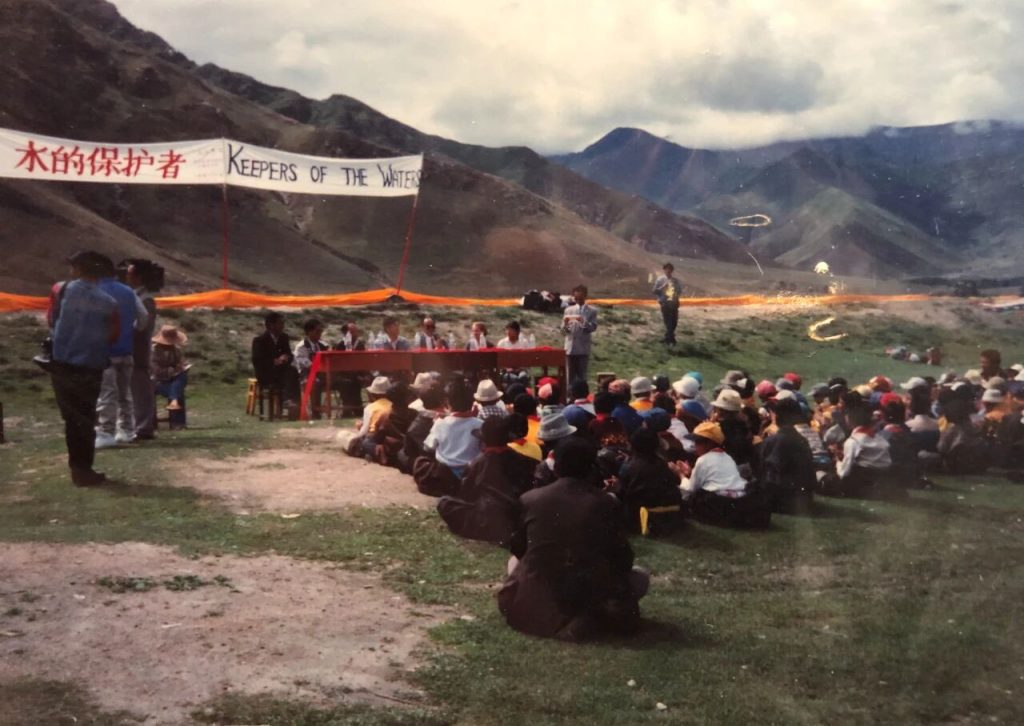
The Second “Guardians of Water” Art Event Kicks Off, Lhasa, 1996
UP-ON: After 31 years, what detail from the event stands out most in your memory?
Betsy: What stands out most in my memory is the Chinese artists’ high level of collaboration and enthusiasm. I remember how they figured out a way to distribute the $7,000 fairly, and I also remember their tremendous creativity and how they kept coming up with new ideas. The government became very excited about this, which ultimately led to the creation of Living Water Park. That was a very important moment. The artists’ achievements are inseparable from our eventual success in obtaining the permit to move forward with the park’s construction. There’s a really great story behind all of this.
The project in Lhasa was still ecology-related, and many artists participated. We stayed there for three weeks, and then spent three to five days exhibiting our work along the banks of the Yarlung Tsangpo River. The artists created some very interesting pieces—for example, Yin Xiuzhen, Song Dong, and Dai Guangyu. Dai Guangyu prayed facing the river, while Song Dong gathered many stones—about three hundred, I’d say. He photographed each stone as he held it in his hand, the process of throwing them, and the moment they struck the river’s surface. He carved the Chinese character for “water” onto a large, beautiful piece of wood, as if to stamp it upon the river. They also held a discussion in Chinese—one I didn’t attend—about the work of the artist Datong Dazhang (Zhang Shengquan). It felt like a philosophical debate: Can you carry a sheep on your back? Should you slaughter the sheep? For them, it was a very meaningful discussion.
It was when I was recreating a dried-up riverbed using handmade paper that I first realized how little environmental awareness people have. I saw that most people have almost no connection to what is happening, and that important environmental information is being suppressed. For the Lhasa project, I wanted to focus on artists living in Lhasa. However, once word got out, many other Chinese artists also came to Lhasa, treating it as a place to “have some fun.”
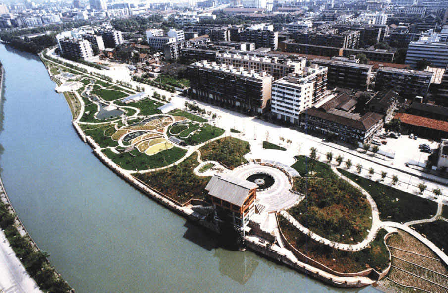
Aerial View of Living Water Park
UP-ON: Your work consistently bridges art, science, and community engagement. In your view, art’s intervention in nature and public spaces is not a form of critique but rather a form of construction. How is this concept reflected in The Defenders of Water?
Betsy: I tell artists that they shouldn’t attack the government; instead, they need to create art that educates and celebrates. I don’t think criticism is effective. Criticism only instills fear and makes people feel ashamed—all governments use this strategy in different ways. I launched Defenders of Water not to criticize, but to bring people together to take action for the environment; this is the only way we can care for the Earth. Art can convey messages, inspire, and offer moments of hope. Science can provide data, but it remains limited to what can be proven. I love art, and I love science. I don’t think the two should be so strictly separated. The renowned scientist Diane Beresford-Kroeger has a brilliant take on this; I’ll send you a quote from her later.
UP-ON: More and more artists and art events are now focusing on ecological, local, and public issues. What advice do you have regarding this?
Betsy: I encourage artists to learn a little about science—what lives in the river, what’s polluting it, how old it is, and where it begins. People know very little about the bodies of water around them, but art can bring them back to the river and spark their curiosity. We need every possible approach. The beauty of art is that it requires no permission or justification; we are free to imagine, to try, and then to try again. Art can convey messages, inspire, and bring moments of hope.
Performance art can be anything—really, anything. All you have to do is decide, “I’m performing a piece.” I feel that the moment performance art enters a museum, it becomes something else. Nowadays, museums everywhere are staging performance art—but what does that mean? It means nothing; it really has no meaning. It’s a work of art, but what does it signify? Does it matter? What really matters? I always ask myself these questions. I know some people who go there to provide educational programs for children. These days, in some countries, if an artist does something like that, it’s considered their performance piece.
UP-ON: Shouldn’t this be displayed in an art museum?
Betsy: Can it be displayed in a museum? Can everything we want to preserve or find a safe place to store really be displayed in a museum? No. There was a great discussion at the Asian Art Archive. I completely agree with a Japanese artist: as soon as performance art enters a museum, it loses its power. The government doesn’t want artists to have that power either.
UP-ON: Do you have any advice for young artists?
Betsy: I have a friend who’s trying to create an urban wetland to demonstrate how to grow food on water—and how crops can still be grown even if the water level rises. She’s doing a great job. Her name is Mary Martinelli, and she’s an artist in Los Angeles. She runs a project called “Metabolism Studio,” where artists can apply for residencies and learn—it’s really interesting. A lot is happening in the U.S. right now because we’ve created such a mess. We’re just a small group of people, yet we’ve created such a huge mess. Maybe we should stop calling ourselves artists—I don’t know. Artists can imagine many things and accomplish a lot. But if we only think within the box, the box remains just a box. If we think about the entire planet, the whole Earth, let’s consider what we can do. That could be very beneficial—and it doesn’t have to be confrontational. Art doesn’t necessarily have to be about opposition; it can also be about simply living.
UP-ON: Thank you very much for agreeing to this exclusive interview. In addition to serving as an academic contribution to this Shanghai Documentation Exchange event, this interview will also be archived in the UP-ON Behavioral Art Archive.
Betsy: Thank you. It’s great to see you again.
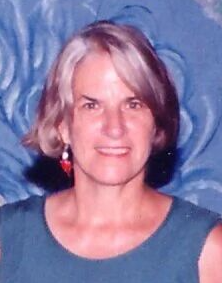
Betsy Damon, an American environmental artist, performance artist, and ecological activist, is the founder of the “Keepers of the Waters” project. She has long used art to connect with ecological conservation, encouraging artists, scientists, and the public to collectively focus on water conservation, and is known as a “practical visionary.” She founded “Keepers of the Waters” in 1991, a project that integrates public art, performance art, and water resource conservation. The project was implemented along the Funan River in Chengdu in 1995 and along the Lhasa River in Lhasa in 1996, inviting artists from China and abroad to collaborate on performance and installation works. These initiatives represented significant international site-specific art events in China during the 1990s, bringing ecological issues into the domestic avant-garde art scene. Among her best-known projects is the Living Water Garden in Chengdu (1998), the world’s first urban ecological park designed for water treatment. Combining wastewater purification, public art, and environmental education, it stands as a classic example of the integration of art and ecological engineering. Her early representative works include the performance piece 7,000-Year-Old Woman. Her book Water Talks was published in 2022, and she continues to engage in water-themed art, lectures, and exhibitions worldwide.
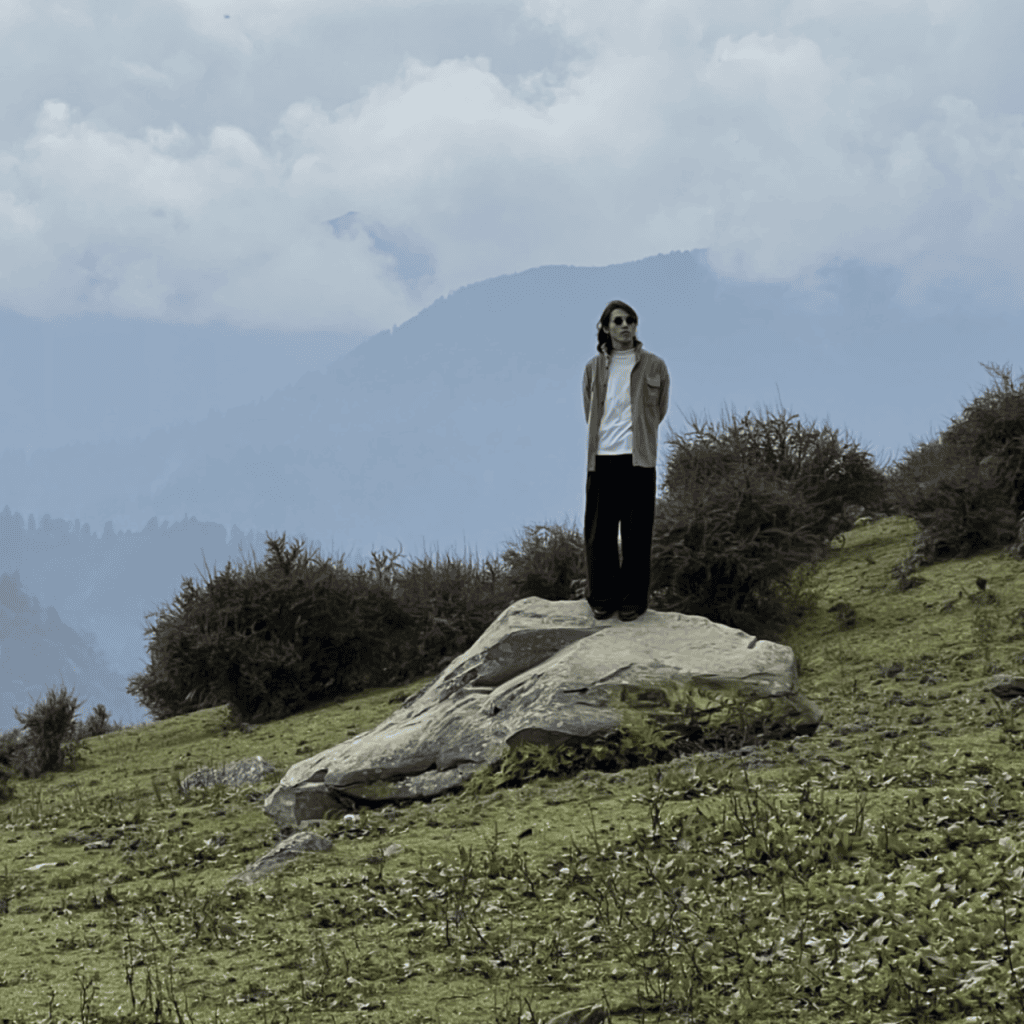
Shao Ye is an artist. His current social identity is that of an internet industry professional dedicated to artistic creation; he lives and works in Shanghai. In recent years, he has been exploring the boundaries of the “live” experience: traversing mountains and rivers, or walking through human society, using his body as a medium to continually deepen his “pseudo-theatrical” artistic practice. Some of his works are designed to span his entire life journey; he deeply cherishes the philosophy that “the artist himself is his greatest work.” He has been deeply involved in art projects such as the UP-ON International Live Art Festival, the In the Clouds International Live Art Festival, and Rebe Live Action, and his works have toured multiple countries and regions, including Southeast Asia, Argentina, and Moscow.

Project Title Sponsorship

Chengdu Shangcheng Design has been deeply engaged in architecture and spatial design for over two decades, consistently focusing on the relationships between architecture, nature, culture, and society. The firm has developed an integrated design practice encompassing urban planning, architecture, landscape architecture, and interior design. Its projects are located in numerous cities across China and span a wide range of types, including industrial parks, office buildings, cultural exhibition spaces, and residential spaces. With a focus on spatial value and user experience, Shangcheng Design is committed to providing clients with architectural and spatial solutions that combine foresight, aesthetic appeal, and practicality. The firm’s work has been recognized with numerous domestic and international awards, including the China Interior Design Awards and IFI International Interior Design Competition, the Architecture MasterPrize (AMP), the BLT Built Design Awards, the DNA Paris Design Awards, the Milan Design Awards, the London Design Awards, and the Architect of the Year Awards.