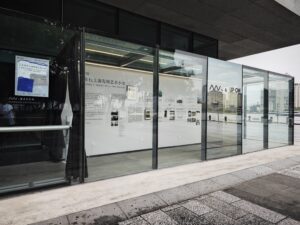
The “Research Room” section of the UP-ON Archive aims to revitalize archival materials through theoretical research, seminars, self-publishing, and other means, thereby fostering in-depth knowledge production. On June 17, 2026, the first project of the MAM & UP-ON Live Art Documentation Center, *Simple Techniques • Uncovering the Past*, was launched in Shanghai. The theme of the first documentation exchange event drew directly from Professor Zhao Chuan’s book *A Brief History of Radical Art: Chronicles of 1980s Shanghai*. We interviewed Professor Zhao Chuan about the origins and subsequent developments of this book. Due to the length of the interview, we have divided it into three parts—Part 1, Part 2, and Part 3—based on content. The text has been reviewed and approved by the interviewee.
Interviewee: Zhao Chuan
Interviewer: Shao Ye
Date: March 31, 2026
Location: Zhao Chuan’s Studio, Shanghai
Shao Ye: Your *A Brief History of Radical Art in Shanghai* reflects a unique personal perspective in its writing and offers a vivid account of the regional cultural landscape.
Zhao Chuan: The art scene in Shanghai at that time was deeply intertwined with the city’s history. Many members of the generation from the 1920s and 1930s studied abroad, following two main paths: one to Europe and the other to Japan. They brought back modernism, including movements like Surrealism. In the decades that followed, those who returned from Europe tended to occupy a more dominant position, while those who returned from Japan faced greater challenges. Overall, these art forms remained quite marginal. We could only engage in marginal activities. Radical endeavors are never straightforward, and this was deeply tied to my youth. I saw no need to achieve so-called objectivity; I simply sought my own narrative perspective and the approach that suited me. I am neither an institution nor an academy—I just pieced it all together on my own.
Shao Ye: Your narrative perspective—which is more personal and intimate—may not have aligned with the mainstream official demands of the time, but within the broader context of art history, it is incredibly valuable. This also aligns with the concept of “micro-history” and fits well with the cultural environment of Shanghai relative to other regions that you mentioned earlier. For instance, compared to the 1985 New Wave in Beijing or other regions, what unique characteristics does Shanghai possess that are worth your discussion?
Zhao Chuan: In my view, the “85 New Wave” was a grassroots uprising of that era, taking place within the broader context of China. As the saying goes, “A single spark can start a prairie fire”—in reality, there were hundreds or even thousands of diverse artistic events and exhibitions occurring in the years around 1985, which collectively formed what came to be known as the “movement.”
Shao Ye: It spread across the country.
Zhao Chuan: Exactly. Beijing is the political center; whatever happens in Beijing often becomes a national issue, while areas outside Beijing are considered “the provinces.” During the ’85 period, what actually happened in Beijing was limited, and the number of artists involved was also limited. But Beijing was a hotbed of discourse. Later on, many of those who developed theoretical frameworks—those who held the reins of discourse—were graduates of the Central Academy of Fine Arts. That’s why I wrote *A Brief History of Radical Art*—because, as I understand it, the ’85 movement was grassroots; it was a vibrant phenomenon unfolding in various regions. It emerged spontaneously during that historical period—following the Cultural Revolution, the Reform and Opening-Up, and the Ideological Liberation Movement—as a very natural and free artistic response. It didn’t belong to any single city; it took place across the whole of China. Shanghai had its own context, so its response to the overall movement was different. At the time, the mainstream approach within the ’85 Movement was to create works that were more symbolic and allegorical. Shanghai painters, however, generally attempted to respond to politics with a depoliticized attitude—which I view as a different kind of politicization. They sought to dissolve those elements within their canvases, which is why abstract painting was highly regarded for a time and gradually became prevalent. Some art theorists who came to Shanghai couldn’t understand this; they felt Shanghai was lagging behind, failing to actively depict political symbols or make bold, grand statements. On the contrary, Shanghai artists—heavily influenced by Western art history—sought to push the boundaries even further. Of course, if we were to discuss individual artists in detail, they were actually quite different; each had their own sense of responsibility.
Shao Ye: So, it might actually be better to focus on the individual level. These individuals gradually shaped the distinctive characteristics of Shanghai—or Yunnan, Beijing, and other regions—which together formed the broader cultural and artistic landscape of that era. I think I understand what you’re saying about Shanghai artists during that era—they tended to express their radical stances through depoliticization and anti-political approaches, rather than through the mainstream emphasis on political opposition.
Zhao Chuan: Of course, we can’t generalize; artists are still very much individuals, so we have to look at their specific creative work from that time. There were also some artists who produced critical imagery and responded using symbolic language.
Shao Ye: For example, in the late 1980s, a lot of Political Pop emerged in Shanghai.
Zhao Chuan: Right.
Shao Ye: Could you please introduce some of the most representative artist groups—or key artists—of that era as depicted in this book?
Zhao Chuan: I feel that when we talk about “representativeness”—or “iconic styles”—it simultaneously obscures a great deal. I wonder if we have the ability to set aside those representative elements and truly uncover certain textures that can reveal the artists’ thoughts and methods within a specific context. Because “representativeness” has been constantly shaped and amplified, its obscuring effect has grown increasingly powerful. This is also a realization I’ve had upon revisiting these events and people decades later. History is a process of simplification. In Rembrandt’s era, there were likely many artists creating works in a similar style or with similar sensibilities, yet today we know of only one or two. A young art writer named Liu Chengzhen wrote about the history of performance art in the 1980s, mentioning an exhibition in 1986 called “Creative Action.” This exhibition was organized by me and a few of my classmates, but it is rarely mentioned—it’s always been oversimplified in favor of more “representative” figures and events. As a result, it’s never been considered particularly representative. Yet if you examine it closely, you’ll discover many fascinating aspects. I’m not suggesting we should examine this particular exhibition, with which I’m familiar, but rather that when we look back today and discuss “representativeness,” might it be possible to engage in more meticulous work to explore certain aspects? This is also something I would reconsider if I ever had the opportunity to return to writing.
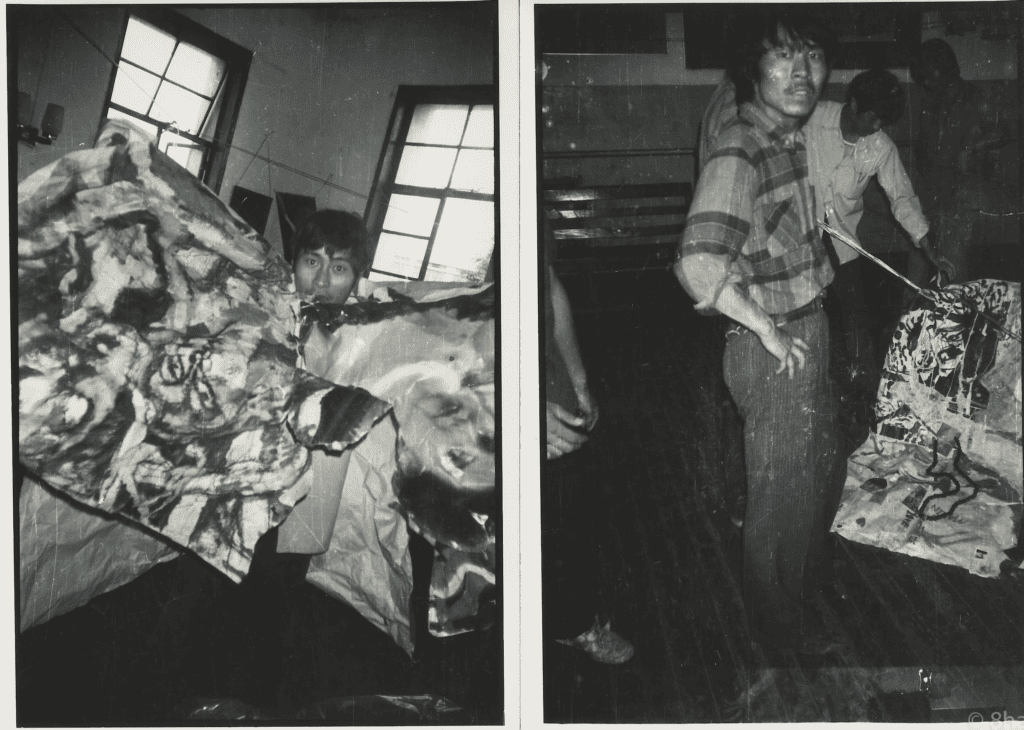
Scene from the opening of “Creative Action,” 1986
Shao Ye: You’re right. Indeed, as soon as we mention “representativeness” or “core,” these terms are already one-sided and obscure a great deal.
Zhao Chuan: Right, and this notion of “representativeness” is becoming increasingly “representative.” That is to say, after 30 or 40 years, a few have achieved fame and success, a few have passed away, a few have moved abroad, and a few have stepped back from the field—yet those who have achieved fame and success now come to represent everything.
Shao Ye: Let’s set aside this so-called “representativeness” or “core events” for now. We can broadly describe things by time period—for example, what works or activities in the early, mid, and late 1980s best fit the description of “radical.”
Zhao Chuan: For specifics and accuracy, we still need to go back to the written record—to the books. It seems to have been the “Twelve Artists Exhibition” in 1979—it’s often said that this exhibition predated Beijing’s “Stars Art Exhibition” by several months. Organized by Shanghai artists themselves after the Cultural Revolution, rather than by the Artists Association or any official institution, this art exhibition was highly pioneering. Symphony music was even played in the exhibition hall. I haven’t seen this exhibition myself, but one of my art teachers from when I was a teenager was among the participating artists.
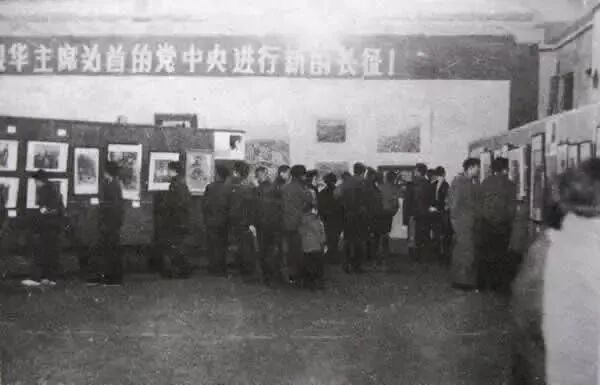
Group photo from the opening of the “Twelve Artists Exhibition,” 1979
Then came the “Ten-Artist Exhibition” in 1983, which marked the first time artists proposed holding a purely abstract exhibition. It was shut down after just one day, and some participants later faced disciplinary action. At the time, abstract art was considered a bourgeois form of expression, directly linked to ideology and deemed politically unacceptable. As I recall, after participating in this exhibition, Zhang Jianjun was assigned to work as a security guard for half a year.
Later, in 1985, the “Six-Person Exhibition of Modern Painting”—featuring Yu Youhan, Qin Yifeng, Feng Lianghong, Ding Yi, Wang Guqing, and Ai Dewu—was held at the Fudan University Student Club. This was one of the few exhibitions at the time to include the word “modern” directly in its title. Looking back today, it doesn’t seem like a big deal, but at the time it was quite unusual—a very forthright expression of our convictions. The term “modern” could be associated with the bourgeoisie at any moment. Later, in June 1986, we organized the “Creative Action” exhibition at the Fudan University Student Club, featuring artists such as Tang Guangming, Zhao Chuan, Yang Xu, Zhou Tiehai, and Niu Honghua. We hauled a truckload of materials over from the Academy of Fine Arts—recycled scrap wood, old monitors, tables, chairs, and so on—and improvised an installation right there in the exhibition hall. At the time, we didn’t even know what an “installation” was; the term hadn’t been coined yet. Back then, in the studios and hallways of the academy, we were building “installations” every day. Unlike today, when I’ve returned to painting, back then we were trying to break free from all that—to break free from the discipline of the academy.
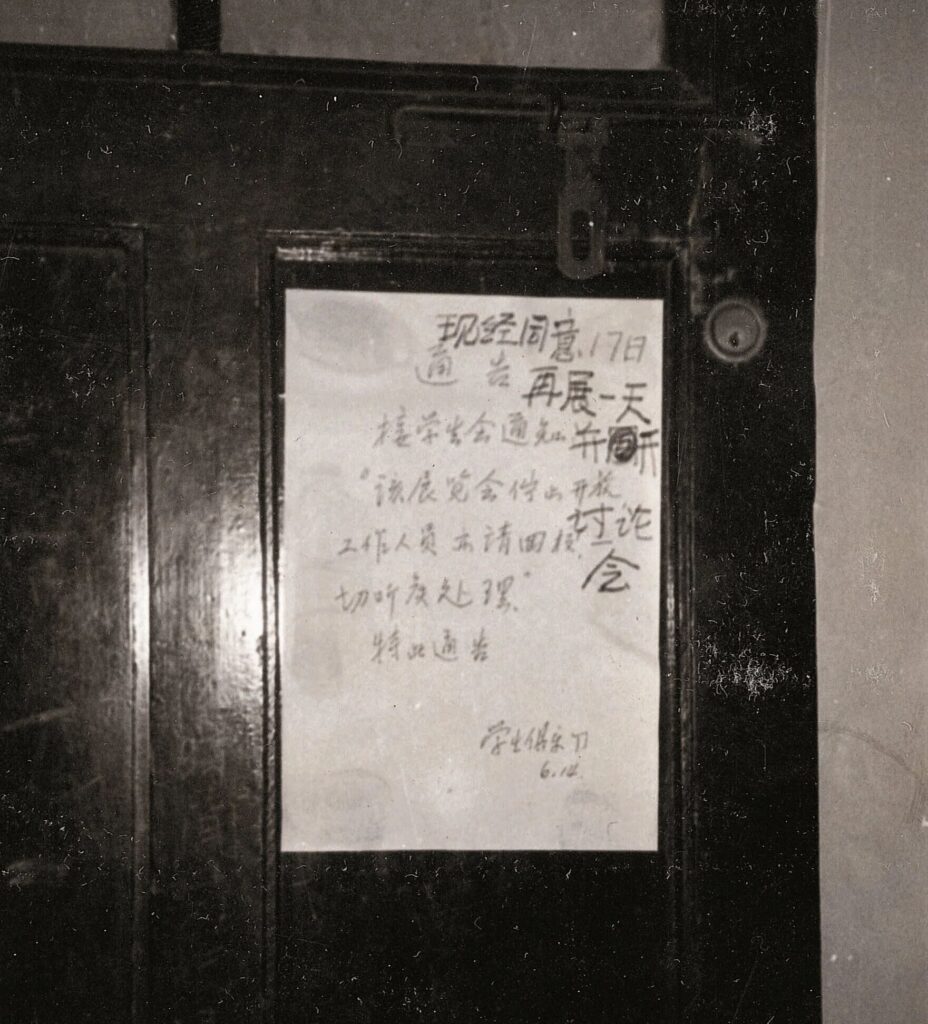
“Creative Action” Was Shut Down in 1986
That year also saw the “Convex and Concave Exhibition.” There were many exhibitions during that period, such as “Black-White-Black” by Wang Ziwei and his group—a highly conceptual work featuring 800 or 1,200 black squares, which was also the title of the piece. The older generation of abstract painters tended to adopt a lyrical style. Their work was influenced by Expressionism, Surrealism, and the like. But by the time Wang Ziwei and his group created “Black-White-Black,” it was already American art—with entirely different origins and artistic threads. Where did American art come from? After 1949, contact with the West gradually ceased, and we could no longer access overseas publications—except for a few from the socialist bloc. The Western art books that remained didn’t even cover abstract art; they were mostly Post-Impressionism, Fauvism, and early Modernism. After the Reform and Opening-Up, in the mid-1980s in Shanghai, it was rare but possible to come across art books from the 1960s and 1970s in the U.S.
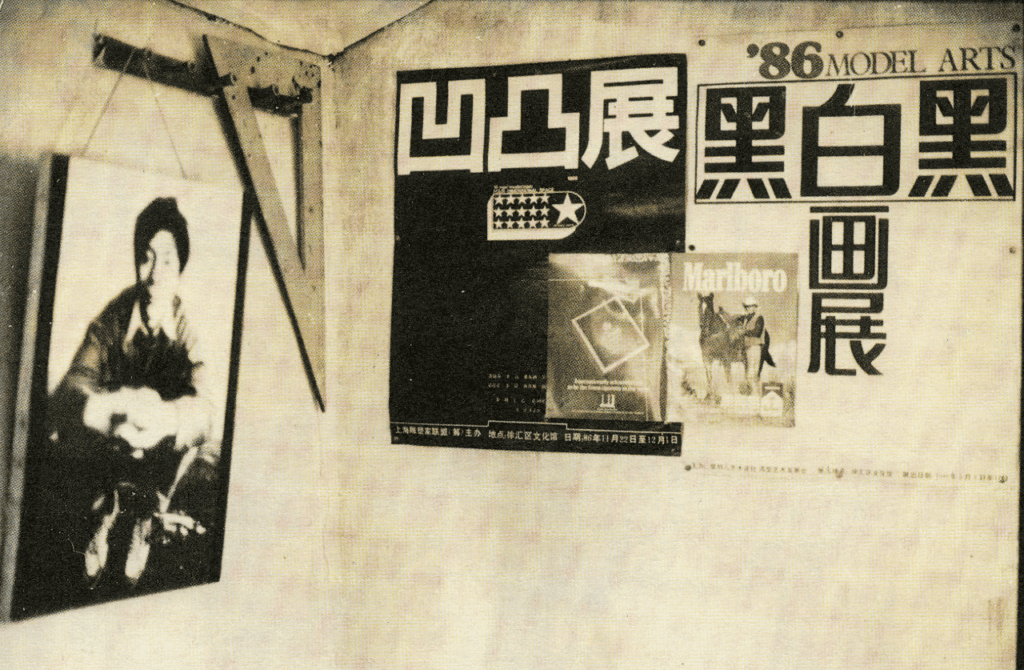
Posters for *Black, White, Black* and *The Concave-Convex Exhibition*, 1986
So, as mentioned earlier, there is an information gap, and radicalism sometimes relies on this to stimulate creativity. Because art cannot be separated from the exploration of form—this is why, as I mentioned earlier, I wanted to use “Borrowing from Others” as the title of the book. When discussing radicalism, we must address its spiritual essence—what lies within? Ultimately, your spiritual core must find a shell. The art education available in China at that time could not provide what was needed for those souls to find an external shell.
At the time, the creative methods introduced by Kishchakov’s drawing classes and Maximov’s training programs actually became a form of discipline and constraint. In the 1970s, some artists in Shanghai referred to themselves as “outsiders,” while those who joined organizations like the Artists Association were considered “official painters”—which was actually quite impressive.
They adopted an “uninvolved” attitude toward the mainstream art scene—though in reality, it may have been that they simply couldn’t “get involved.” For example, those from families with “undesirable” political backgrounds were barred from attending universities or specialized art schools. As a result, some turned to private art studios to study painting. Private studios were a tradition dating back to before the Liberation, but they gradually disappeared after the 1970s.
At the time, the official mainstream art scene advocated for figurative works with political themes, as only such works stood a chance of being exhibited. Meanwhile, the private studios taught students to paint landscapes and still lifes—subjects that the authorities looked down upon as expressions of a bourgeois lifestyle and deemed unfit for the mainstream art world. Consequently, these artists were marginalized from the start, engaged in activities on the fringes of the art world.
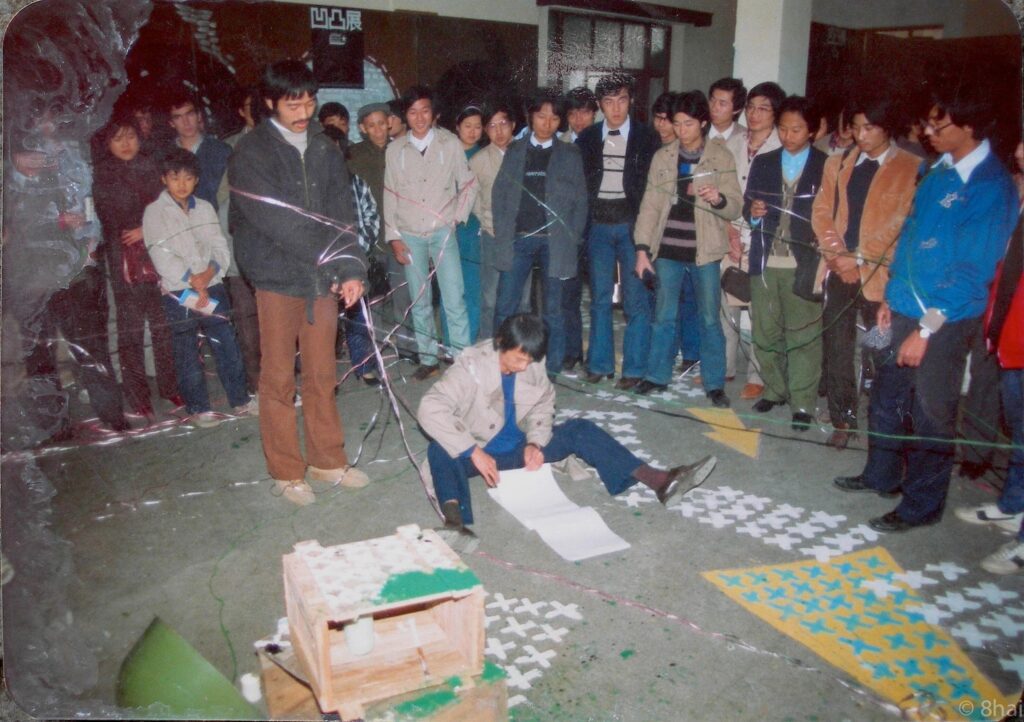
Scene from the opening of the “Convex and Concave Exhibition,” 1986
Shao Ye: So we ended up in the “opposition.” At the time, there seemed to be an official term for it: “eliminating bourgeois spiritual pollution.”
Zhao Chuan: The term “opposition” and that self-identification in Shanghai emerged mainly in the late 1970s and early 1980s. “Eliminating bourgeois spiritual pollution” was a political campaign that took place around 1983. After the Cultural Revolution ended, change was inevitable, but how should it happen? How much reform and opening-up should there be, and in what direction? It was like an elastic band back then: if it loosened even a little, some people would object, asking, “How can you do this? How can you listen to songs from Hong Kong and Taiwan? How can you wear American-style jeans?” So the reins would be tightened again. But another group would argue, “Aren’t we supposed to open up and emancipate our minds?” So it was constantly fluctuating. By early 1987, there was another campaign against “bourgeois liberalization”—it was a constant cycle of loosening and tightening. Radical art existed right on the edge of this tension between loosening and tightening: when things were loose, we’d catch our breath and create something; when they were tight, we’d get a slap on the wrist—that’s how it was.
Shao Ye: You mentioned earlier that among those Shanghai artists back then, the more radical ones would label themselves as “wild.” From what I understand, the mainstream artists in Shanghai at the time mainly came from two camps: the Shanghai Theatre Academy and the then-School of Arts and Crafts; another group consisted of the artists you just mentioned who studied in private studios.
Zhao Chuan: I don’t think there were any “schools,” nor was there any real opposition between them. In the late 1970s and early 1980s, many painters engaged in formal experimentation—the more radical ones—were, just like in Beijing, a mix of those with academic backgrounds and many amateurs. Take Feng Guodong from Beijing, for example, or Gong Jianqing, whom I discuss in my book—they were both factory workers. By the 1980s, however, the art scene was dominated by people who had graduated from art academies. But in the 1970s, many artists came from diverse backgrounds because the pathways to employment and further education were different back then. Art schools in Shanghai had their own unique characteristics; after 1949, their institutional status remained relatively low.
Shao Ye: For example, compared to the Shanghai School of Arts and Crafts, did the Shanghai Theatre Academy perhaps hold a slightly greater degree of influence at the time?
Zhao Chuan: It’s difficult to speak directly about “influence.” But graduates of the School of Arts and Crafts held associate degrees, while those from the Academy of Dramatic Arts held bachelor’s degrees. Many of the latter had already secured positions as professional “official” artists at the Shanghai Institute of Oil Painting and Sculpture and the Shanghai Art Museum, whereas graduates of the School of Arts and Crafts could not gain entry into these institutions. They were more grassroots in this city; many went on to work as graphic designers in factories and commercial enterprises. The Academy of Dramatic Arts was located in the heart of Shanghai’s downtown area, near Jing’an Temple, while the School of Arts and Crafts was situated on the outskirts of Jiading, in the suburbs of Shanghai. In the mid-1980s, when I visited a friend there, there wasn’t even a proper sign at the school gate—just a sign left over from the Cultural Revolution that read “Socialist University.” Weeds were growing rampant inside, and a group of teenage boys and girls, aged seventeen or eighteen, were coming of age in this school that lacked any sense of authority.
Shao Ye: But it seems that some of the artists who emerged from the School of Arts and Crafts have actually gained a high international reputation?
Zhao Chuan: Professor Yu Youhan was their mentor. In that era, there were a few older artists—one was Yu Youhan, and another was Li Shan, a teacher at the Shanghai Theater Academy. A group of younger artists gathered around them, influenced and encouraged by them, realizing that art could be approached in this way.
Shao Ye: Your book also mentions Mr. Yu Youhan and Mr. Li Shan extensively, including the group of artists they mentored.
Zhao Chuan: They were extremely influential in the ’80s and ’90s. But starting in the late ’80s, overseas art dealers began to get involved, and Political Pop, as a subject matter, started to become commercialized. So by the early ’90s, some of the more radical artists were strongly opposed to these collaborations with the market; they wanted to continue making pure art.
Shao Ye: So by the early 1990s, some exhibitions specifically excluded Political Pop.
Zhao Chuan: Because they felt those works had already been commercialized. Of course, looking back now, I realize things weren’t quite that simple. Especially with some of the realist works Mr. Yu painted related to the 1950s and 1960s—even though they were guided by art dealers, they still stemmed from his own life experiences and were a response to the times. I remember seeing some of them overseas; they were quite outstanding.
Shao Ye: In your book, you mentioned that Yu Youhan and Li Shan were among the most influential and important figures of that era. Aside from them, are there any other artists you consider to be significant?
Zhao Chuan: Yes, there are a few others, like Yang Hui. He’s a younger generation than Yu Youhan—a few years older than me—and he’s also quite influential. When we formed the “M Art Group,” he was essentially our spiritual leader—partly because of his artistic vision, and partly because of his personal charisma. Once, the Artists Association held a meeting for young artists, and we snuck in and sat in the back. Yang Hui found it boring, so we kept smoking and got the people around us to smoke too, creating a cloud of smoke until everyone was so choked they couldn’t stand it anymore—haha. There were also others who wielded their own unique influence—for example, Zhang Jianjun at the art museum. They had more abundant resources, which allowed you to see some truly distinctive works even within the museum.
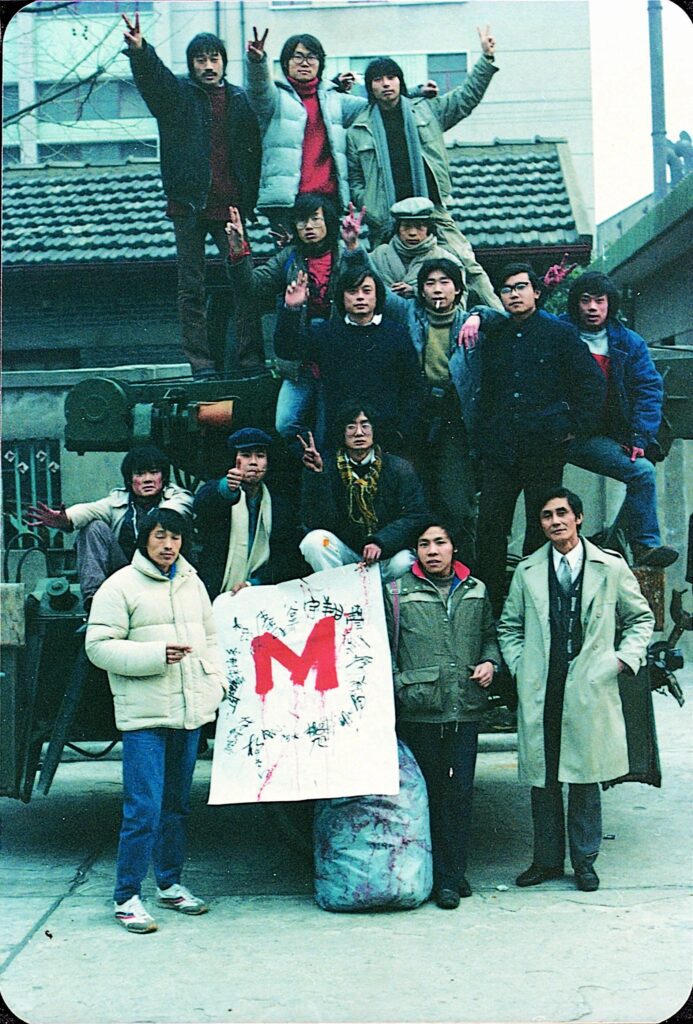
Group Photo of Artists from the “M Group Conceptual Art Performance Exhibition,” December 1986 (Yang Hui, Song Haidong, Zhao Chuan, Hu Yuelong, Li Zuming, Gong Jianqing, Shen Fan, Tang Guangming, Yang Xu, Wang Guqing, Weng Liping, Fu Yuehui, Qin Yifeng, Yang Dongbai, Zhou Tiehai)
Shao Ye: From today’s perspective, it might be seen as a great example of event-based art or performance art.
Zhao Chuan: Back then, there were generational differences and distinct artistic circles. Later on, some of these artists began to adopt more radical stances. When we were planning the “M” exhibition, someone said, “Well, I could kill two chickens right there on the spot.” He thought it would be thrilling—a way to go off the beaten path—and wanted to achieve a more intense effect.
Shao Ye: These more radical forms of performance art—or conceptual art, if you will—didn’t emerge until the mid-to-late 1980s. In the early days, the focus was still largely on abstract art.
Zhao Chuan: Right. Before we did *M*, we organized the “Creative Action” exhibition, and we’d already wanted to move away from painting. For some, these explorations were a path toward new concepts and insights; for others, it was just a experiment—they’d try it out and then go back to painting. We were all young back then; while making art, there was also a certain desire to seek thrills.
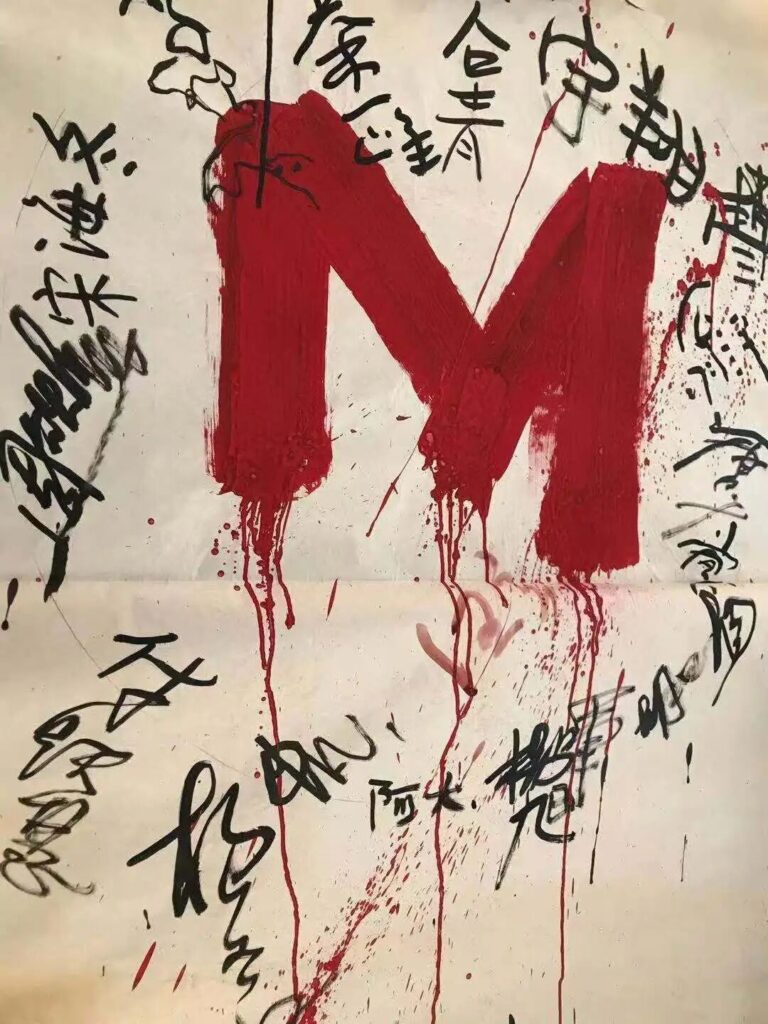
Poster for the “M Group Conceptual Art Performance Exhibition,” 1986
Shao Ye: Actually, it’s the same today. Many people—for example, those involved in theater or performance art—might just dip their toes in, try it out, and then walk away.
Zhao Chuan: I was only 19 back then, studying at the Affiliated High School of the Academy of Fine Arts—essentially a high school student—naive and inexperienced.
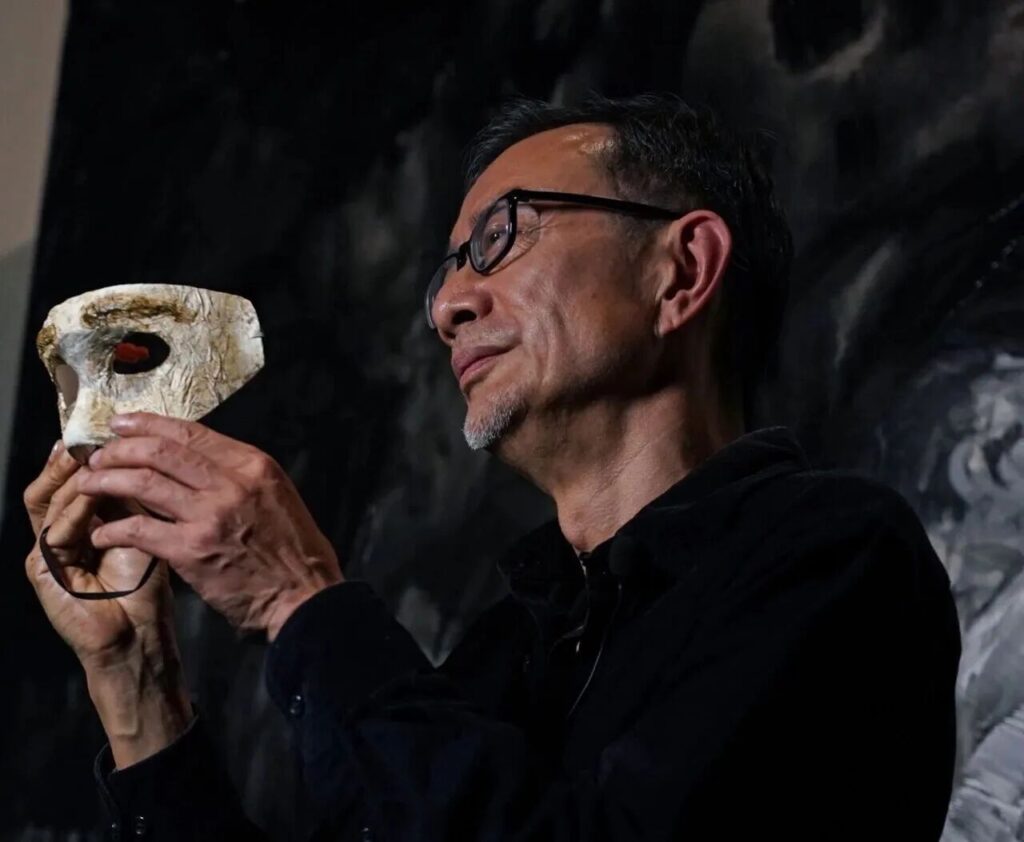
Zhao Chuan, born in Shanghai in the 1960s, creates works spanning theater, literature, film, and contemporary art. He is a co-founder of the independent theater troupe “Caotai Ban,” whose collective theater productions include *The World’s Factory* (2014) and *A History of Youth* (2023). He is dedicated to exploring how art and social practice intertwine—examining the roles of the individual, the collective, the body, critical thinking, documentation, and poetry within this interplay. His publications include *A Brief History of Radical Art* (2015) and *The Theater That Never Gives Up* (2021).
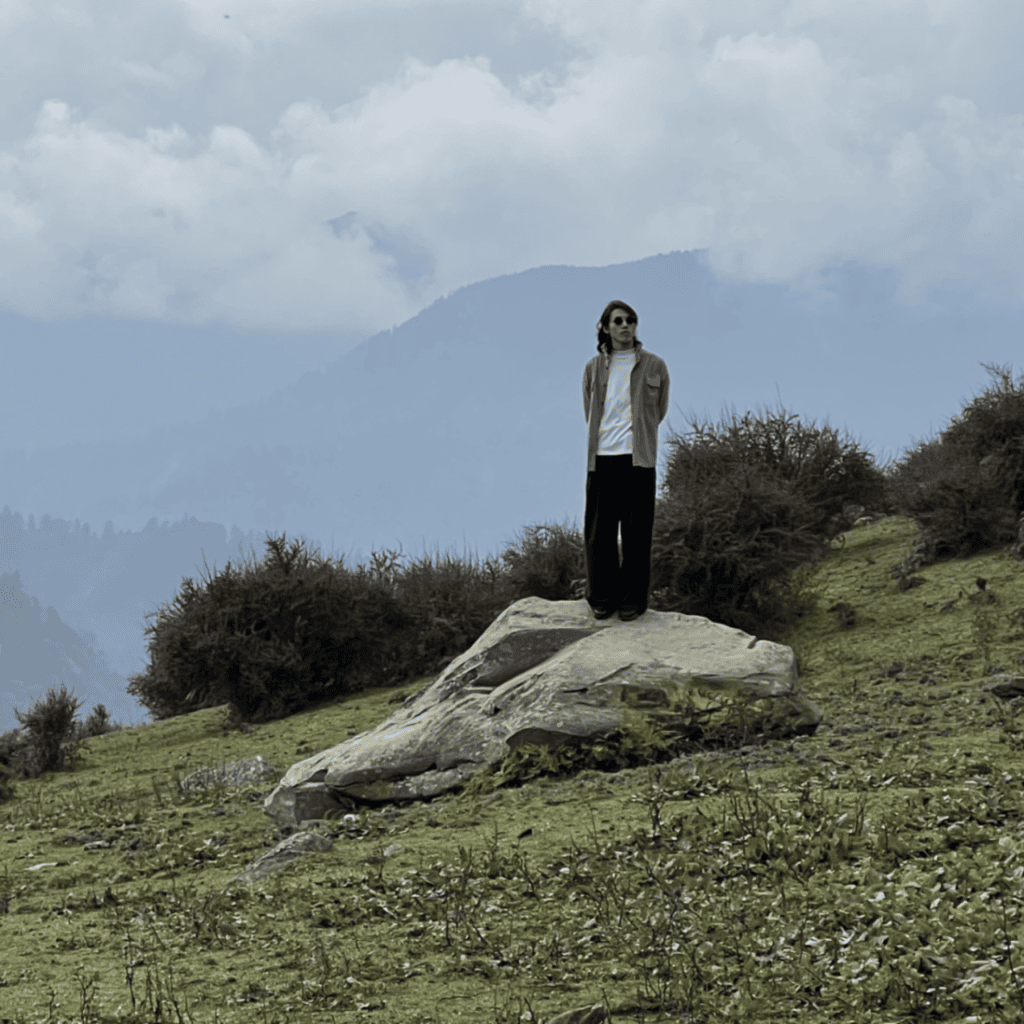
Shao Ye is an artist. His current social identity is that of an internet industry professional dedicated to artistic creation; he lives and works in Shanghai. In recent years, he has been exploring the boundaries of the “live” experience: traversing mountains and rivers, or walking through human society, using his body as a medium to continually deepen his “pseudo-theatrical” artistic practice. Some of his works are intended to span his entire life journey; he deeply cherishes the philosophy that “the artist himself is his greatest work.” He has been deeply involved in art projects such as the UP-ON International Live Art Festival, the In the Clouds International Live Art Festival, and Rebe Live Action, and his works have toured multiple countries and regions, including Southeast Asia, Argentina, and Moscow.

Chengdu Shangcheng Design has been deeply engaged in architecture and spatial design for over two decades, consistently focusing on the relationship between architecture, nature, culture, and society. The firm has developed an integrated design practice encompassing urban planning, architecture, landscape architecture, and interior design. Its projects are located in numerous cities across China and span a wide range of types, including industrial parks, office spaces, cultural exhibition venues, and residential spaces. With a focus on spatial value and user experience, Shangcheng Design is committed to providing clients with architectural and spatial solutions that combine foresight, aesthetic appeal, and practicality. The firm’s work has been recognized with numerous domestic and international awards, including the China Interior Design Awards and IFI International Interior Design Competition, the Architecture MasterPrize (AMP), the BLT Built Design Awards, the DNA Paris Design Awards, the Milan Design Awards, the London Design Awards, and the Architect of the Year Awards.