The “Research Room” section of the UP-ON Archive aims to revitalize archival materials through theoretical research, seminars, self-publishing, and other means, thereby fostering in-depth knowledge production.
From Gestural Reenactment to Digital Archives:The Politics of Memory in Myanmar Performance Art
(Text and Photos: Liu Guicheng)
Within the field of performance studies, attention to the performing arts of Southeast Asia—and Myanmar in particular—has long remained relatively limited. This can be attributed, in part, to Myanmar’s status as a Third World country. In contrast, there has been a greater volume of research on the developed Southeast Asian nation of Singapore. Supported by a stable political climate and the resources of Singapore’s top-tier universities, the National Library of Singapore provides a wealth of materials on Singaporean performance art. At the same time, the National Gallery of Singapore has incorporated Singaporean performance art—as a mainstream art form of the 1980s and 1990s—into its curatorial programs, thereby providing researchers with a wealth of reference materials; On the other hand, due to its relatively hot climate and strict political censorship, Myanmar’s performance art has not left behind a great deal of documentation, which has also imposed certain restrictions on artists’ creative activities—particularly on organized and institutionalized art movements. In comparison, Thailand, another Southeast Asian country with a well-developed performance art scene, although also subject to artistic censorship, benefits from a relatively mature art ecosystem—including the Southeast Asian Art Biennale, the Bangkok Art and Culture Center, and its integration with the international art market—has achieved a relatively high degree of institutionalization in performance art, with a correspondingly greater abundance of documentation within various art institutions. In contrast, Myanmar has not developed a relatively mature art scene under its repressive political environment. This makes research on Burmese performance art particularly challenging. To date, the most systematic study of the history of Burmese performance art comes from Nathalie Johnston, whose master’s thesis was based on field research into Burmese performance art.
At the same time, Burmese performance artists themselves are seeking a balance between the ephemerality and permanence of performance art. Ephemerality refers to the immediacy and transience of a performance, while permanence provides a source for the future history and research of performance art through historical records and archival resources; more importantly, it serves as a means to combat oblivion. In the context of Burmese performance art, the oblivion of a performance is not merely a natural ontological attribute; it is also a political adaptation strategy under severe political censorship and a means of effective political critique through the ephemeral nature of performance art. However, the political expressive aspirations of Burmese performance art actually create a paradox with its nature as a performance. On the one hand, the political expression of performance art requires public engagement, necessitating that as many people as possible be exposed to the performance in order to form a broad cultural memory; on the other hand, the inherent ephemeral nature of performance art imposes clear temporal and spatial limitations, making it difficult to achieve universality.
Based on this paradox between performative memory and forgetting, this paper analyzes two primary memory strategies in Myanmar’s performing arts: gestural reenactment and digital archiving. Gestural reenactment continuously reshapes and renews memory through bodily repetition and variation within new political contexts. Meanwhile, with the advancement of globalization and digital technology, digital archiving has provided new avenues for the dissemination and preservation of memory in Myanmar’s performing arts, but it also carries the risk of “de-gesturalization” of performance itself and its absorption by art institutions. By examining the practices of Burmese performance artists such as Moe Satt, Htein Lin, and Chuu Wai, this paper reveals how Burmese performance art seeks a balance between forgetting and memory, presence and absence, and corporeality and mediation.
I. The Politics of Performance: Forgetting as an Adaptive Strategy
In current Western scholarly discussions on performance, an examination of performance ontology offers a discourse on the impossibility of remembering performance. This ontological examination is also grounded in a broad conception of performance. On the one hand, performance theorists adopt an analytical approach to emphasize that “as an art form, performance lacks a unique medium,” thereby highlighting its presentness; on the other hand, performance studies also stress that “presentness, immediacy, agency, embodiment, and event are, rather than defining characteristics of our objects of study, the core issues of our discipline,” as performance studies scholar Peggy Phelan articulates in her seminal exposition on the ontology of performance: “The sole life of performance lies in the present moment. Performance cannot be preserved or recorded, nor can it otherwise participate in the circulation of representation: once this is done, it becomes something other than performance.” The ontological relationship between performance and presence and embodiment constitutes the characteristic that distinguishes performance from other practices.
A key issue raised by the “immediacy” and “presence” of performance is that performance resists being recorded or archived; once a performance is no longer “immediate,” it ceases to be a performance. Viewed through this ontological lens, performance is constantly evading its own persistence, while research on performance can only ever revolve around its remnants. Remembering performance seems impossible. Hannah Arendt, in emphasizing the isomorphic relationship between politics and performance, also recognized the problem of performance’s persistence—particularly its demands on the body and presence—which prevent performance itself from fulfilling the function of memory. The function of memory is thus entrusted to texts; memory constitutes a behavior unique to human society, and through memory, literature and history are formed to counteract human forgetfulness. An individual’s life history differs from the homogeneity and inevitability of biological life; it is constituted by action and discourse, and thus these elements that make up life history are also endowed with mortality. The way to counteract this mortality is through the textual memory of poets and historians.
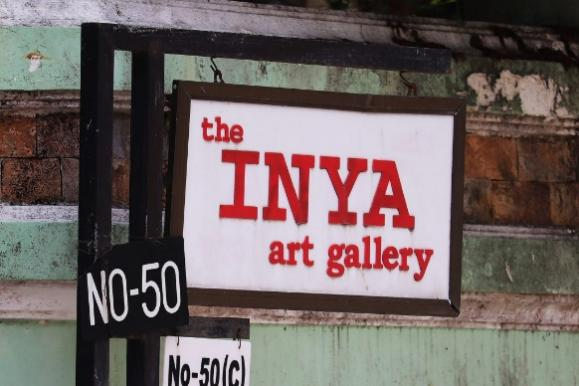
The political strategy of contemporary performance art in Southeast Asia, however, involves political resistance through forgetting. This differs from Arendt’s perspective, rooted in Western history, which views the city-state as an institutional safeguard for performance, where performance and politics maintain a clear relationship of representation. Looking back at the history of performance art in Myanmar, although its development has been influenced by Western art, it differs from Western performance art, which stems from artistic experimentation and dissatisfaction with the art establishment. The earliest emergence of performance art was directly linked to political events, and in Myanmar, performance art serves as a means for artists to spontaneously critique current sociopolitical realities through the form of “performance.” On the one hand, Burmese artist Mo Sa traces the history of Burmese performance art back to the country’s “8888 Uprising”—a large-scale pro-democracy movement led by students and brutally suppressed by the military, which left an indelible mark on the nation’s collective consciousness. The key to this narrative choice lies in the fact that the emergence of Burmese performance art was not directly linked to political events; rather, it was in the 1990s—following those events—that the introduction of Western art books and the establishment of the Inya Art Gallery provided institutional support for emerging artists. It can be said that, within this narrative, Burmese performance art is deeply intertwined with the country’s political reality. On the other hand, since the “8888 Democracy Movement” of 1988, Myanmar has been under prolonged military rule and a strict censorship regime. This repressive political environment has profoundly influenced artistic creation, exposing enduring art forms to the risk of censorship and prohibition.
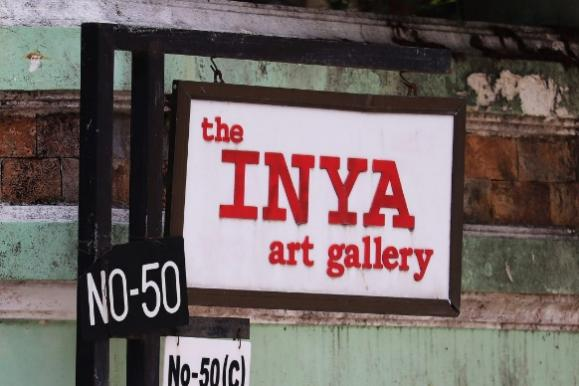
Inya Art Gallery
https://aura-asia-art-project.com/en/galleries/illuminated-protected-and-nurtured-art-in-the-dark-era-inya-gallery
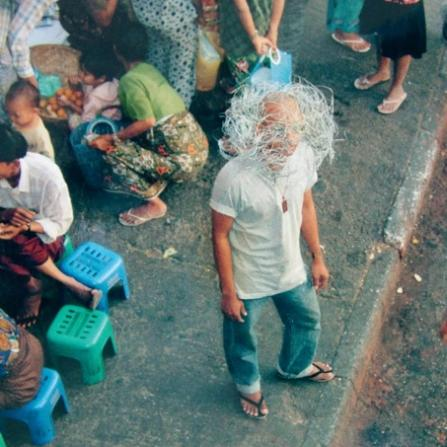
Photo: The artist Nyein Chan Su performing on a sidewalk in Yangon. Image: Nyein Chan Su (NCS), On the Road, 1997, performance, Yangon, Myanmar.
During the 1988 military coup, the new leader Saw Maung and the new political party, the State Law and Order Restoration Council (SLORC), seized power and reinstated martial law. In 1989, the SLORC amended the 1962 Printers and Publishers Registration Act to ban “sensitive” topics and increase fines for violations. For Burmese artists seeking to express political views through art, abandoning text—including any form of art with a lasting presence—became a necessity, as such works faced strict political censorship. This not only prevented artists’ works from being exhibited but also put their lives at risk. Artist Htein Lin was imprisoned as a political prisoner from 1998 to 2004. During his six and a half years in detention, he was not allowed to paint, but managed to secretly create hundreds of paintings by using white cotton prison uniforms—stained with lighter fluid, syringes, or his own hands—in place of paintbrushes. During his political exile, due to a lack of art supplies, he was forced to turn to performance art as a means of artistic expression. Consequently, artists have chosen to use performance art for political resistance largely because of its ephemeral nature: a performance can only occur in the present moment and cannot be captured or authentically recorded; yet, it is precisely in this fleeting occurrence that its political significance is generated. This ephemeral nature makes performance a powerful weapon for artists’ political protest. Although Burmese authorities still require performance art to be declared and approved in advance, “performance artists have grown weary of seeking approval for their shows. Mo Sa was detained after an unauthorized performance in Mandalay in 2012 but was acquitted.” Here, forgetting serves as an adaptive strategy for confronting political reality. Rather than treating text as a means of memory and attempting to ascribe it a higher value, Burmese performance art demonstrates how performance, compared to text, can function more effectively in the face of an uncertain political reality.
However, it is precisely because it must be forgotten in the face of specific political realities that the true history of Burmese performance art is difficult to fully reconstruct. This dilemma is evident in the work of the artist Po Po, whose early performance art pieces left only private images in sketchbooks for posterity to reference, without any video or photographic records. Consequently, art historian Natalie Kingston does not consider his work to be Myanmar’s first performance art piece in her account of Myanmar art. This illustrates that, when defining performance art, art history tends to rely on visual records as a foundation—even though, from the perspective of performance itself, visual records still cannot fully recreate or preserve the performance. This once again touches upon the paradox of performance art—namely, the paradox of forgetting (immediacy) and memory (persistence): On the one hand, Burmese performance art seeks to make political statements and express social concerns, which requires its performances to be widely recognized by the public in order to achieve a social impact; on the other hand, given the political realities it faces, it must rely on the forgetting of the performance to ensure its own survival. So, in what way should performance art be remembered? “Gesture Reenactment” can serve as a theoretical perspective for understanding the embodied memory strategies of Burmese performance art.
II. Reenactment of Posture: The Reshaping and Separation of Embodied Memory
The key distinction between “reenactment” and various archives centered on performance lies in the re-staging of the original performance, which restores the ontological qualities of embodiment and presence to the performance. Diana Taylor, a theorist who directly grounds the distinctiveness of “reenactment” as a performance memory strategy in the ontology of performance, notes that “multiple forms of embodied action persist, albeit in a state of constant repetition. They reorganize themselves, transmitting collective memory, history, and values from one group or generation to the next. Embodied and performative actions generate, record, and transmit knowledge.” Performance is always reenacted in an embodied form; although this may differ from the original performance, it does not signify the disappearance of the performance. On the contrary, it is merely a form of self-reorganization, and the memory inherent in it is not completely altered during this process but is continuously passed down. Through embodied reenactment, the performance continually rearticulates memory.
Compared to “re-enactment,” “gestural re-enactment” places greater emphasis on the possibility of performance detaching from its original context during the process of re-enactment. Memory in this process is not a faithful recollection of the original performance and its context, but rather a continuous reshaping of memory amidst the disruption of the original context. Moreover, this memory is grounded in a certain social attitude inherent in the performance; thus, the performance continues to manifest its political tension. Benjamin emphasized the citability of “gesture”: “ ‘To quote a text is to interrupt its context; an epic drama based on interruption is, in a specific sense, citable.’ Citation inherently carries the connotation of reenactment. It is precisely through the process of reenactment that a gesture continually detaches itself from its original context and is re-examined. As a gesture is cited time and again, it ceases to be merely historical—requiring restoration to its original context—and is instead constantly reinterpreted, generating new meanings, and this meaning, in turn, is continually rewritten and renewed with each citation.
In Burmese performance art, the reenactment of gestures manifests as a reinterpretation of politics. Mo Sa’s performance piece *Face and Finger* consists of 108 gestures, all of which were created by the artist and given various names, including “flower,” “pistol,” “wave,” “vote,” and so on. While these gestures were originally intended merely as part of the artist’s work, Mo Sa repeatedly performed them—for example, by documenting the gesture of extending an ink-stained little finger during Myanmar’s first democratic election to depict the voting process. In his latest 2024 performance art piece, “Pinky Say Something,” he once again employed this gesture. He smeared ink from his little finger across his face to symbolize the people’s modest power, and incorporated the juxtaposition of a bullet and the gesture into the performance to express the fragility of the people’s power in the face of military might. During the 2021 coup by the Burmese military, Mo Sa adopted the gesture of extending three fingers—the ring finger, middle finger, and index finger—to oppose the military coup. This gesture had previously become a symbol of dissent in *The Hunger Games* (2012); it is now a symbol of our revolution against military dictatorship and has evolved into a political stance against the military government. During the 2021 military coup, another performance artist, Chuu Wai, also documented the public’s practice of making noise by striking objects. In Burmese culture, making noise is believed to ward off evil spirits. People began spontaneously using household items that could produce sound, and Yangon was filled with the clatter of various objects as the crowd expressed their dissatisfaction with the government. Seizing this opportunity, Chuu Wai collected various sound-producing objects to create a video art piece. Here, the act of striking objects is severed from its original context and generates new memories within the current political context. Starting from the original, creative gesture, Mo Sa’s pose has lost all connection to its initial artistic context. The pose is invoked in different political contexts and imbued with new meanings against the backdrop of new political events. Mo Sa’s pose-based work is not merely a reenactment of past political events or a recollection of them; the pose itself can be reused in future political contexts, once again opening itself up to new meanings.
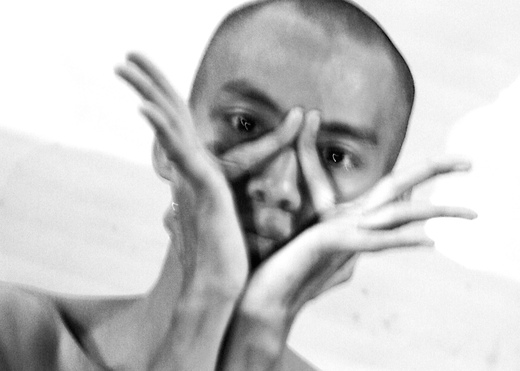
Moe Satt, F n’ F (Face and Fingers) 2008-2012

Moe Satt, from the series ‘Pinky Say Something’ (2024)
At the same time, a gesture does not merely signify a “reenactment” in the embodied sense; Burmese performance artists creatively capture political gestures, transforming them into enduring works of art, and continually repeat these political gestures. Artist Tai Lin was imprisoned from 1998 to 2004 for his political dissent. After his release, he created the artwork *A Show of Hands*, in which he cast numerous raised hands in plaster. These plaster sculptures were cast from the hands of former political prisoners in Myanmar, and each is accompanied by a card bearing information about the individual’s imprisonment. In this way, *A Show of Hands* allows everyone to “raise their hand,” thereby reiterating a testimony to the human rights violations committed by Myanmar’s military government. Mo Sa also transformed his own gestures into archival art installations, using screen-printed acrylic mirrors to recreate gestures such as voting, revolution, a gun, and a thumbs-down, thereby imbuing the gestures with political metaphor. The reenactment of gestures is no longer merely a physical replication; it also draws on other artistic media to form a memory of the gestures.

Htein Lin: A Show of Hands, Albright-Knox Art Gallery, 2019.
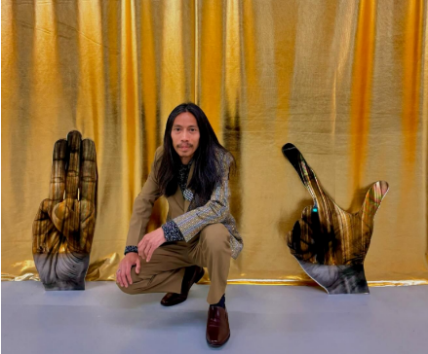
Moe Satt, ‘Storyline (voted/gun/revolution/thumbs down)’ 2024.
From this perspective, it is difficult to distinguish between performance art and political action in Myanmar, as the very context of their creation and the venues where they are performed are themselves sites of political action. In 2005, Chaw Ei Thein and Tai Lin staged an ongoing interactive street performance on one of Yangon’s busiest streets, titled “Mobile Market and Mobile Gallery.” Thay Lin sold paintings, while Chaw Ei Thein sold tea, sugar, garlic, chili peppers, and stationery—including drawing paper, paint, and everyday supplies. Both walked the streets, stopping at crowded corners or areas to sell these various products at extremely low prices. The artists deliberately used Burmese currency that was no longer in circulation, such as coins and small-denomination 1-kyat and 5-kyat bills. The reason these banknotes are no longer in circulation is that Myanmar’s hyperinflation has rendered small denominations worthless. All of these notes bear the image of General Aung San, a founding father of Myanmar, while his daughter, Aung San Suu Kyi, was at that time under restrictions imposed by the Myanmar military. This performance art drew crowds of onlookers, who were curious not only about the prices but also about the currency itself. Similarly, during the 2021 rallies protesting the military coup, artist Yadanar Win performed “Bloody Coup.” She sat in the square wearing an oxygen mask, her body covered in blood, holding an IV bag filled with “blood” in her left hand, surrounded by young people holding signs reading “Oppose the Military Coup.” In such street scenes, the actions themselves are difficult to define, but it is precisely this ambiguous relationship between artistic practice and political action that creates a space for everyday political resistance; these gestures can be interpreted both as performance art and as political stances.
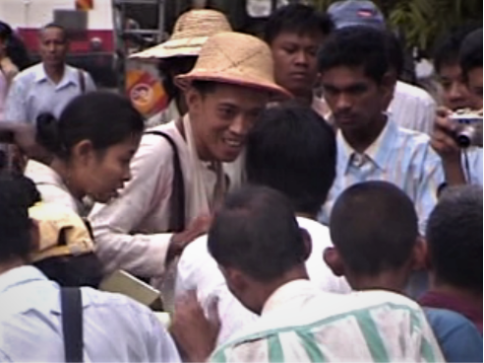
Mobile Market and Mobile Gallery 2005 By Chaw Ei Thein and Htein Lin
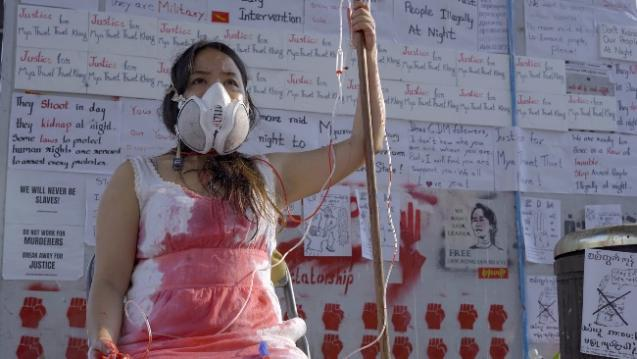
Yadanar Win in the 3AM performance ‘Bloody Coup’, Yangon, 18 February 2021
Under a system of censorship, direct textual or visual expressions may be restricted or even prohibited. In such cases, non-textual sensory traces—such as sound, smell, and touch—can become important mediums for conveying and evoking memories. These sensory experiences are often more subtle and difficult to censor, yet they can powerfully stir both individual and collective memories. Therefore, in the context of Burmese performance art, “gesture” refers not only to a specific physical posture but also encompasses non-visual gestures. Take, for example, Zhu Wei’s documentation during the 2021 military coup in Myanmar of the sounds produced by people striking objects—this auditory memory, even in the absence of text or images, can evoke people’s perceptions of the social atmosphere and collective actions at that time; Similarly, Tai Lin, unable to obtain painting materials while in prison, secretly created hundreds of paintings using a lighter fluid-coated syringe or a white cotton prison uniform in place of a paintbrush. The rough texture and possible scent of the prison uniform, along with the unconventional materials used in the creative process, may all serve as sensory carriers of the artist’s personal memories and experiences of incarceration. Although these sensory details are not directly displayed, they are inherent in both the process and the outcome of the artistic creation, capable of evoking associations with the oppressive environment for both the artist and the audience. When performers reenact these gestures, they do more than simply replicate physical movements; they also relive the emotions and sensory experiences of that time. This combination of bodily and sensory memory ensures that reenactment is not merely a replication of external form, but also encompasses a reliving of the inner experience.
III. Digital Archives: The De-posturalization of Performance Records
Drawing on posture theory, we can gain a deeper understanding of how Burmese performance art awakens and reshapes public memory. However, what requires further reflection is whether the citability of a posture necessarily implies the emergence of a certain critical and resistant politics. Disruption does not necessarily signify a new form of social expression; particularly in performance art, detachment from the original social context may also imply a process of neutralization and institutional co-optation. performance art can be transformed into a harmless artwork displayed in a museum. Within Myanmar’s local artistic context, to evade censorship, artists have sought to stage performance art on the streets rather than in art museums, as the institutionalization of art would subject its form and content to official restrictions. However, the globalization of performance art has enabled numerous performances to take place in non-local contexts—whether on the streets of foreign countries or in Western art museums. Mature art markets have co-opted what was once provocative performance art; these acts no longer represent new possibilities but have once again become “commodities.” Myanmar performance artists have also recognized this. During the Third Yangon Performance Art Festival, artist Neha Choksi mentioned in an interview, “The genre of performance art has been accepted and institutionalized… Whether street art or performance art can serve as a form of resistance against the system… that depends on the context and relative position.” In the context of globalization, Burmese performance artists have begun participating in international performance art festivals; their scope, initially limited to Southeast Asia, has gradually expanded to Europe, where Burmese artists are engaging in European art festivals and residency programs through their performance works.
When performance art is detached from its original social context and enters the production of the art institution, it no longer opens up possibilities for the future through the reenactment of gestures. In the context of Burmese performance art, overseas arts foundations—including the Goethe-Institut in Germany and the French Cultural Center—have played a significant role. Artist Zhu Wei used her artwork to oppose the 2021 military coup and fled to France under the protection of the French Cultural Center. On the streets of France, she covered her face with a red headscarf and held up political protest signs in front of the Louvre, thereby expressing her satire of Myanmar’s current political situation. If this performance—completely detached from the Burmese people—can be understood as an attempt to draw Western attention to Myanmar’s political situation, then in Brussels, she walked directly through an art museum, holding a red umbrella covered with notes, the notes containing information and texts collected from the people of Myanmar during the mass protests that followed the military coup. Returning from the streets to the art museum signifies not only assimilation into the art establishment but also the need for performance art to conform to the art establishment’s requirements through new modes of memory, thereby enabling the inherently fleeting and ephemeral performance art piece to gain recognition within the art world—a process that necessitates reintroducing the role of media in memory.
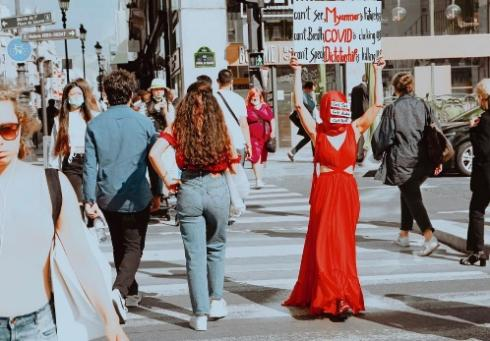
Chuu Wai SEEING IS BELIEVING! 2021 Paris
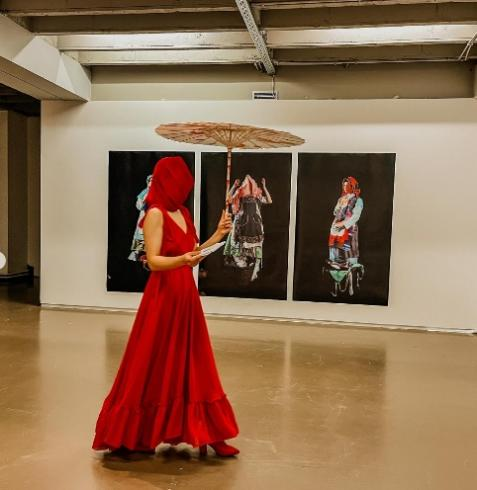
Chuu Wai Seeing is Believing? 2024 Brussels
It is true that performance, both ontologically and in practice, rejects a form of mediality. However, the art establishment requires artists to document their performances in the form of visual works, thereby enabling them to accumulate symbolic capital and attain greater artistic prestige. This process of accumulating symbolic capital does not necessarily stem from the artists’ own initiative. On the one hand, the requirements of art museums and galleries for the permanence of art compel artists to consider mediation; on the other hand, the art system itself is driving the mediation of performance art. In early Burmese performance art, documentation often took the form of text and photographic images, with most accounts based on the artists’ oral narratives. Following the “Beyond Pressure” performance art festival in Yangon, the organizers documented the performances through photographs and written accounts, compiling them into a publication that helped establish a network for performance art in Myanmar, as well as across Southeast and East Asia. With the rise of the global internet, it has become increasingly easy to document Burmese performance art through video and images. The internet’s integration with the global network has deconstructed the political significance of the ontology of performance; performances can now be transmitted to the world via video, completely bypassing Burmese official art censorship. Performance artist Emily Phyo’s work *Being 365* involved photographing a different person every day for 365 consecutive days, from January 1, 2015, to January 1, 2016, and uploading the photos to her social media accounts; she tied a tape measure over the subjects’ eyes, with the numbers on the tape measure revealing their ages. She also recorded their names, occupations, and the dates the photos were taken. Through this work, the artist reflected on the context of Myanmar’s first democratic elections, in which every individual—as a participant in the general election—exercised their own power; these subjects were ordinary people from all walks of life. With the aid of digital media, this embodied performance art was transformed into a form of non-presential artistic presentation.
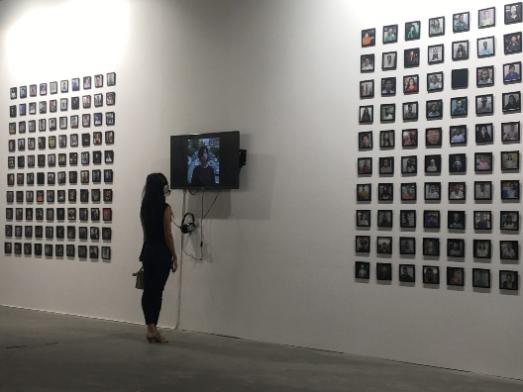
Being 365 2015 by Emily Phyo, ‘Art Stage Singapore’, 21–24 January 2016, Image: Nathalie Johnston
Art institutions have also played a crucial role in documenting the digital archives of performance art in Myanmar. *365 Days of Existence* was not only presented on social media but was also performed at *Art Stage Singapore* in 2016. Most of the performance art materials in this article are drawn from records kept by art museums or festivals. This trend became particularly evident following the 2021 military coup in Myanmar, as Myanmar performance artists left the country due to their dissenting views. In Western countries, the identity of Myanmar performance artists is closely tied to Myanmar’s own political realities, At the 2023 Asia Now art fair in Paris, Nge Lay, an artist who fled Myanmar, was interviewed about the country’s political situation, and the fair also documented his performance art piece. Nge Lay “stamped red seals on different sheets of paper, sometimes with violent gestures, sometimes with reluctant ones. The regions of Myanmar were stamped onto this series of papers to symbolize the country’s internal divisions.” This 20-minute performance was also video-recorded by the fair. Through archival work by various art institutions, the relationship between contemporary Burmese performance art and the country’s political reality has become increasingly clear.
However, the digitization of Burmese performance art cannot be understood solely as a requirement of the art establishment; the development of media and imaging technology has objectively helped performance artists reach a wider audience through social media, thereby circumventing political censorship. This is particularly true for performance artists of the new era: Yadanar Win’s performance “Bloody Coup” was widely shared on platforms such as TikTok and YouTube, drawing global public attention to the current situation following Myanmar’s military coup. The collective “3AM,” comprising artists Yadanar Win, Ko Latt, and Ma Ei, produced “Construction and Deconstruction,” a performance video created during the coup. The portable and easily preserved nature of the footage allowed it to cross national borders, and it was exhibited at the “10th Asia-Pacific Triennial of Contemporary Art.” This digital performance highlights the cyclical nature of Myanmar’s political turmoil and the resilience of the Myanmar people in the face of prolonged political instability. The use of digital platforms has enabled artists to circumvent censorship and reach a wider audience, demonstrating the adaptability and endurance of political expression through art. Therefore, accusations of “institutional co-optation” regarding digital archives are not entirely valid; artists, within their social context, must balance their personal safety with their artistic expression, and digital media has greatly enhanced the longevity and reach of performance art itself.
In the digital archives of performance art in Myanmar, we can observe that, on the one hand, as performance art undergoes a process of institutionalization, it is co-opted by art institutions, and its inherent political character is gradually diluted; on the other hand, the embodied and action-oriented power of the performance itself is gradually diminished during the archiving process. While digital archives enhance the performance’s longevity, they also transform it into a form of widespread political information, allowing the public to engage with Myanmar’s political reality through digital means. This differs from the gestural reenactment of performance memory; the advantage of media-mediated memory lies in the fact that performance art and its underlying social implications can reach a broader audience.
The trajectory of performance art from “postural reenactment” to “digital archives” can be viewed as a transformation in recording methods brought about by technological development; however, this understanding of linear evolution obscures the more complex political tensions and institutional conditions involved. First, in contemporary Burmese performance practice, “gestural reenactment” and “digital archives” are not mutually exclusive but rather coexisting strategies of memory. Although digital archives are relatively time-lagged due to technical constraints, interpreting them as a “progressive” or “superior” form of memory inadvertently falls into a form of technological determinism. This perspective overlooks the unique space of meaning opened up by the reenactment of gestures—its bodily transience, the fragility of presence, and the incompleteness that cannot be fully translated into disseminable images, which precisely constitute a crucial part of its function as a strategy against censorship and against forgetting.
Second, in the specific context of Myanmar, the emergence of digital archives cannot be simply attributed to technological expansion; it is more deeply embedded in the structural inequalities of the art system, class conditions, and information infrastructure. We must be wary of the class divisions and infrastructure disparities surrounding digital archives in Myanmar’s current reality. Before digitalization is understood as an “emancipatory medium,” we must reflect on the following questions: Who has the capacity to create digital archives? And who has the right to view the political performances produced by these media? Due to long-standing political censorship and internet controls in Myanmar, access to the internet itself is restricted by the military. Access to internet devices, the development of digital literacy, and even proficiency in using social media platforms are often concentrated in urban centers such as Yangon and Mandalay. Consequently, the digital circulation of artworks relies more heavily on elite artists with resources or exiled artists who have already entered the Western art system—those who not only control the media platforms but also possess the opportunities for archiving and exhibition.
Furthermore, the “viewability” of Burmese performance art in digital media is often constructed within a curatorial framework shaped by the Western gaze. At the 2024 Bangkok Biennale of Contemporary Art, Mo Sa’s performance piece *Body Inside T-shirt* was presented as a three-day performance and installation: a suspended T-shirt formed the silhouette of an absent body, while the artist entered the T-shirt, shaping it with her own body, and invited viewers to write or draw their hopes for Myanmar’s future on the fabric. The body trapped within the T-shirt symbolizes, on the one hand, the people struggling under Myanmar’s political reality and, on the other, hints at the international community’s “incomplete understanding” of the realities of the resistance in Myanmar. Myanmar’s political trauma is condensed into an exhibit-ready visual form, and the audience’s “empathy” is transformed into participatory acts within the exhibition space that can be documented, disseminated, and recycled.
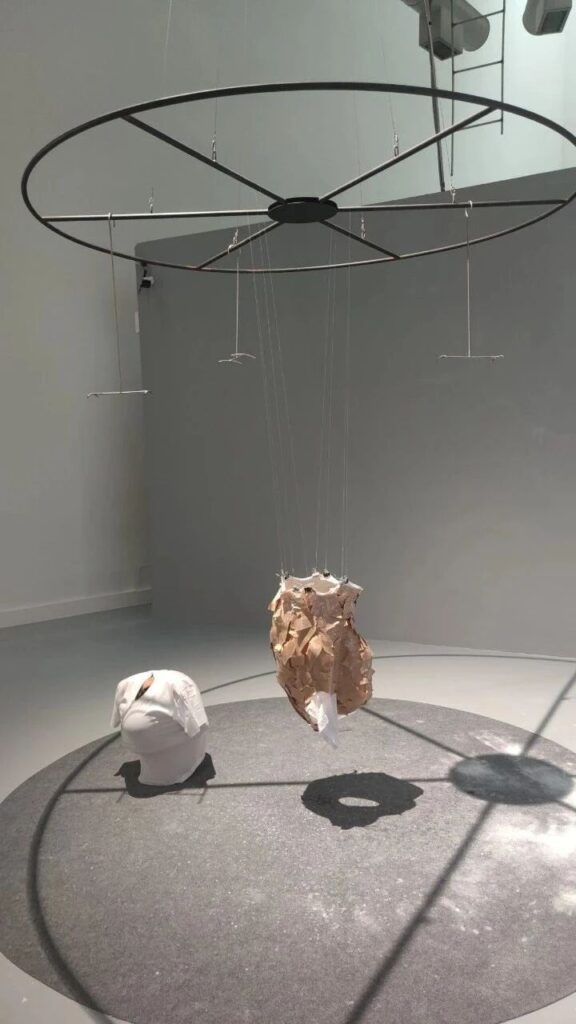
Moe Satt, ‘Body Inside T-shirt’, 2024.
It is evident that Burmese performance art—as presented, documented, and archived in Asian art festivals and international residency programs—is often highly visual, political, and “confrontational.” While these works cater to the political trends of the current art establishment, they also construct a “Burmese reality” accessible to global audiences through media translation. This undoubtedly reinforces the trend toward the elitization and symbolization of art in the digital sphere—where political stances are transformed, within the digital cycle, into spectacles of suffering by the “other.” Therefore, we must return to the tension between the reenactment of stances and media archiving to understand Burmese performance art. Digital platforms are not neutral channels of communication; they are technical, class-based, and, above all, political. The formation of a truly critical stance cannot rely solely on the global visibility of images; it also requires a more equitable and reflective structure of interaction among artists, institutions, and audiences.
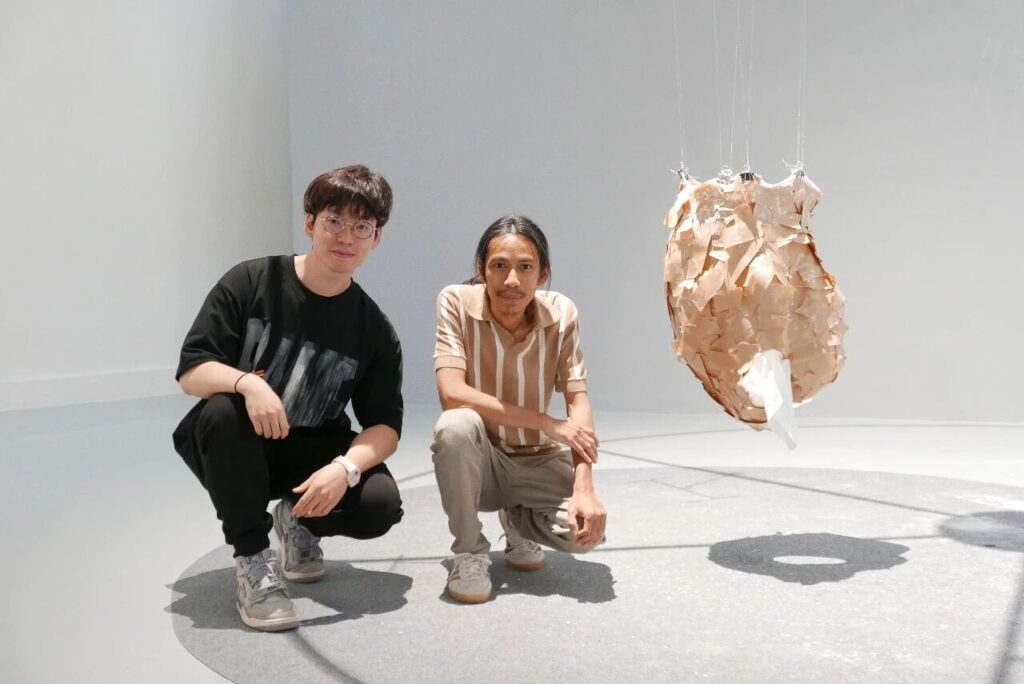
In 2024, the author and Mo Sa participated in the Bangkok Art Biennale
Note: Portions of this article were previously published in Liu Guicheng, “The Politics of Memory in Myanmar’s Performance Art: From the Reenactment of Postures to Digital Archives,” in *Weiming Asia-Pacific Studies*, Vol. 15, edited by the Asia-Pacific Research Institute, Peking University (Hong Kong: China Century Publishing Group Co., Ltd., 2025), pp. 49–64.
1 “Artistic Freedom Report: Thailand – Expansive and Politically Contentious.” Arts Equator, https://artsequator.com/artistic-freedom-report-thailand-expansive-and-politically-contentious/. Accessed 14 April 2025.
2 Nathalie Johnston. “Intuitive Acts: The Evolution of Performance Art in Myanmar”, Master Dissertation, 2010.
3 Noel Carroll. 1986. Performance. Formations 3, no. 1:78.
4 Barbara Kirshenblatt-Gimblett. “Performance Studies .” Le Laboratoire Du Geste, www.laboratoiredugeste.com/spip.php?article129. Accessed 15 Aug. 2024.
5 Peggy Phelan. Unmarked: The Politics of Performance. Routledge, 1993: 146
6 汉娜·阿伦特. 过去与未来之间. 王寅丽,张立立译.南京: 译林出版社, 2018:38.
7 莫薩. 緬甸行為藝術簡介. 現代美術 173, 2014(06):76-82.
8 Moe Satt, 1st Beyond Pressure International Festival of Performance art, 2008:10-12.
9 Mratt Kyaw Thu. “After Bold Beginning, Curtain Descends on Myanmar Performance Art.” Frontier Myanmar, 3 July 2020, www.frontiermyanmar.net/en/after-bold-beginning-curtain-descends-on-myanmar-performance-art/.
10 Radio Diaries. “Timeline: Myanmar’s ‘8/8/88’ Uprising.” NPR, NPR, 8 Aug. 2013, www.npr.org/2013/08/08/210233784/timeline-myanmars-8-8-88-uprising.
11 Brooten, McElhone, and Venkiteswaran, Myanmar Media Historically and the Challenges of Transition, in “Myanmar Media in Transition: Legacies, Challenges and Change”, Singapore: ISEAS – Yusof Ishak Institute, 2019: 22.
12 Nora Taylor. “Sedimented acts: Performing history and historicizing performance in Vietnam, Myanmar and Singapore.” Southeast of Now: Directions in Contemporary and Modern Art in Asia, vol. 6, no. 1, Mar. 2022:13–31.
13 Mratt Kyaw Thu. “After Bold Beginning, Curtain Descends on Myanmar Performance Art.” Frontier Myanmar, 3 July 2020, www.frontiermyanmar.net/en/after-bold-beginning-curtain-descends-on-myanmar-performance-art/.
14 Nathalie Johnston. “Intuitive Acts: The Evolution of Performance Art in Myanmar”, Master Dissertation, 2010.
15 Diana Taylor. The Archive and the Repertoire. Performing Cultural Memory in the Americas, Duke University Press, 2003: 20-21.
16 瓦尔特·本雅明.无法扼杀的愉悦, 陈敏译.北京:北京师范大学出版社,2016:182.
17 Satt, Moe, 1st Beyond Pressure International Festival of Performance art, 2008:10-12.
18Satt, Moe. “Beaten Pots, Three Finger Salutes and Car Horns: The Art of Protest in Myanmar.” ArtReview RSS, 17 Feb. 2021, artreview.com/beaten-pots- three-finger-salutes-and-car-horns-the-art-of-protest-in-myanmar/.
19 “Buffalo AKG Art Museum.” Htein Lin: A Show of Hands , buffaloakg.org/art/exhibitions/htein-lin-show-hands. Accessed 19 Aug. 2024.
20 Nora Taylor. “Sedimented acts: Performing history and historicizing performance in Vietnam, Myanmar and Singapore.” Southeast of Now: Directions in Contemporary and Modern Art in Asia, vol. 6, no. 1, Mar. 2022:20.
21 “Exiled Artist Yadanar Win on Myanmar’s Bloody Coup.” ArtReview RSS, artreview.com/exiled-artist-yadanar-win-on-myanmar-bloody-coup/. Accessed 19 Aug. 2024.
22 Moe Satt, 3rd Beyond Pressure International Festival of Performance art, 2010:22.
23 “Performance art.” Chuu Wai – Young Woman Artist In Myanmar, chuuwai.com/. Accessed 15 Aug. 2024.
24Myanm/art. “Being 365: Emily Phyo.” Myanm/Art, 6 Sept. 2016, myanmartevolution.com/2016/08/03/ being-365-emily-phyo/.
25Morelli, Naima. “仰光: 與Nge Lay和Aung Ko對談.” Artasiapacific, 6 Feb. 2023, artasiapacific.com/admin/articles/9416.
26 Johnston, Nathalie. “What Transition? Art and Performance in Myanmar.” QAGOMA Asia Pacific Art Papers, 24 Feb. 2022, apap.qagoma.qld.gov.au/what-transition-art-and-performance-in-myanmar/.
27 “Myanmar: Freedom on the Net 2024.” Freedom House, 2024, https://freedomhouse.org/country/myanmar/freedom-net/2024#footnoteref1_Iaz4yck2kn-JEfMhX0vj6EfNmzEzVsuLPIIZBHC745Q_mvVkQVUW7B4i. Accessed 10 April 2025.
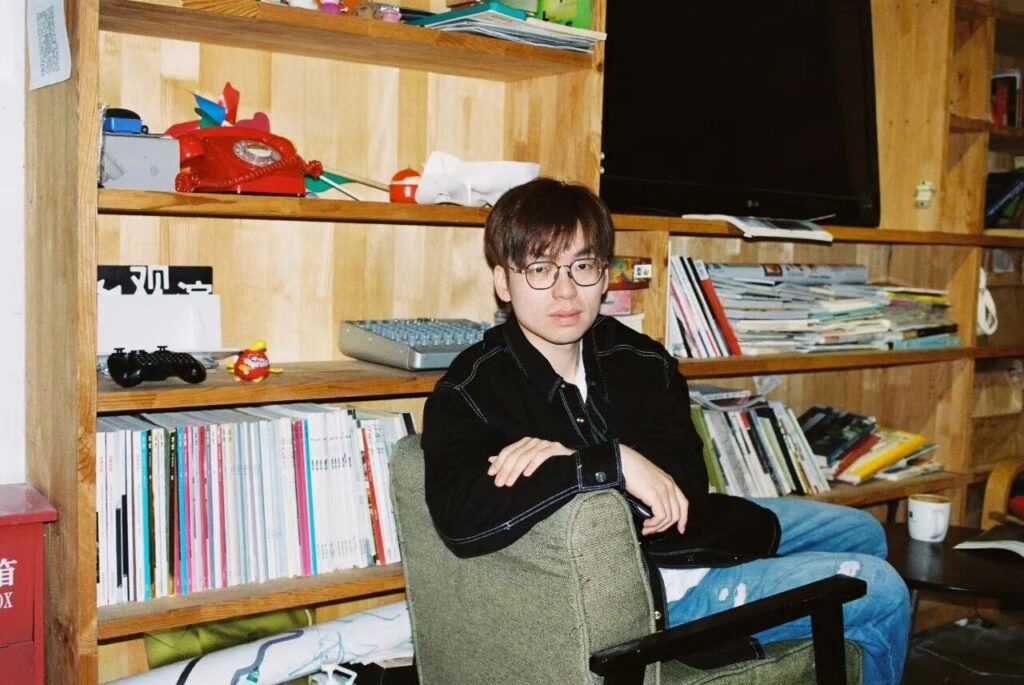
Liu Guicheng is a joint Ph.D. student in the School of Arts at Peking University and the Department of Cultural Sociology at Yale University, specializing in theater and performance theory.

Project Title Sponsorship:Chengdu Shangcheng Design has been deeply engaged in architecture and spatial design for over two decades, consistently focusing on the relationship between architecture, nature, culture, and society. The firm has developed an integrated design practice encompassing urban planning, architecture, landscape architecture, and interior design. Its projects are located in numerous cities across China and span a wide range of types, including industrial parks, offices, cultural exhibition spaces, and residential spaces. With a focus on spatial value and user experience, Shangcheng Design is committed to providing clients with architectural and spatial solutions that combine foresight, aesthetic appeal, and practicality. The firm’s work has been recognized with numerous domestic and international awards, including the China Interior Design Awards and IFI International Interior Design Competition, the Architecture MasterPrize (AMP), the BLT Built Design Awards, the DNA Paris Design Awards, the Milan Design Awards, the London Design Awards, and the Architect of the Year Awards.