“Unearth” is the inaugural project launched by the MAM & UP-ON Center for Live Art Documentation. Its core mission is to systematically organize and present key moments and valuable archival materials from the history of performance art with an objective and rigorous approach. Through in-depth research and scholarly investigation, the project aims to uncover overlooked threads of practice and historical turning points, thereby producing outcomes of academic value.

UP-ON Performance Art Archive
Launches “Chengdu + Shanghai” Dual-City Operation Model
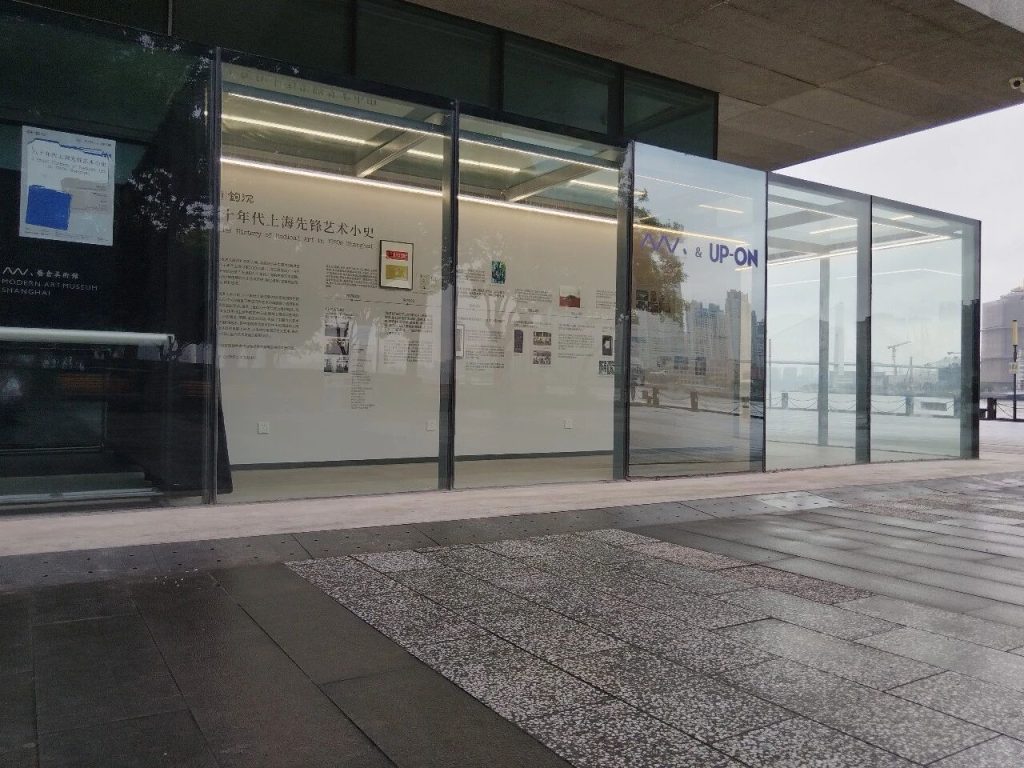
MAM & UP-ON Live Art Documentation Center
The MAM & UP-ON Live Art Documentation Center, jointly established by Art Warehouse Museum and the UP-ON Archive, has been based in Shanghai for over three months. Our planned initiatives are progressing step by step, one small step at a time. Although we’re now in Shanghai, we mustn’t lose the Chengdu mindset of balancing work with enjoyment—we need clear goals in our work, but also the leisure to appreciate the scenery. Only when our minds and bodies are at ease can we go the distance.
In June, when MAM & UP-ON launched its archival research project Uncovering the Past, it received funding from Pusu. The MAM & UP-ON International Performance Art Festival, set to open in September and aimed at promoting the exchange of performance art creation, has also been fortunate to receive support from the FICFF Foundation. Shanghai is a place where people and ideas converge; we believe that by devoting ourselves wholeheartedly to meaningful endeavors, we will naturally receive the support we need.
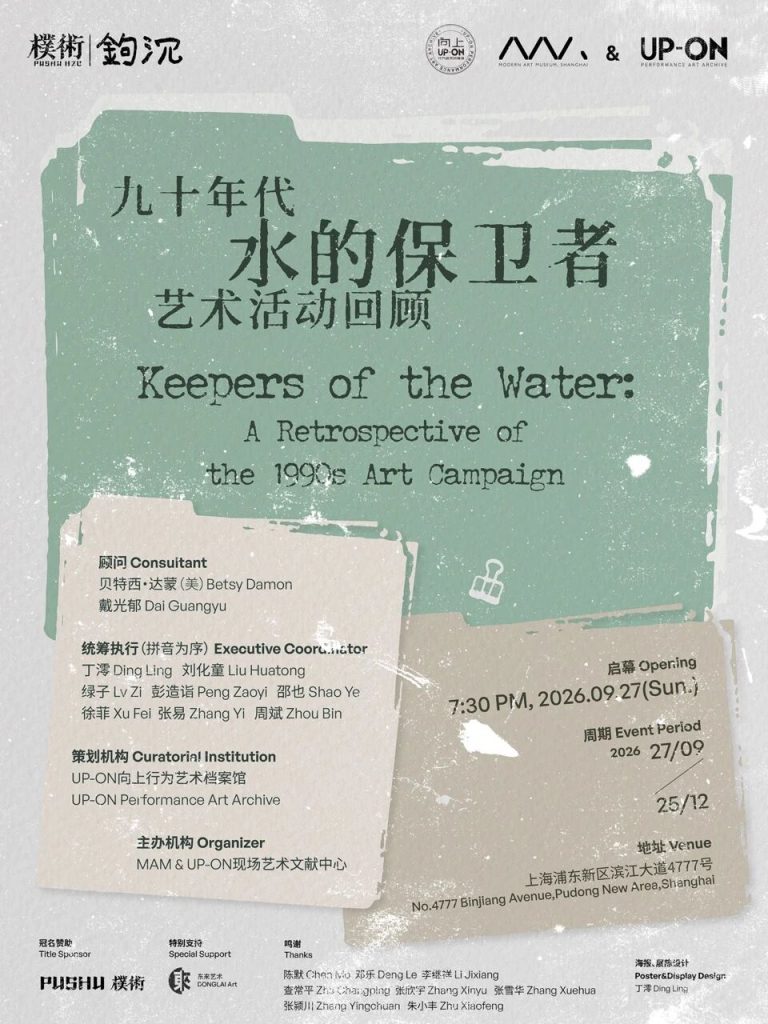
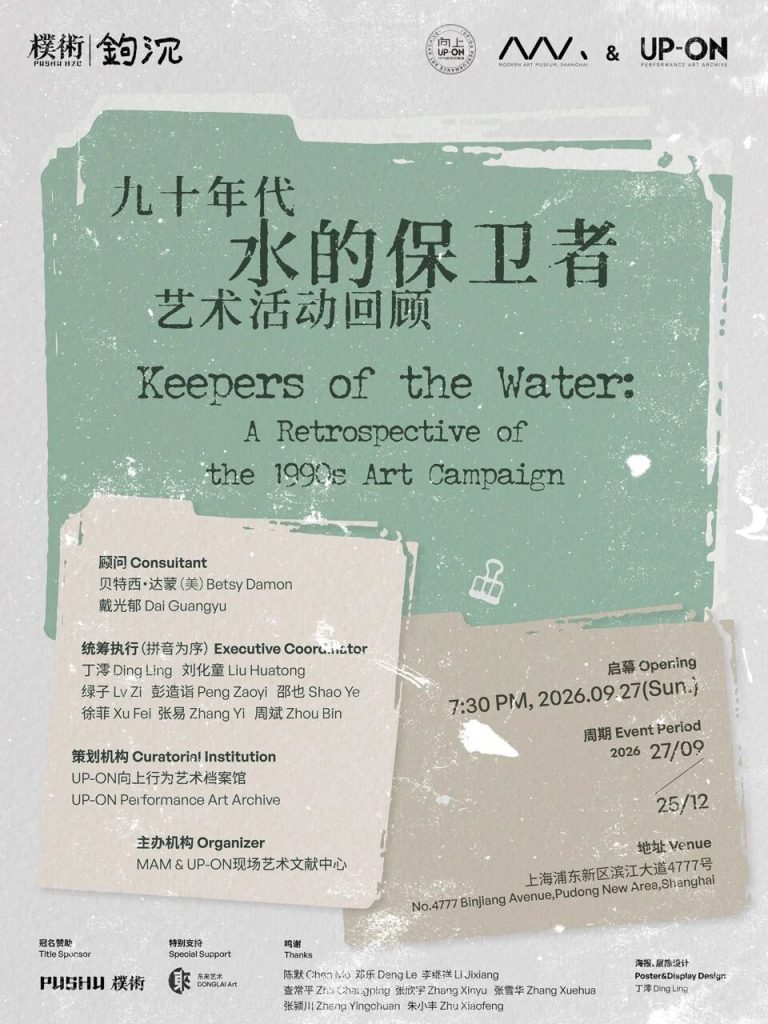
In the first installment of Unearth, we looked back at Shanghai’s avant-garde art scene in the 1980s—a turbulent era whose dramatic ups and downs in the art world leave us with a sense of nostalgia and reflection. In the second installment of Uncovering the Past, opening on September 27, we turn our attention to the “Defenders of Water” art movement that took place in southwest China in the mid-to-late 1990s.
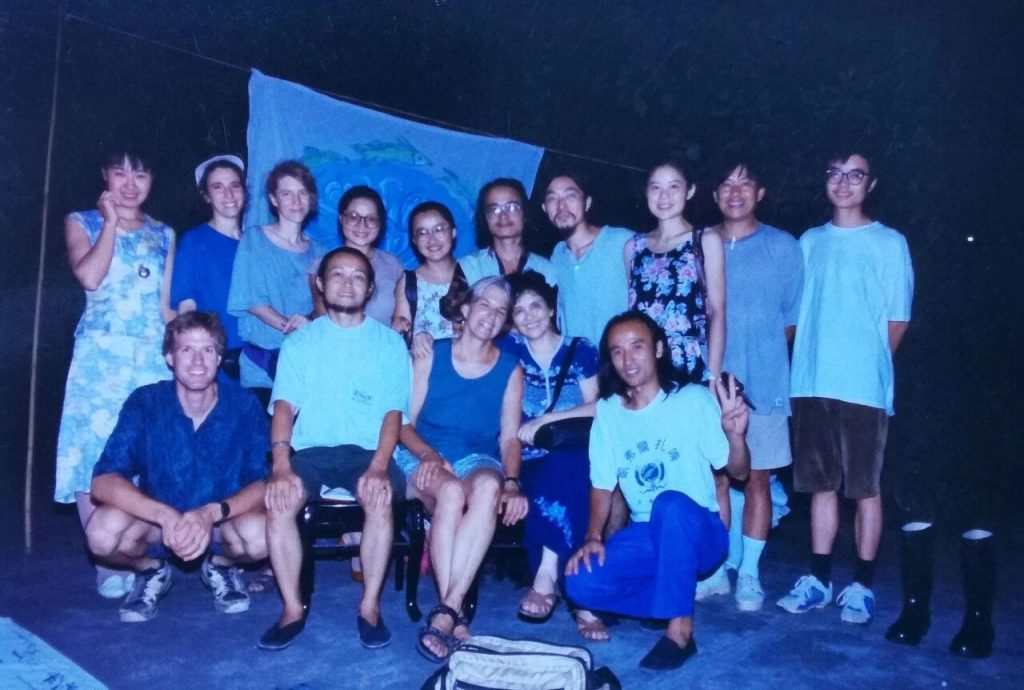
Group photo taken during preparations for the first installment of The Water Guardians (Chengdu) (Front row, from left: Zeng Shan, Dai Guangyu, Betsey Damon, Lin Shaohan, Liu Chengying; Back row, from left: Ji Xia, Beth Grossman, Christine Baeumler, Li Qi, Liu Mei, Zeng Xun, Zhu Gang, Xie Mingxiang, Li Dan, Chen Zhongxin)
Performance art emerged in mainland China in the 1980s, primarily taking the form of individual creative works in private spaces outside of art museums. In contrast, “Defenders of Water”—a series of four events held between 1995 and 2000—was an exceptionally rare artistic initiative that closely integrated avant-garde art with urban ecological issues. It received government support, garnered extensive media coverage, took place in urban public spaces, and actively engaged with the public. Even more remarkable is that the “Living Water Park”—a concept conceived and championed by the artists—was successfully realized as a physical space, becoming a signature public facility in the city. It has won numerous international awards and remains in use to this day.
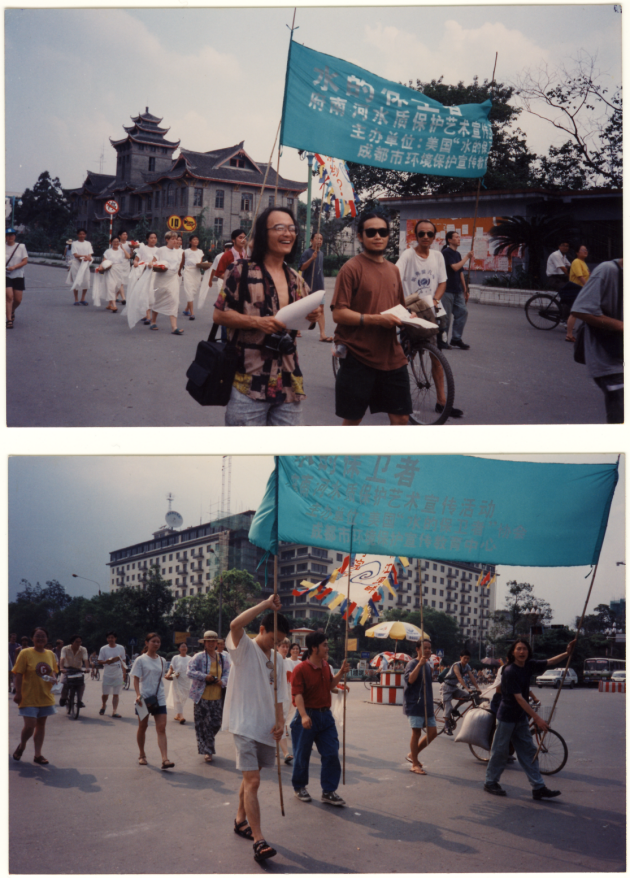
The first installment of the two-week “Guardians of Water” art event (Chengdu) has kicked off
Remarkably, the artistic vision and aesthetic characteristics of The Defenders of Water were in step with the latest trends in international avant-garde art in the early 1990s—a period some theorists have termed the “third turn” in avant-garde art, marked by the rise of socially engaged art: “Socially engaged art today constitutes the contemporary avant-garde” (Claire Bishop). Artistic practice was no longer confined to grand-narrative-style, sweeping critiques of society and institutions; instead, through means such as strategic negotiation, it entered public spaces and community settings to examine issues such as the environment, identity, gender, race, and class from a micro-level perspective. Dialogue and interaction among individuals, between individuals and communities, and between individuals and the city became key modes through which art unfolded.
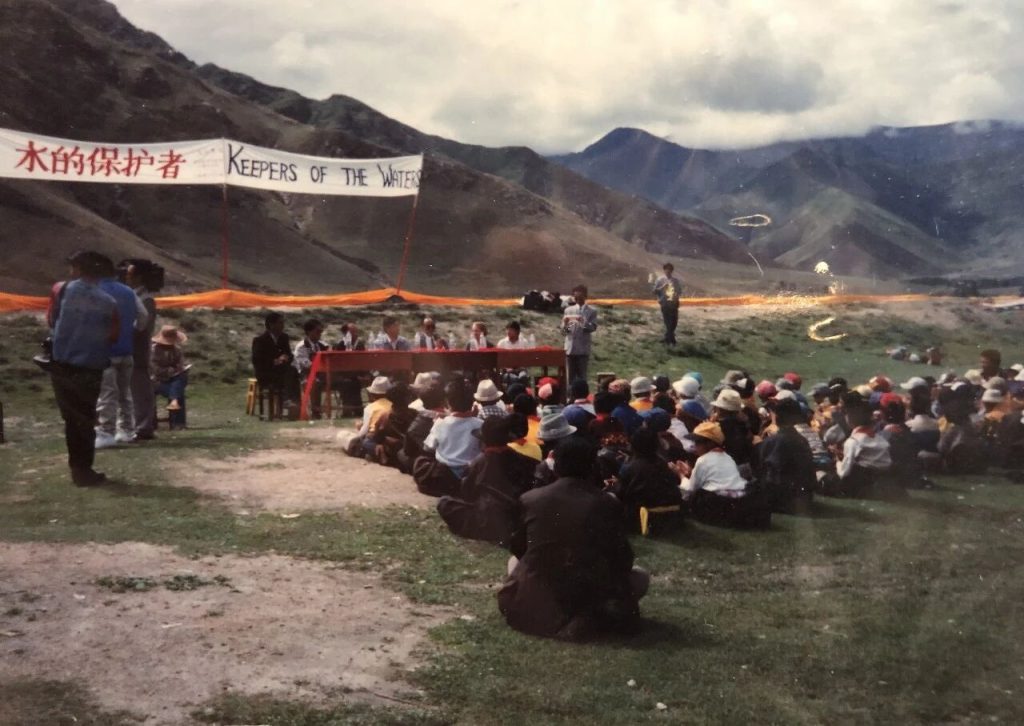
Scene from the Opening Ceremony of “Guardians of Water,” Episode 2 (Lhasa)
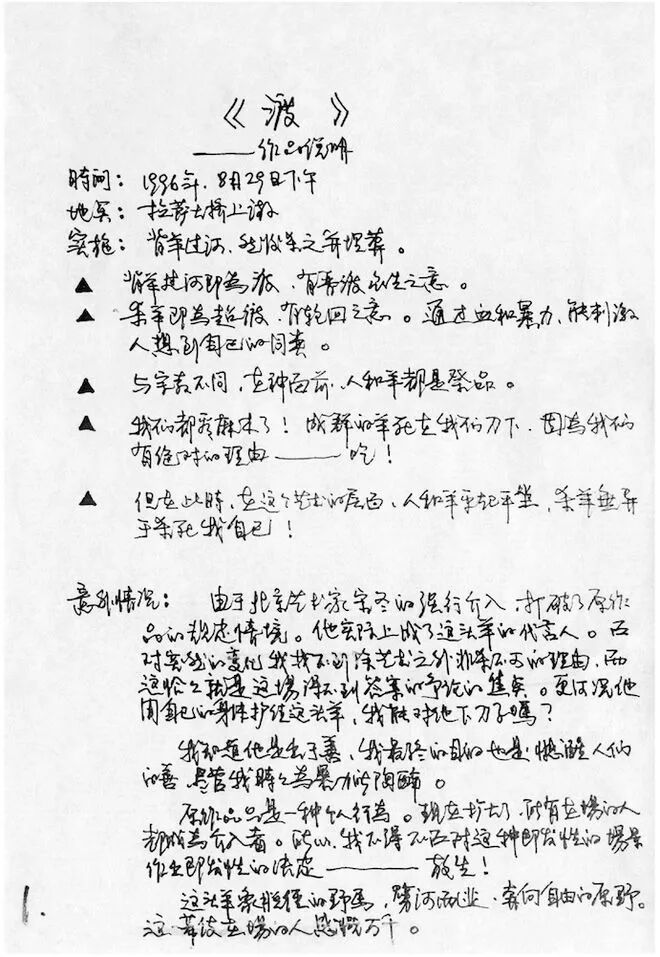
Conceptual Sketches for Zhang Shengquan (Datong Dazhang)’s Performance Artwork Crossing
That such a convergence could take place was also a matter of serendipity. As the chief curator of the “Defenders of Water” initiative, Betsy Betsy Damon (born in the United States in 1940) is an internationally renowned ecofeminist artist, a pioneer of public intervention art, a curator, and the founder of a nonprofit organization. Since the 1980s, she has focused on ecological issues, and in 1991, she founded the nonprofit Keepers of the Waters, which brings together artists, governments, and communities worldwide to create public art addressing water environments and to promote education on ecological restoration. In 1994, while she was planning the event with numerous artists, the Chengdu municipal government had just launched a comprehensive river restoration project, and environmental protection was a central public issue in the city at the time.
In 1995, following the conclusion of the first “Keepers of the Waters” event, Betsy Damon proposed to the Chengdu government the construction of the Living Water Park. Completed in 1999, it became the world’s first urban park dedicated to water ecological purification—a far-reaching tangible outcome of the “Keepers of the Waters” initiative and a classic example of how art can engage with, drive, and realize social causes.
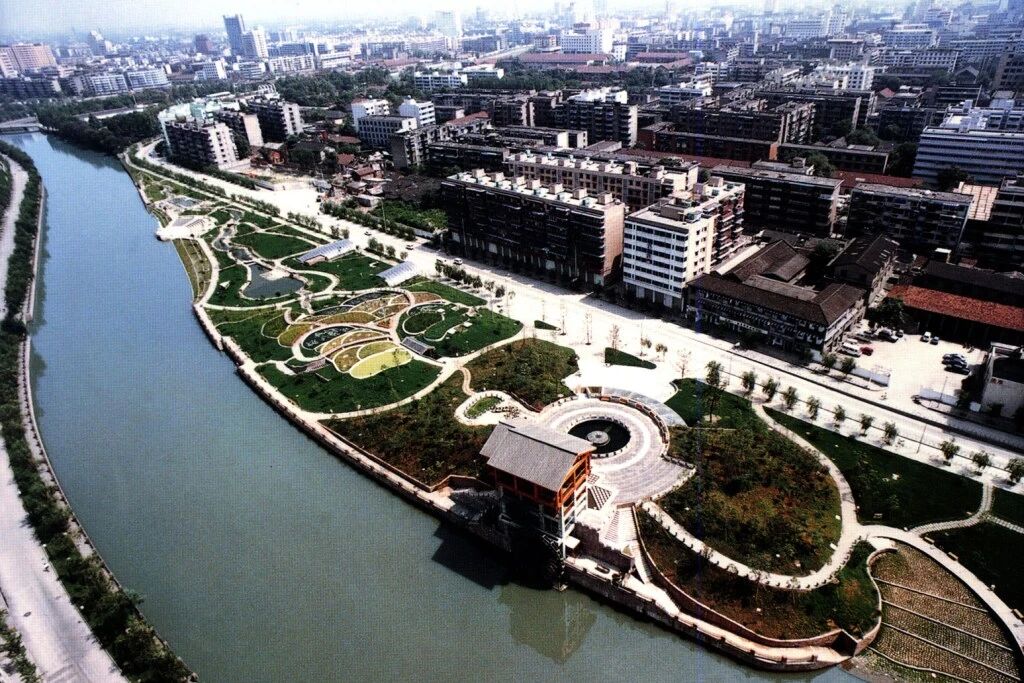
On-Site at Living Water Park
As an early example of socially engaged art in China, the academic value of The Defenders of Water has clearly been greatly overlooked—which is why the second issue of Uncovering the Past presents documentation of this significant artistic event. We hope that by revisiting it, the academic community will gain a deeper understanding of The Defenders of Water, thereby sparking professional dialogue and research.
Opening: 7:30 PM, September 27, 2026
Duration: September 27 – December 25, 2026
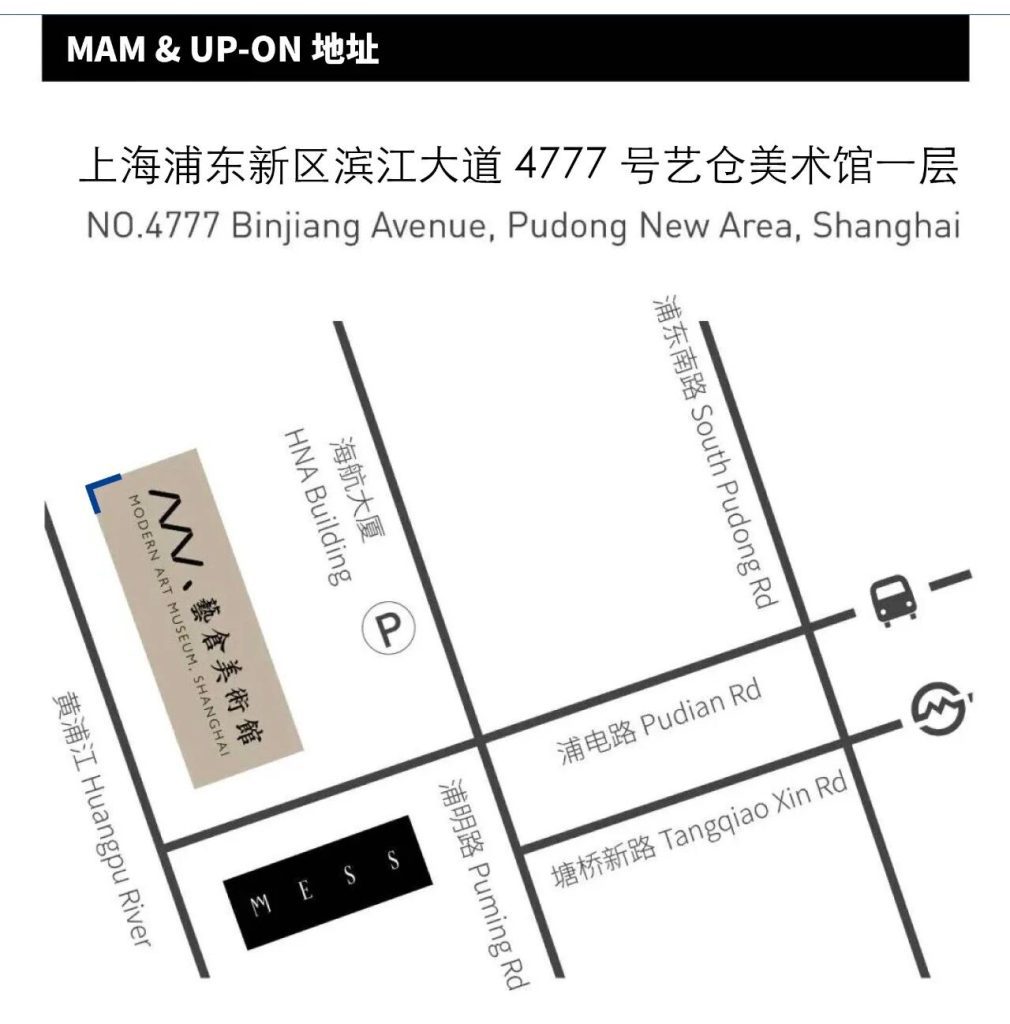
Address: 4777 Binjiang Avenue, Pudong New Area, Shanghai
Advisors (in alphabetical order): Betsy Damon (USA), Dai Guangyu
Executive Producers: Ding Lei, Liu Huatong, Lüzi, Peng Zaoyi, Shao Ye, Xu Fei, Zhang Yi, Zhou Bin
Curated by: UP-ON Performance Art Archive
Organized by: MAM & UP-ON Live Art Documentation Center
Title Sponsor: PUSHU
Special Support: DONGLAI ART
Acknowledgments: Chen Mo, Deng Le, Liu Chengying, Li Jixiang, Shen Yunqing, Cha Changping, Zhang Xuehua, Zhang Xinyu, Zhang Yingchuan, Zhu Xiaofeng
Poster and Exhibition Design: Ding Lei
Hours: Tuesday–Sunday, 10:00–18:00 (last admission at 17:30); Closed on Mondays (schedules for public holidays subject to announcement)
Address: 1st Floor, Art Warehouse Museum, 4777 Binjiang Avenue, Pudong New Area, Shanghai
Project Title Sponsorship

Since its founding in 2015, Pusu has been guided by the philosophy of “Stripping Away the Ornate to Reveal the Essence; Mastering the Art of Composure,” steadfastly blending art and design.
We advocate for bringing art into everyday life, weaving it into every detail and expression of our brand to provide contemporary urbanites—regardless of age or background—with a comfortable, minimalist, and high-quality lifestyle experience.
It is currently the men’s apparel brand in China that engages most actively and closely with contemporary art.