The “Research Room” section of the UP-ON Performance Art Archive is dedicated to revitalizing archival materials through theoretical research, seminars, self-publishing, and other initiatives, with the aim of fostering in-depth knowledge production.
Acting in Time and Space: The Expression and Challenges of Performance in the Public Sphere
(Text by Cheng Ai | Images and text provided by UP-ON Performance Art Archive)
Performance art, as a significant form of contemporary art, originated in Europe in the early 20th century and has undergone over a century of development worldwide. It was not until the 1970s that performance art began to gain popularity in China. By the mid-to-late 1990s, Chinese performance art entered a period of prosperity, marked by a surge in the number of artists and an increasing diversity of forms, becoming a vital artistic medium reflecting the complexity and pluralism of Chinese social reality. Over the past five decades, the creation of Chinese performance art has become an indispensable part of Chinese contemporary art, possessing significant research value.
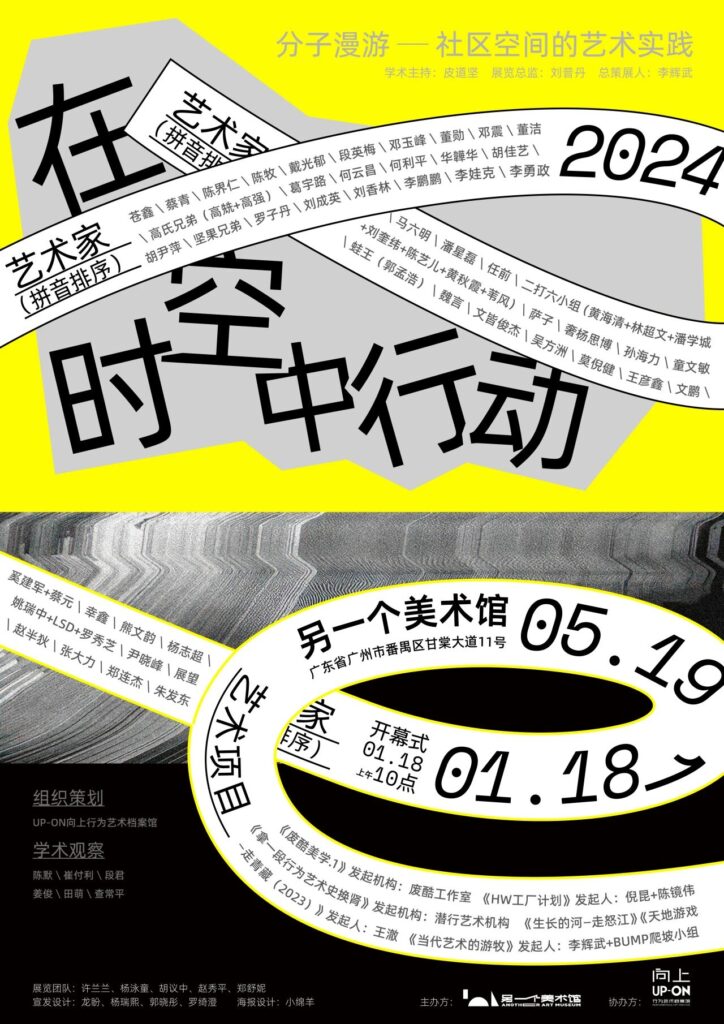
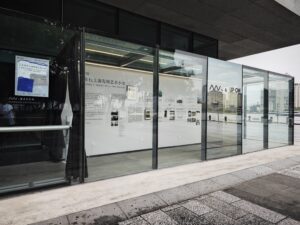
However, the documentation and archiving of Chinese performance art face practical challenges, including the difficulty of preserving materials, the impact of censorship, and limited funding for academic research. Despite this, on January 18, 2024, the exhibition *Acting in Time and Space*—A Documentary Study of Chinese Performance Art, curated by the UP-ON Performance Art Archive, opened quietly at Another Art Museum in Guangzhou. This marks China’s first large-scale exhibition dedicated to the documentation and research of performance art. Tracing a 53-year evolution from 1970 to 2023, the exhibition systematically organizes and presents artistic creations and projects executed in the public sphere. The exhibition features contributions from over 60 performance artists across mainland China, Hong Kong, Macau, and Taiwan, showcasing 50 representative and milestone works alongside five distinctive and pioneering art projects. Regrettably, many significant works were absent due to difficulties in obtaining exhibition approvals. These artistic practices not only document the evolution of performance art in China but also demonstrate how artists have utilized this form to express, explore, and influence the real world, as well as how they have initiated dialogue and stimulated the public’s imagination and reflection through creative acts.
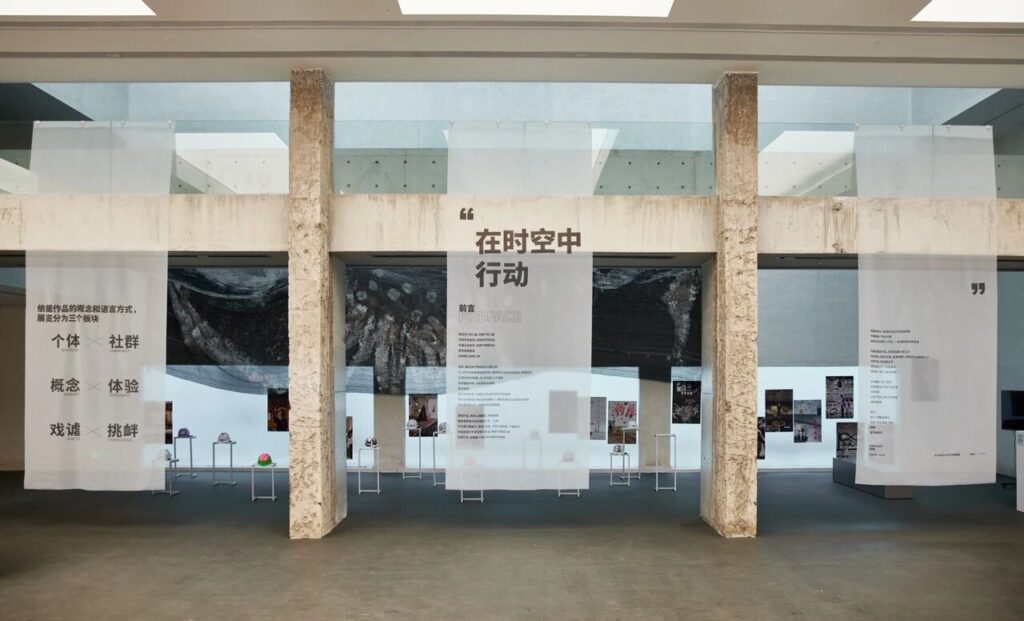
“Acting in Time and Space” Exhibition View 1, 2024, Another Art Museum, Guangzhou
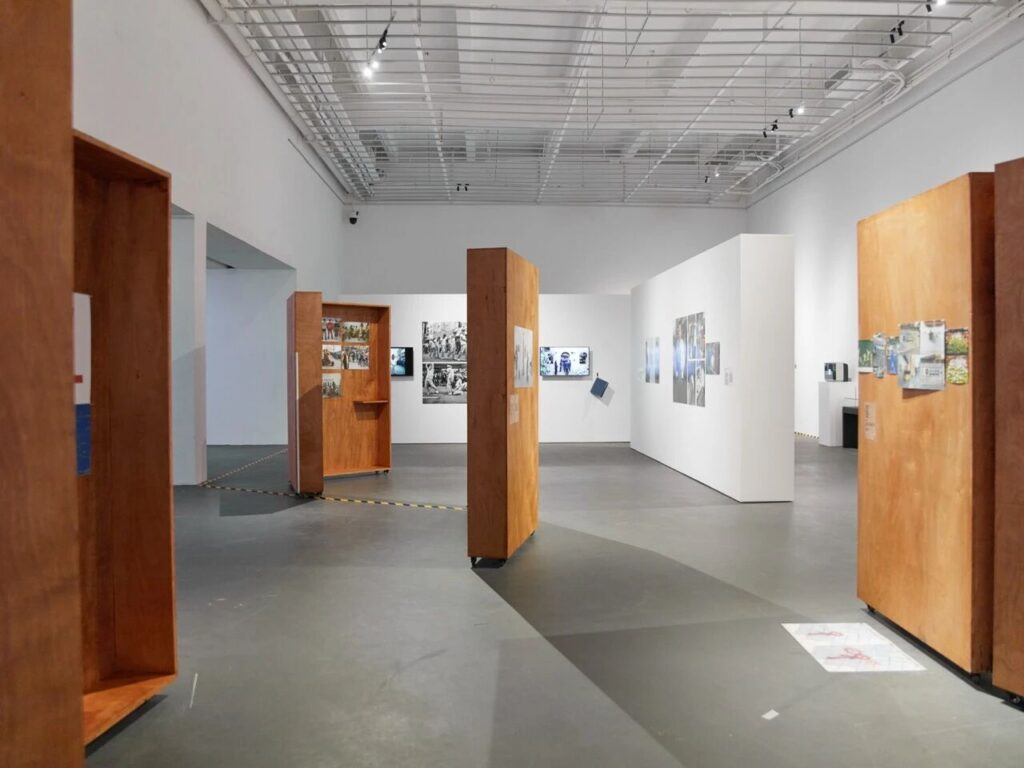
“Acting in Time and Space” Exhibition View 2, 2024, Another Art Museum, Guangzhou
Looking back over the past five decades through this exhibition, it is evident that while Chinese performance art has been influenced by Western avant-garde art, it has also integrated local cultural and political contexts to develop a unique character and undergo various stages of evolution. Chinese performance art first emerged in 1970, pioneered by Hong Kong-based artist Frog King (Guo Menghao). His work *The Plastic Bag Campaign* is the earliest piece in this exhibition’s exploration of the theme of Chinese performance art and the public sphere. This underscores the significance of the public dimension of performance art in China.
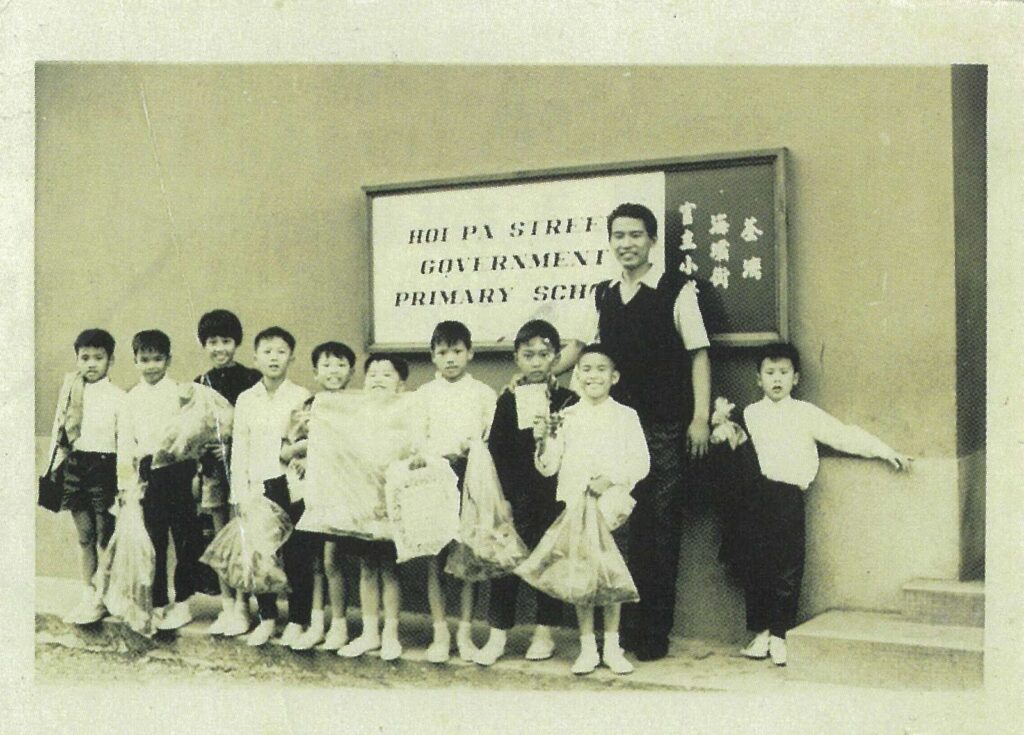
“The Plastic Bag Campaign” 1970, Frog King (Guo Menghao)
Since its inception, performance art has been imbued with a strong spirit of rebellion and adventure, questioning mainstream values, offering subversive interpretations of the world, and constantly challenging established norms. Unbound by constraints such as medium, material, form, discipline, or space, performance art can take place anywhere: at farmers’ markets, bookstores, riverbanks, shopping districts, abandoned factories, store windows, and on the streets. Performance art in public spaces not only explores the relationship between people and space but also reflects the challenges people face within the context of contemporary society.
For example, works such as Taiwanese artist Chen Chieh-jen’s *Functional Loss No. 3* (1983), Ge Yulu’s *Ge Yulu* (2013–2017), Dong Xun’s *Mobile Streetlight* (2011), and Liu Xianglin’s *Welcome* (2016) all took place in urban public spaces. In contrast, the Gao Brothers’ performance piece *Embrace* attempts to create its own “public space.” In this work, the various concepts, debates, and misinterpretations stemming from the act of “embracing” rapidly evolved into a highly controversial cultural and social event within the “public space.” The interactivity and infinite connectivity of the internet, combined with the unfinished nature of this work, provided the artists with new momentum and inspiration through their dialogue with the public. The emergence of *Embrace* and the discussions it sparked demonstrate that post-89 Chinese contemporary art has grown increasingly mature in its construction of “public space,” revealing the creative vitality of Chinese contemporary art.
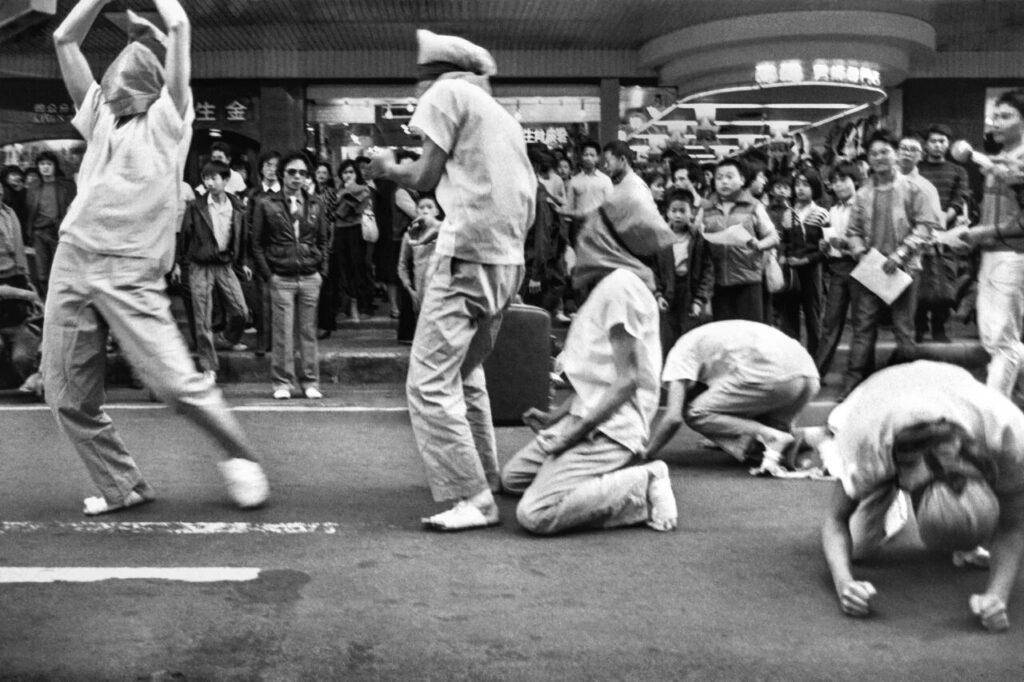
“Functional Loss No. 3,” October 20, 1983, Chen Jierun
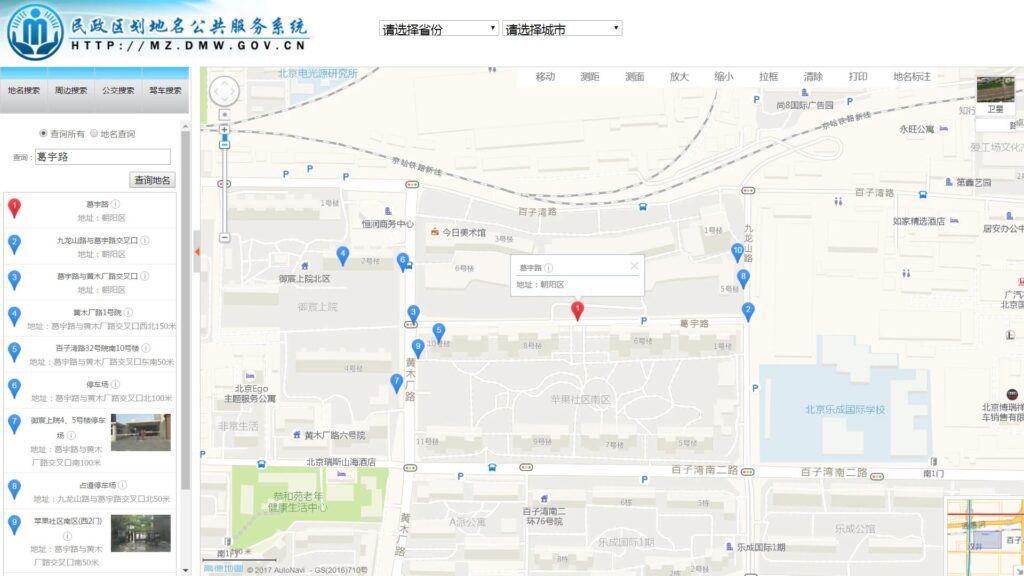
“Ge Yulu” 2013–2017, Ge Yulu
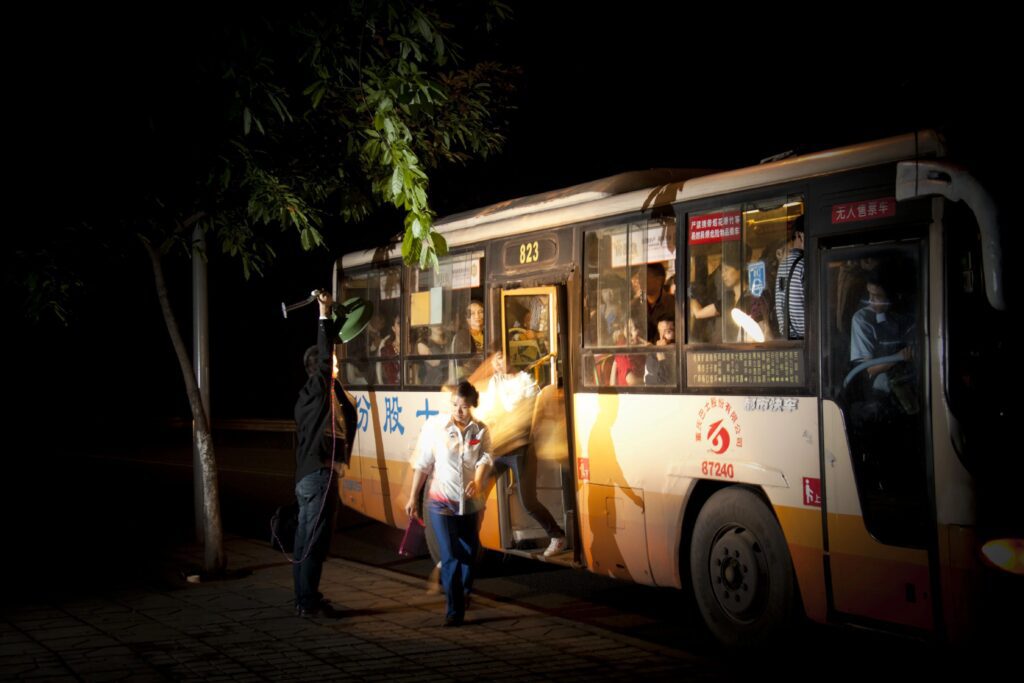
“Mobile Streetlights,” 2011, Dong Xun
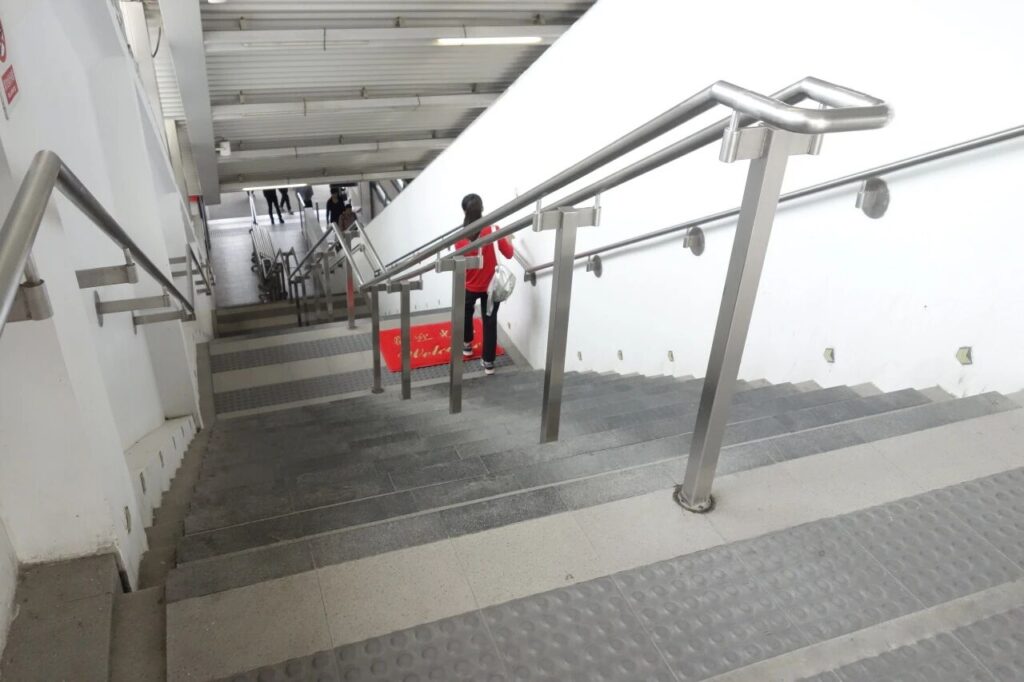
“Welcome” 2016, Liu Xianglin
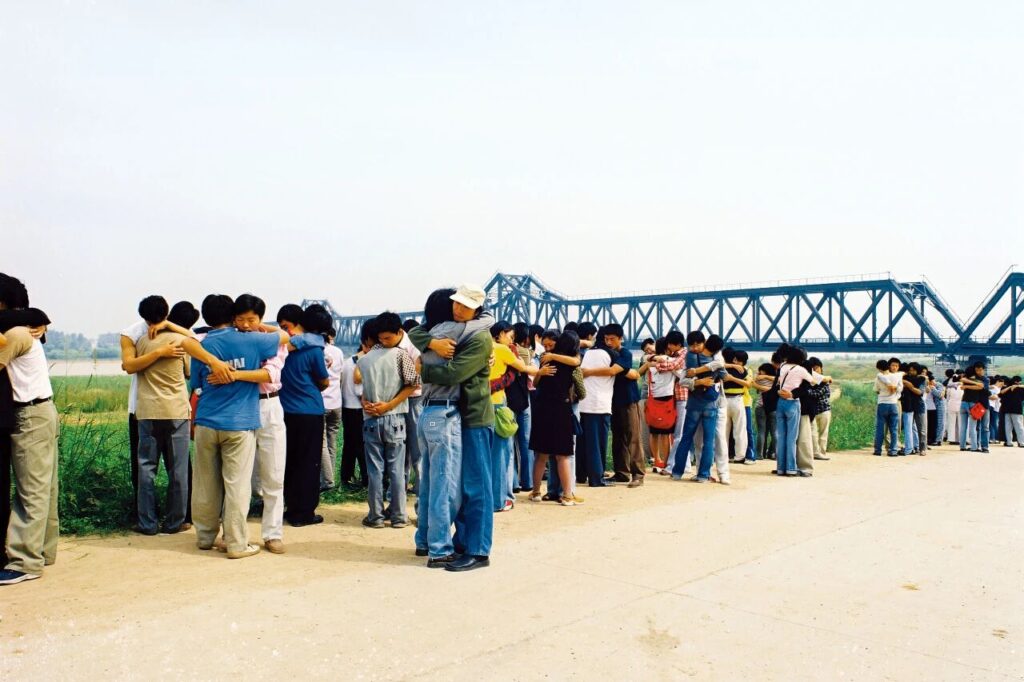
*Embracing 20 Minutes of Utopia* (2000), The Gao Brothers
Performance artists’ creations in public and everyday spaces act like a spark, igniting more diverse perspectives among the public regarding urban spaces and daily life. Take Chengdu as an example: it is not only a central city in southwest China but also a major hub for Chinese performance art. Performance art first emerged in Chengdu in 1995, represented by the “Eight Eccentrics of Shu.” The very first performance art event took place in a public urban space and was widely covered by the media. The themes of Chengdu’s performance art are highly diverse, ranging from issues of identity and dislocation in the urbanization process to consumer ethics and individual experiences under the market economy. Over the past two decades, Chengdu’s performance art community has produced a wealth of talent and achieved significant growth. Chengdu’s open-mindedness allows performance art to unfold spontaneously throughout the city, free from the scrutiny of the public or government obstruction. In fact, these artistic interventions have even contributed to the improvement of the city’s environmental conditions. The most notable example is “The Water Defenders,” and Dai Guangyu’s work *Long-Dormant Water Indicators* (1995) stands as a key piece within this artistic initiative.
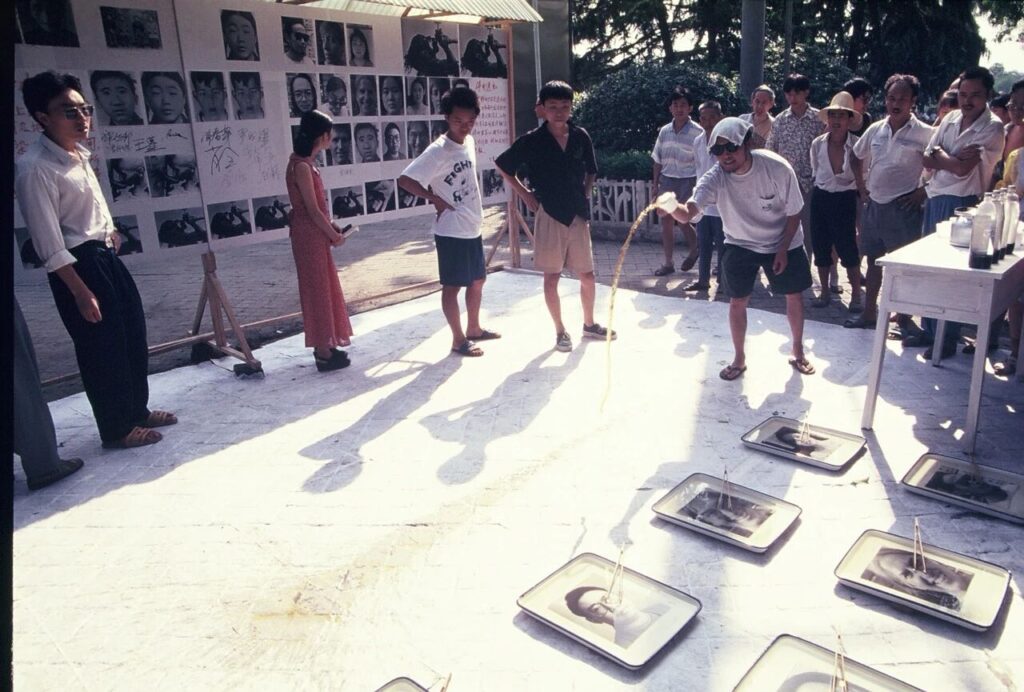
“The Long-Dormant Water Quota,” 1995, by Dai Guangyu
Dai Guangyu’s *Long-Dormant Water Marker* (1995) is a prominent example of performance art engaging with the public in a public space. The work combines performance art with installation art and was presented in a bustling area of the city center (along the Funan River), utilizing the dense flow of people and the gaze of onlookers in the busy streets to maximize the conveyance of the ideas and messages embedded in the piece. Under the gaze of numerous onlookers, the work generated a powerful visual and intellectual impact, aligning with the artist’s intended effect. This rare opportunity allowed the artist to set up an information board on a vacant street corner to explain the work’s concept, which not only created visual intrigue but also prompted deep intellectual reflection among the audience. Questions and interactions from the on-site audience demonstrated the work’s effectiveness in stimulating public thought. The work was installed on a pristine white floor mounted on rice paper, causing viewers to hesitate before stepping onto it and thereby heightening the significance of the performance. The act of stepping onto the floor and soiling the pristine surface became a key linguistic element in conveying the work’s message.
Furthermore, the artist’s performance—brewing tea and washing the floor with river water—along with inviting audience participation, served as crucial means of expressing the work’s core themes. *The Long-Dormant Water Index* demonstrates how performance art achieves social intervention by engaging with the public through public spaces. Several days later, another component of the work—photographs of human portraits soaked in river water displayed in 12 medical trays—gradually eroded and disappeared due to severe river pollution. This startling transformation provided a profound social commentary for the entire artwork and reinforced public awareness of environmental protection and social responsibility.
Through this work, Dai Guangyu not only demonstrates the close connection between performance art, public space, and the public, but also, through his artistic practice, sparks widespread public attention and reflection on environmental and social issues. The body intervenes in urban space, and performance art—as an art form that uses the body as its primary medium—unfolds within urban spaces, creating temporary public spaces. Due to its progressive nature, performance art is often critical and influences the formation of public consciousness. It interacts with urban space on both a physical and a spiritual level.
The concept of public space in contemporary society has long transcended traditional urban geography; it now encompasses broader social and cultural dimensions. Public space encompasses not only urban environments but also nature, the internet, interpersonal and psychological spaces, and virtual worlds. Consequently, the diversification of performance art in China—driven by the widespread adoption of the internet and social media—has led to broader public recognition and participation. Artists have begun exploring increasingly diverse themes and forms, including social issues, cultural identity, gender topics, and environmental protection. For example, in Li Yongzheng’s *Passing on a Brick* (2012–2022)—a long-term art project—the artist commissioned Q Xin Qimeng Xiong Wei, a netizen based in Wukan, and Weibo user @Wukan Chicken Essence to collect local soil via the social media platform Weibo. This soil was subsequently used as raw material and fired in Chengdu into standard building bricks.
Among this batch of bricks, one was donated to Wukan’s newly established library, while another became the centerpiece of the *Passing on a Brick* project. The artist recruited volunteers via Weibo and initiated the brick-passing campaign. On June 21, 2012, Li Yongzheng mailed the brick to the first volunteer. Since then, the brick has been continuously passed among different volunteers, a process that continues to this day. This work serves as a profound reflection on social events in China, while also exploring public memory, social participation, and the role of art in social processes. Through the simple act of passing a brick, it has sparked public interest in local events and fostered discussion on broader social issues.
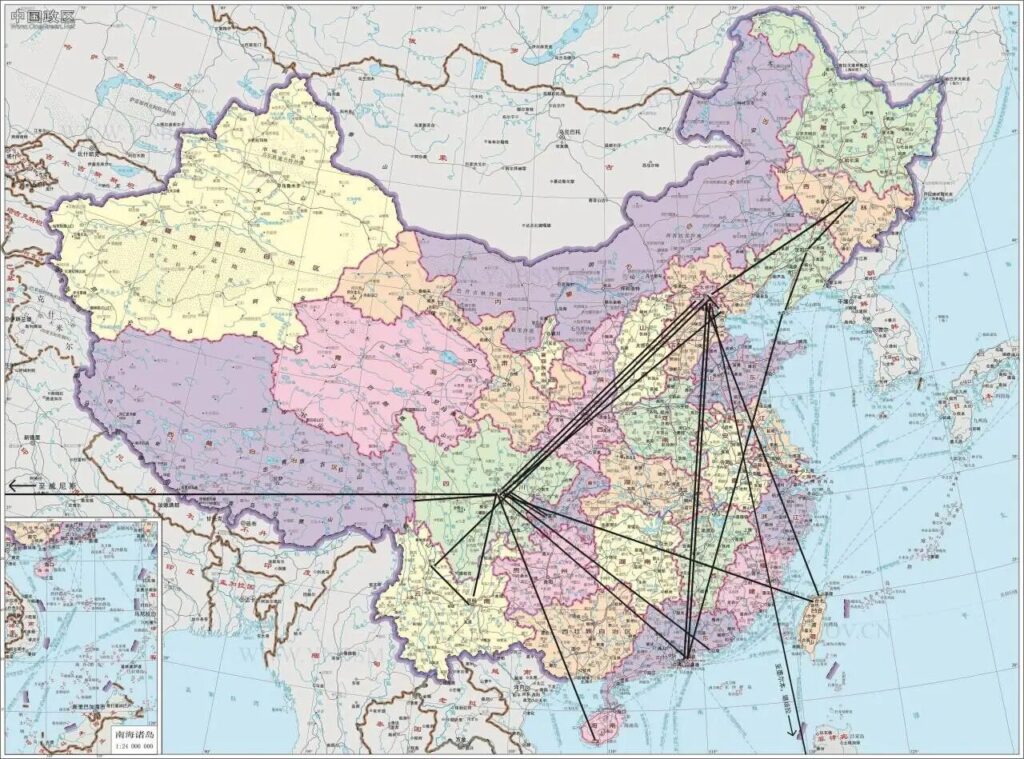
“Passing a Brick” June 21, 2012–present, Li Yongzheng
It is evident that artists’ creative work is not confined to the art world; increasingly, they are bringing art into public spaces, engaging with the public, sparking social attention and discussion, and prompting us to reflect on our self-perception. Returning from the public to the individual is, in itself, a grand act of resistance—a shift from past submission to collectivism to today’s fragmented personal feelings and thoughts, where collective individualism has become a new form of the public.
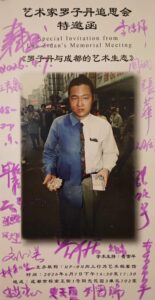
Moreover, the “public” involves not only a relationship with space but also, inevitably, a relationship with people and communities—ranging from collective value systems to individual struggles with social reality and survival, as well as issues of self-identity regarding gender and more. These themes find direct correspondence in numerous works. In his piece *Half White-Collar, Half Peasant* (1996), Luo Zidan liberates the self to engage directly in dialogue with the general public; Cang Xin’s *Identity Swap* series (2002–2006) interprets the transformation of social space—from a functional context for bodily activity or performance to a space for the production of subjectivity and mental states; Duan Yingmei’s series of community-based works employs dialogue and interaction to create a complex network of relationships among collaborators, audiences, objects, and space; Deng Yufeng’s *A Vanishing Movement* (2020) challenges the boundaries between public and private rights, much like a game; Hu Yinping’s *Hu Xiaofang* (2021) embeds itself as a “social gap” within social organizations, utilizing existing social norms and the art system to offer new possibilities for the relationship between labor and life; Hu Jiayi’s *Boxing* (2020) dispels the fear brought on by silence and darkness; She Yang Sibo’s *Let Poetry Return to the Gut* (2023) features a lamb borrowed from a herder’s relative, which, over the course of the seven-day exhibition, consumes the verses the artist has grown from the lawn…
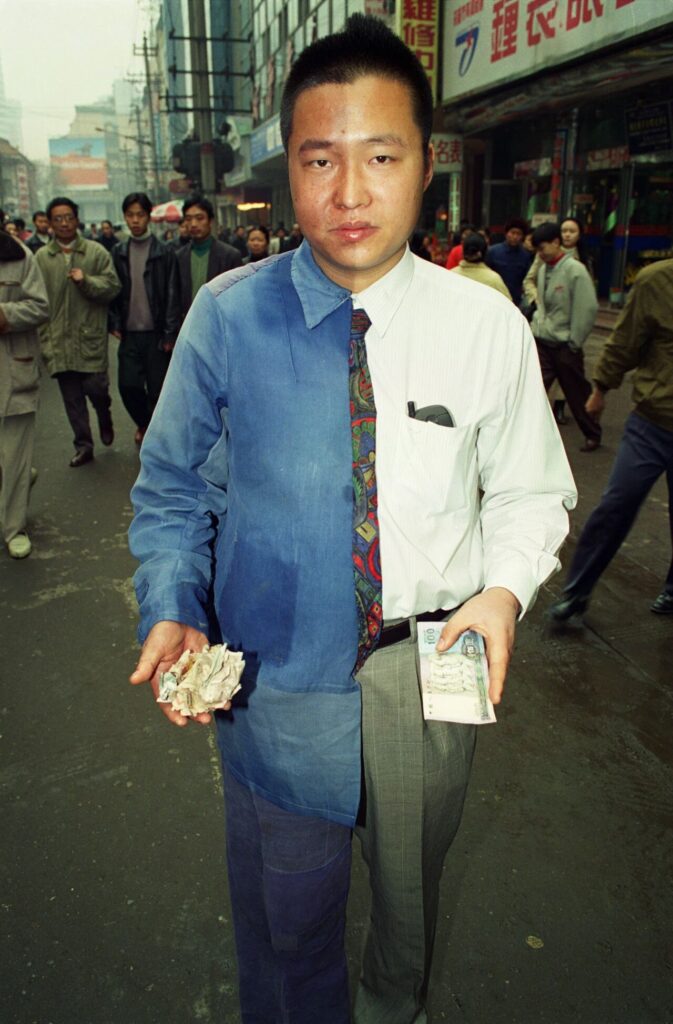
Luo Zidan, *Half White-Collar, Half Peasant*, 1996, Luo Zidan
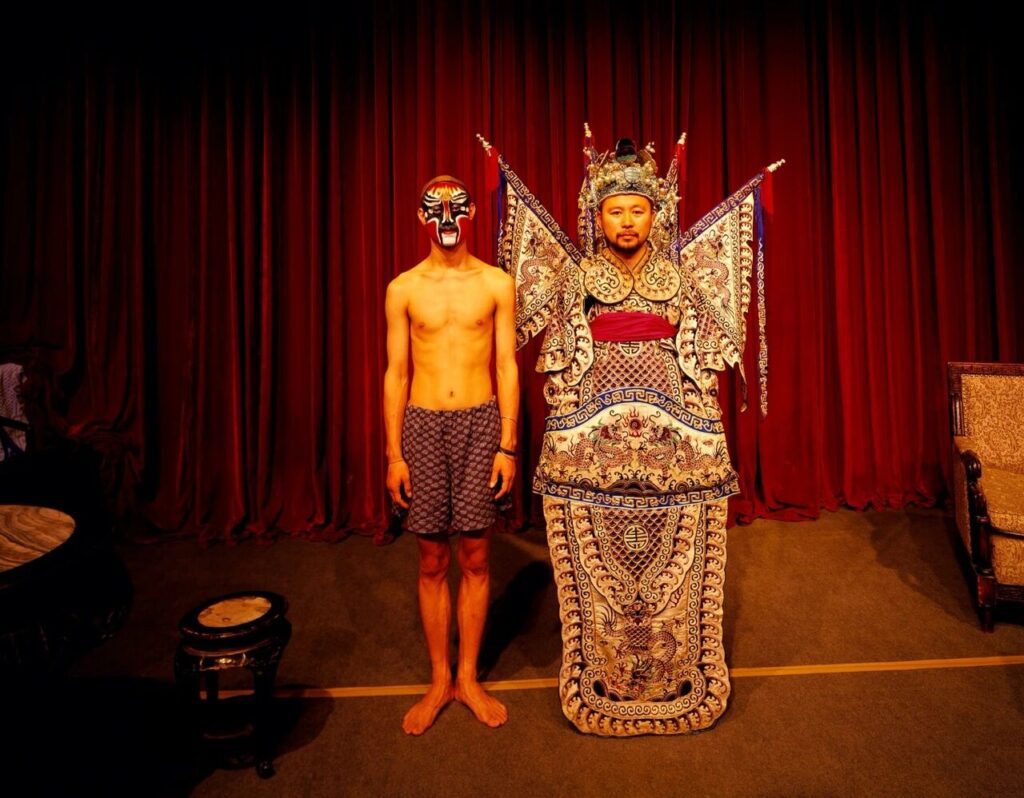
“The Role Reversal Series,” 2002, Cang Xin
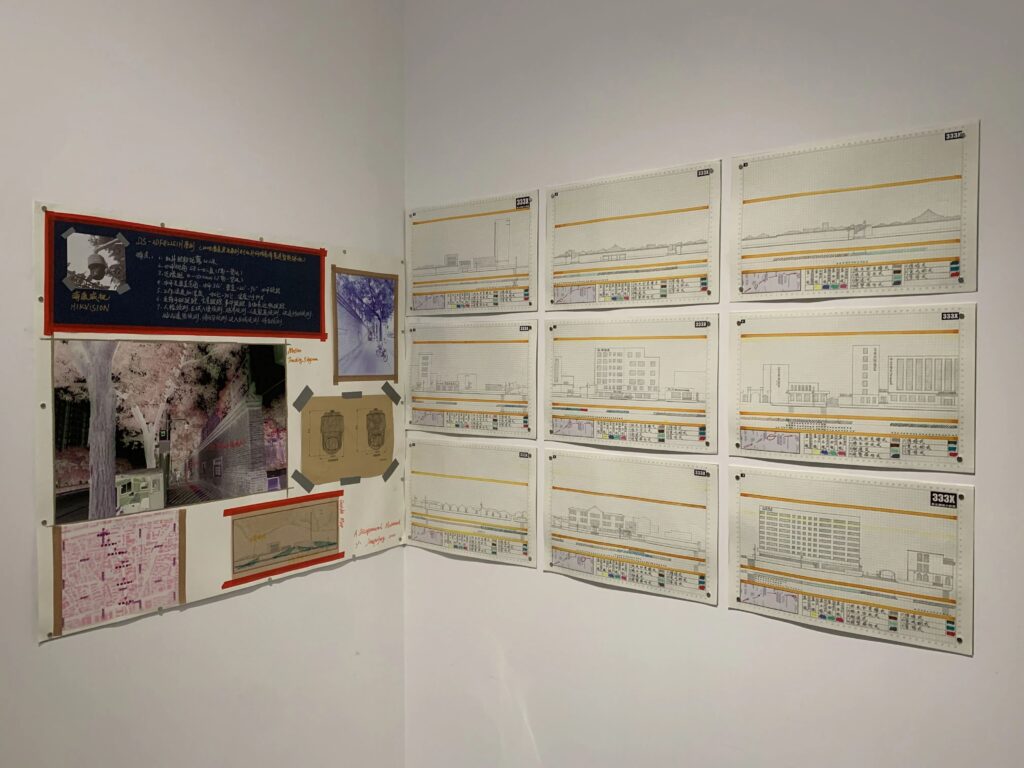
“A Vanished Operation,” 2020, by Deng Yufeng
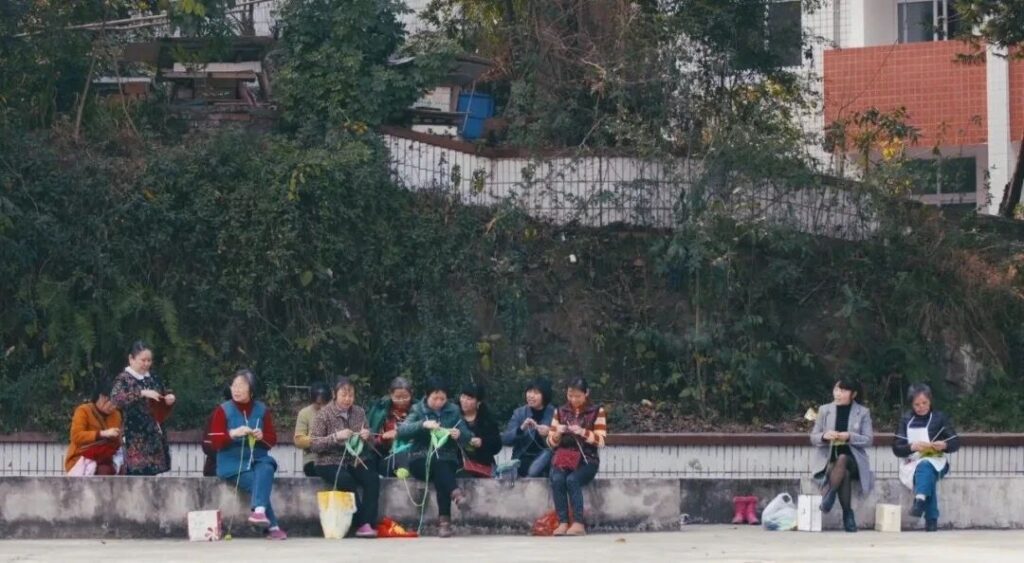
*Hu Xiaofang*, 2015, by Hu Yinping
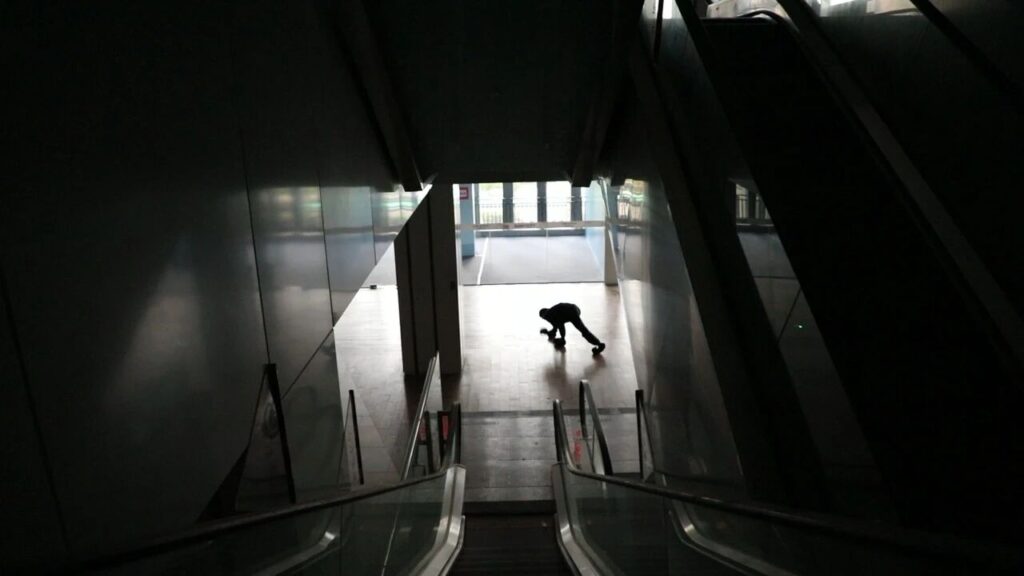
*Boxing* 2020, Hu Jiayi
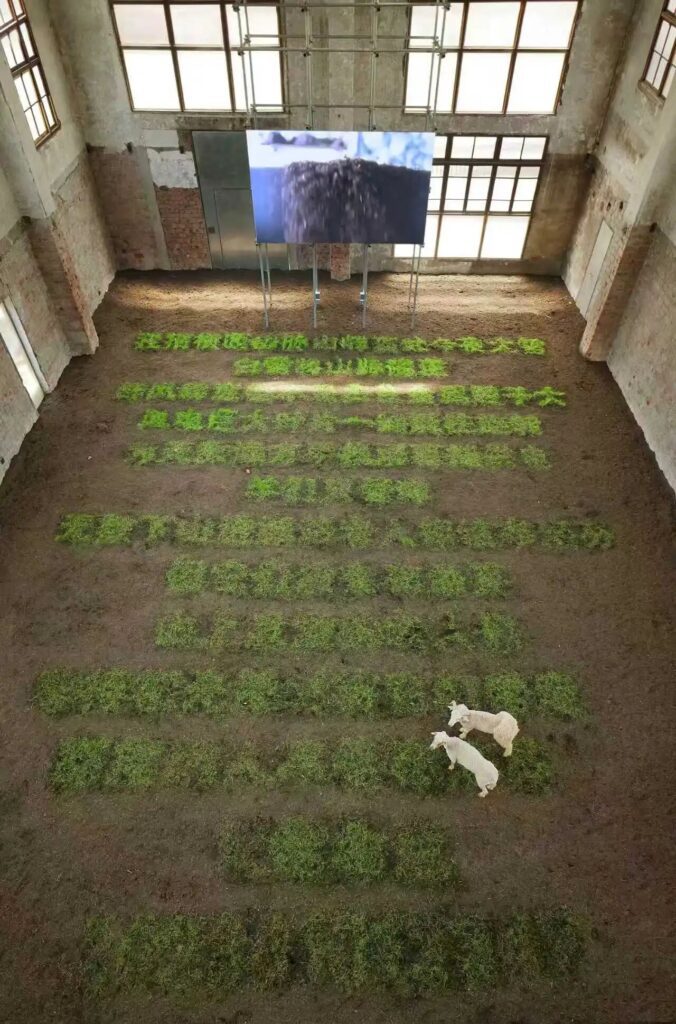
“Let Poetry Return to the Gut” 2023, She Yang Sibo
Performance art is not confined to specific venues; it moves freely through urban public spaces, virtual online realms, desolate natural environments, or abandoned ruins. The avant-garde and rebellious spirit of art creates subtle connections with its surroundings, sparking extraordinary interactions and dialogues. As the core medium of performance art, the body actively intervenes in and creates space, forming a temporary public sphere. Its critical nature is manifested not only in the transformation of physical space but also on a spiritual level, resonating with and prompting reflection on public consciousness. This intervention by performance art—whether in its material form or spiritual essence—engages in a profound interaction with space. While not immediately apparent, this interaction is subtle and imperceptible.
Viewed in this light, performance art is not confined to the live setting, nor does it adhere to a purist approach to performance; in many works, performance is simply an appropriate means of artistic expression. But why choose performance? Perhaps, at its core, performance art is inherently an avant-garde practice that challenges the boundaries of traditional art.
Today, upholding one’s principles and boundaries within a given environment is, in itself, an act of rebellion. And “performance” and “rebellion” remain sensitive terms. Therefore, the definition of what constitutes performance art—or does not—should remain ambiguous.
Chengdu Shangcheng Design has been deeply engaged in architectural and spatial design for over two decades, maintaining a consistent focus on the relationship between architecture, nature, culture, and society. The firm has developed an integrated design practice encompassing urban planning, architecture, landscape architecture, and interior design. Its projects are located across numerous cities nationwide and span a wide range of types, including industrial parks, offices, cultural exhibition spaces, and residential spaces. With a focus on spatial value and user experience, Shangcheng Design is committed to providing clients with architectural and spatial solutions that combine foresight, aesthetic appeal, and practicality. The firm’s work has been recognized multiple times at the China Interior Design Awards and the IFI International Interior Design Awards、Architecture MasterPrize(AMP)、BLT Built Design Awards、DNA Paris Design Awards、Milan Design Awards、London Design Awards及Architect of The Year Awards.